
10 Calming Vagus Nerve Exercises You Didn't Know Existed
If you struggle to relax, find yourself overthinking, stressed, or tense, then these 10 calming vagus nerve exercises might be just what you need.
Plenty of people live in a state of chronic stress and low-level survival mode without realising it. It’s common for people to believe it is their baseline normal to feel wired-but-tired, emotionally flat, jumpy, sensitive, or anxious.
What they don’t realize is that feeling this way is often the result of an over-active sympathetic nervous system.
Essentially, your body is constantly releasing stress hormones to keep you in a state of heightened alert and threat vigilance because it does not feel safe enough to fully let go and relax.
Staying in this stress response for long periods of time gradually begins to feel normal, yet in the background it can quietly wreak havoc on both your mind and body.
If this sounds like you, you might also experience poor digestion, disrupted sleep, and even ongoing physical symptoms or health issues.
This is where the vagus nerve comes in, and honestly, it deserves far more attention than it gets.
Free Nervous System QUIZ!
This quick 2 minute quiz helps you to discover your personal nervous system archetype.
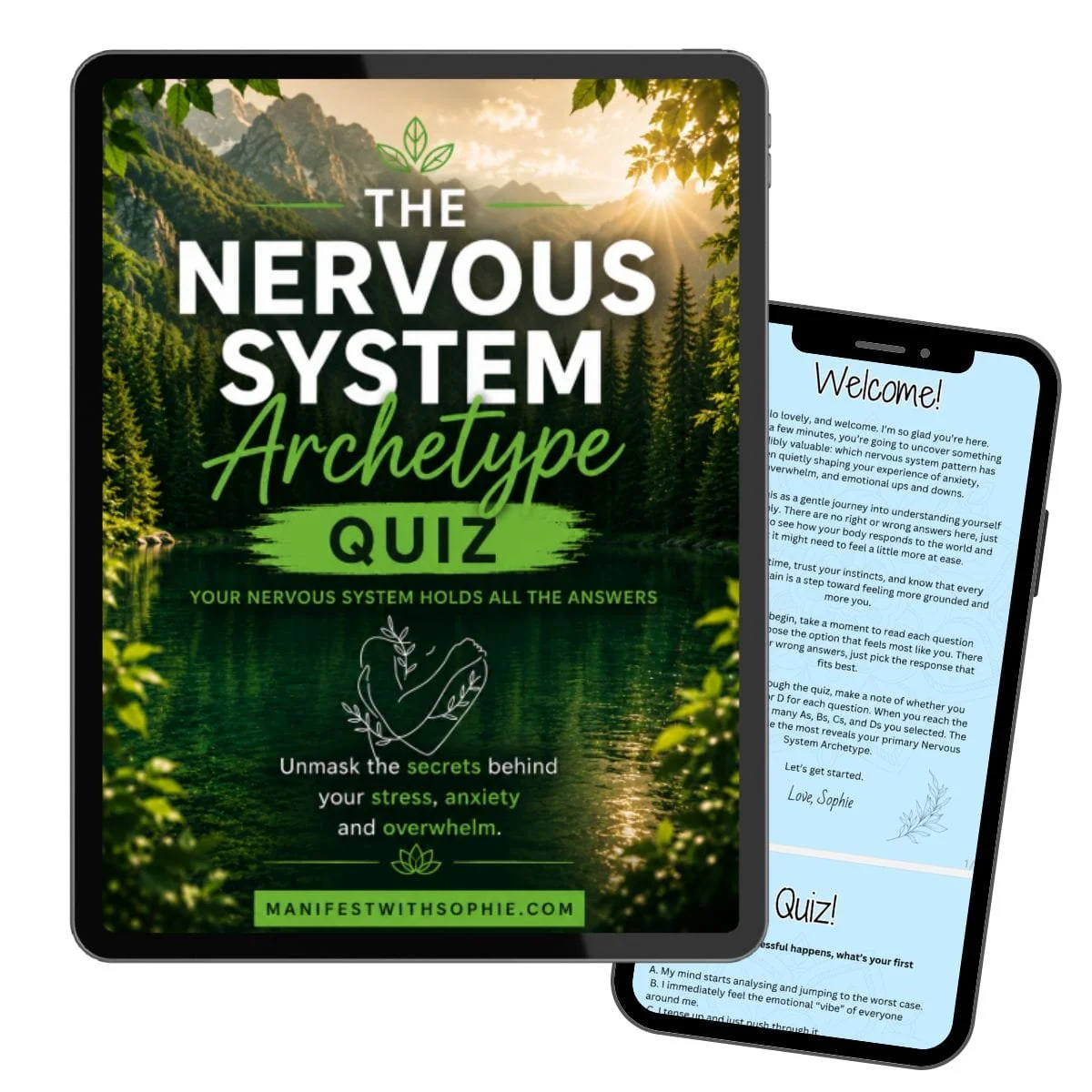
Understand why your mind and body react the way they do and finally uncover what your nervous system actually needs to feel calm.
You’ll feen seen, understood and once that “ah hah!” moment hits, everything will start to make sense.
You’re not “too sensitive” or “too much”. Your nervous system has simply adapted to stress in its own way. Grab your copy of the quiz below.
What the vagus nerve is and why vagus nerve exercises work
The vagus nerve is the longest cranial nerve in the body, and it plays a much bigger role in how you feel than most people realise. It runs from the brainstem down through the face and throat, into the heart, lungs, and gut, with branches that influence things like heart rate, digestion, inflammation signalling and your stress response.
In simple terms, it acts like a communication superhighway between your brain and your body, constantly carrying messages back and forth about safety, stress, and regulation.
Vagus nerve exercises work because they help the nervous system recognise safety through the body. Your brain decides whether to stay in a stressed, protective state or to allow calm based on signals it receives from the body.
When those signals travel up the vagus nerve, they inform the brain that the body is safe and can settle. In response, the brain eases its stress response and the parasympathetic nervous system, often called rest and digest, becomes more dominant.
Signs your nervous system wants more vagal support
When your system stays stuck in stress state for long stretches, it can show up in ways that feel random or confusing. Common signs include:
Shallow breathing, tight chest, or a lump-in-throat feeling
Digestive sensitivity like bloating, reflux, or unpredictable appetite
Tension in the jaw, neck, shoulders, or scalp
Difficulty falling asleep, staying asleep or not feeling rested even after 7-9 hours.
Feeling emotionally reactive, teary, numb, or easily overwhelmed
A constant sense of pressure, even when you “should” feel relaxed
Vagus nerve exercises help because they work with your biology instead of trying to force your mind to calm down through willpower. If you can convince the body it is safe and settled by taking the following steps, the nervous system can begin to relax naturally.
As the brain receives signals of safety from the body, it eases the stress response, allows calming processes to take the lead, and reduces the release of stress hormones that keep you feeling on edge, anxious, or out of sorts.
And here is the fun part. “Vagus nerve stimulation” sounds technical, yet many powerful options are simple, free, and a bit unexpected.
10 vagus nerve exercises that feel surprisingly powerful
These vagus nerve exercises lean toward the lesser-known side. They go beyond the obvious “deep breathing exercises” and tap into the real-life pathways that influence vagal tone, including the throat, voice, face, breathing rhythm, temperature, and social engagement system.
The gargling reset for vagus nerve stimulation
Gargling works because it creates strong vibration and muscular activation in the throat, where branches of the vagus nerve are closely connected.
This vibration sends clear signals of safety up to the brain through vagal pathways, encouraging the nervous system to settle. For many people, this leads to a noticeable sense of grounding and calm because the body is being gently reminded that it can relax its guard.
How to do it
Fill a glass with water. Take a sip, tilt your head slightly back, and gargle for 10 to 20 seconds. Repeat 3 to 5 rounds.
2. Hand-on-heart rhythmic tapping for parasympathetic activation
This works because gentle, rhythmic tapping over the chest creates predictable sensory input close to the heart, an area closely linked to vagal signaling.
The rhythm helps the nervous system anticipate what comes next, which the brain reads as safety. As those signals travel upward, the stress response can ease and parasympathetic activity becomes more dominant, often bringing a sense of steadiness and emotional settling.
How to do it
Place one hand over the centre of your chest. Using your fingertips, tap gently and rhythmically at a slow, even pace. Continue for 30 to 90 seconds.
Make it soothing
Keep the tapping light and consistent. The goal is reassurance, not stimulation.
3. Humming with a hand-on-chest vibration cue
Humming works because the vibration it creates in the throat and chest stimulates vagal pathways that signal safety to the brain. That steady vibration encourages the nervous system to shift out of high alert and into a calmer, more regulated state.
Placing a hand on the chest helps you feel the vibration more clearly, which can deepen the calming effect and make the shift easier to notice.
How to do it
Place one hand on your chest. Inhale through the nose, then hum on the exhale for 6 to 10 seconds. Feel the vibration under your hand. Repeat for 1 to 3 minutes.
A simple upgrade
Try alternating pitches. A slightly lower hum often feels more grounding, while a higher hum can feel clearing.
4. Warmth-based regulation using heat and containment
Warmth supports nervous system regulation because it signals comfort, protection, and reduced threat.
When the body feels physically warm and contained, the brain receives cues that it can soften its guard. This shift supports vagal activity and allows the parasympathetic nervous system to take the lead more easily.
How to do it
Use a warm blanket, hot water bottle, or heat pad placed over the chest, belly, or upper back. Sit or lie in a supported position and allow the warmth to spread for a few minutes.
5. The laughter “dose” for instant state change
Laughter shifts physiology fast. It changes breathing, activates facial muscles, and often interrupts repetitive thought loops. Even forced laughter can create a real state change because the body responds to the action itself.
How to do it
Set a timer for 60 seconds. Start with a fake laugh and let it evolve. Add a gentle bounce in your shoulders or a hand on your belly. Repeat once or twice.
If it feels awkward
Try laughter with a video that reliably makes you smile. Watch your favourite comedian or hang out with a friend who you can have a laugh with. The goal is a genuine body shift, not a performance.
6. The supported chest opening and breath settling reset
This works because gentle chest opening combined with full support helps reduce protective posturing around the heart and lungs.
When the chest feels open yet supported, breathing naturally deepens and becomes less guarded. These changes send safety signals to the brain through vagal pathways, encouraging a calmer nervous system state.
How to do it
Lie back with a cushion or rolled towel placed lengthwise along the spine, allowing the chest to gently open. Let your arms rest comfortably at your sides. Stay here for one to three minutes.
Make it soothing
Avoid forcing the stretch. The sensation should feel safe and spacious rather than intense.
7. The cold face dip for fast parasympathetic support
Cooling the face works because it activates a built-in reflex linked to the vagus nerve that signals the brain to slow things down. When cold water touches the face, especially around the eyes and cheeks, the heart rate naturally drops and the nervous system shifts toward a calmer, more regulated state.
This response helps the body move out of high alert and into steadier, parasympathetic activity.
How to do it
Fill a bowl with cool water. Take a normal breath in, then dip your face for 5 to 10 seconds. Come up, breathe normally, and repeat 2 to 3 rounds.
8. Gentle neck soothing for vagus nerve activation
This works because the vagus nerve travels through the neck, alongside structures that help regulate heart rate and nervous system activity.
Slow, gentle touch in this area sends strong signals of safety to the brain, especially when the movement is predictable and non-threatening. As the brain receives those signals, it can ease the stress response and allow the nervous system to settle into a calmer state.
How to do it
Using light pressure, slowly stroke or massage the sides of the neck from just below the ear down toward the collarbone. Move at a pace that feels soothing rather than stimulating. Spend 30 to 60 seconds on each side.
Make it soothing
Keep your jaw relaxed and your breathing natural. The touch should feel comforting and grounding, rather than like a massage you would get to work out tension.
9. The social gaze practice for your nervous system’s safety circuit
Your nervous system responds to safe connection. Eye contact with a trusted person, a warm interaction, or even a kind moment with a stranger can support vagal tone. This is one of the most overlooked vagus nerve exercises because it looks like “life” rather than a technique.
How to do it
Choose one safe person. During a normal conversation, hold warm eye contact for 2 to 3 seconds at a time, then look away naturally. Add a gentle smile. Keep your breathing slow.
Solo version
Look at a photo of someone who feels safe to you, or sit with your pet and focus on warmth and soft attention for a minute.
Why it matters
Connection signals safety. Safety is the language the nervous system understands.
10. Singing one slow song with an extended exhale focus
Singing combines breath control, throat vibration, emotional expression, and rhythm. It can be one of the most enjoyable vagus nerve exercises because it feels like a mood shift rather than “self-work.”
How to do it
Pick one song that feels calming or comforting. Sing it slowly, emphasising long, smooth phrases. Focus on making the exhale last slightly longer than the inhale.
If singing feels intense
Hum the melody instead. You still get the vibration benefits with less self-consciousness.
How to get better results from vagus nerve exercises
You get more benefit when your body experiences these as genuine safety signals, rather than another task to perform “correctly.”
Choose one exercise that feels easy to repeat
Pick one that feels natural, even slightly enjoyable. Repetition builds familiarity, and familiarity supports safety. Build them into your day where they fit naturally, for example, I like to sing or hum along to music while I am driving.
Pair your practice with a cue that teaches your body “this is calm”
A hand on the chest, a warm drink afterward, sitting in the same cosy corner, a specific playlist. Your nervous system learns through association.
Use tiny doses throughout the day
A 60-second reset used consistently often outperforms a 20-minute session that happens once every two weeks.
A calmer baseline is built, one signal at a time
Nervous system regulation works best through small, consistent signals of safety repeated over time. When you give your body regular opportunities to settle, your nervous system begins to learn that calm is available more often than it once believed.
As that baseline shifts, it takes less to bring yourself back into a regulated state and far more to tip you into anxiety, stress, or overwhelm. You may start to feel more like yourself again, steadier, clearer, and more at ease in your body and mind.
If you want to understand exactly how your own nervous system responds to stress and what helps it calm most effectively, take the Nervous System Archetype Quiz. Discover your personal pattern and learn how to support your nervous system in a way that truly fits you.
