
If you’ve been feeling exhausted, overwhelmed, on edge, emotionally numb or unable to properly relax, you may be experiencing what people often describe as survival mode.
The warning signs can show up mentally, emotionally and physically. You might overthink small decisions, struggle to switch off, feel constantly behind or become overwhelmed by things you would normally cope with.
You also might find you generally see life in a negative way.
20 Warning Signs Someone Is in Survival Mode
Here are 20 common warning signs someone may be stuck in survival mode:
You overthink even small decisions
Even simple choices can start feeling weirdly difficult when your brain is already overloaded and trying to think through every possible outcome.
You feel on edge for no obvious reason
You might feel restless, uneasy, or like something is wrong even when there is nothing obvious happening around you.
You struggle to relax properly, even when you have the chance
You finally get time to yourself, but instead of switching off, your body stays tense and your mind immediately finds something else to think about.
You feel tired but your mind still races
Your body can feel completely exhausted while your brain somehow refuses to shut up, especially when you finally stop at the end of the day.
You get irritated or overwhelmed more easily than usual
Small noises, interruptions, requests, or everyday problems can suddenly feel like far too much when your system is already carrying more than it can comfortably handle.
You feel emotionally flat, numb, or disconnected
Survival mode does not always feel anxious. Sometimes it looks more like shutting down, going through the motions, or feeling strangely disconnected from yourself.
You doom scroll or distract yourself constantly
Reaching for your phone, TV, food, or constant stimulation can become an automatic way of avoiding the uncomfortable feelings that appear when everything goes quiet.
You struggle to focus or think clearly
You might reread the same thing three times, forget what you were doing halfway through, or feel like your brain is permanently running through fog.
You feel like you are always behind
No matter how much you get done, your brain keeps focusing on everything that is still unfinished, making it difficult to ever feel properly caught up.
Your body feels tense, especially in your jaw, shoulders, chest, or stomach
You may not even notice how much tension you are holding until you consciously unclench your jaw, drop your shoulders, or take a proper deep breath.
You experience digestive issues or bloating more often than usual
Stress can affect the digestive system too, so periods of ongoing pressure may sometimes come with changes in your stomach or digestion.
You keep putting things off, even things you care about
This can look like laziness from the outside, but sometimes the task simply feels like one more demand when your mental capacity is already stretched.
You avoid anything that feels mentally or emotionally heavy
Messages go unanswered, admin piles up, and difficult conversations get pushed back because your brain simply does not want another thing to deal with.
You feel more sensitive to noise, pressure, people, or stimulation
Things you would normally tolerate can suddenly feel incredibly irritating or overwhelming when your system has very little capacity left.
You struggle to be fully present
Even during things you normally enjoy, part of your mind may still be thinking about what needs doing, what might happen next, or what you have forgotten.
You feel guilty when you rest
Slowing down can feel uncomfortable because your brain has become so used to doing, fixing, planning, or preparing that simply resting feels somehow wrong.
You find it hard to access joy, excitement, or ease
Things you know you enjoy can start feeling strangely flat because so much of your energy is being spent simply getting through the day.
You feel like life is something you are trying to survive rather than enjoy
Your days can start feeling like one long list of things to get through, with very little space left for actually feeling present, peaceful, or excited about your life.
You wake up already feeling mentally “on”
Before you have even properly started the day, your mind may already be running through tasks, worries, conversations, or everything you need to remember.
You keep hoping you will feel better once things calm down, but they never fully seem to
There is always another deadline, problem, busy week, or thing to sort, so the calm you keep waiting for never quite seems to arrive.
Feeling Stuck, Flat, or Overwhelmed More Than Usual?
If you’ve recognised yourself in more than a few of these signs, there may be a pattern behind the way your nervous system responds to stress. But that pattern isn’t the same for everyone.
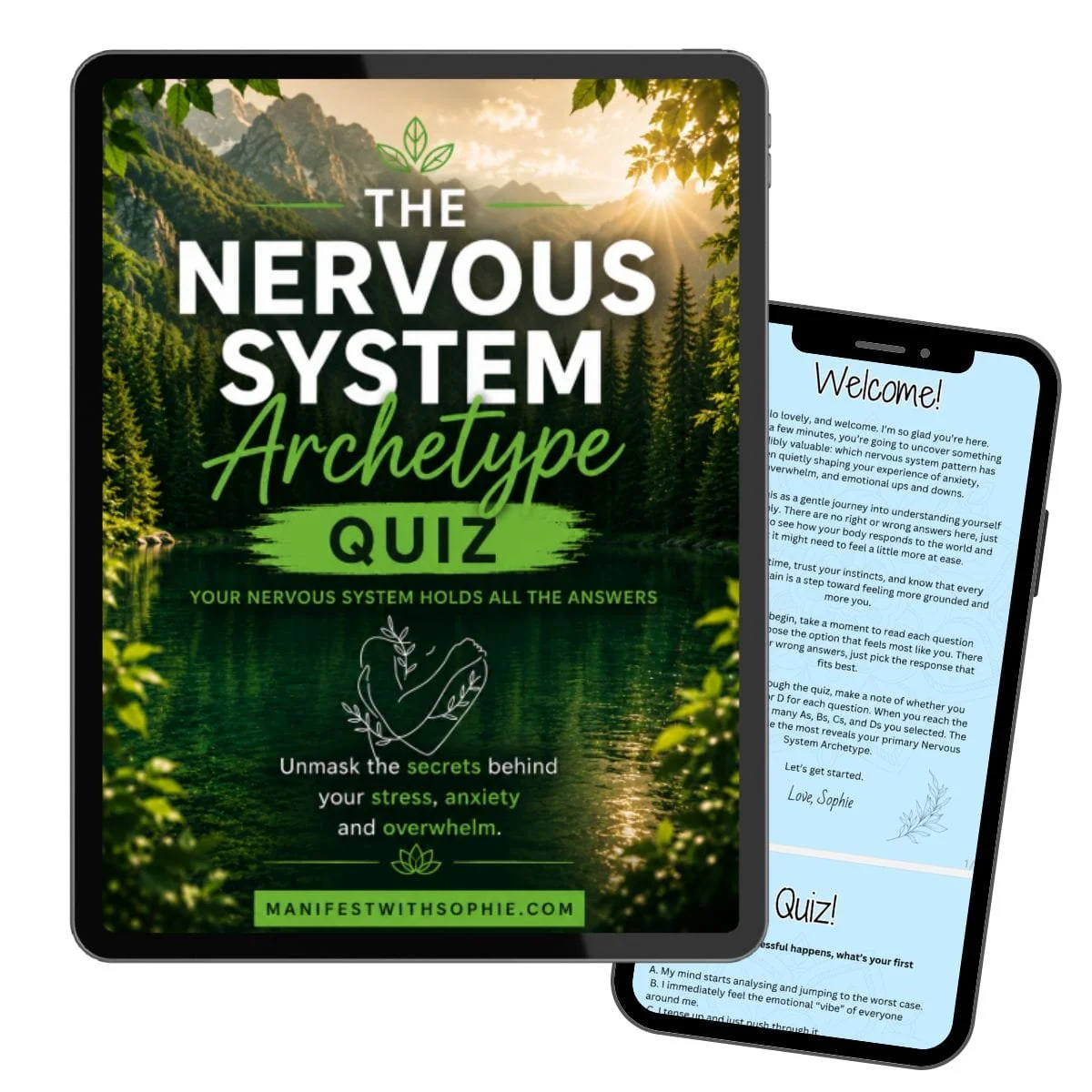
My free Nervous System Quiz identifies 4 different Nervous System Archetypes, each with their own patterns, triggers, and ways of responding when life becomes too much.
Which one are you?
Take the free quiz below to discover your Nervous System Archetype and learn what your system may need to start feeling calmer, lighter, and more like yourself again.
What Is Survival Mode?
Survival mode is a state where your nervous system stays in a constant stress response, prioritising protection over relaxation, even when there is no immediate danger.
When your brain senses stress or danger, your body can release stress hormones such as adrenaline and cortisol to help you respond.
That protection system is there for a reason. It helps you respond when something feels overwhelming, unsafe, unpredictable, or too much for your system to handle.
This is closely connected to your body’s natural fight, flight or freeze response, which helps you react to real or perceived threats.
This response developed to help us react quickly to immediate threats, giving the body the energy and alertness it needed to protect itself.
The problem is, your body does not only react to obvious danger. It can also respond to emotional stress, long-term pressure, unresolved overwhelm, poor rest, overstimulation, work stress, and years of pushing through without enough recovery.
Long-term stress can affect multiple systems throughout the body, which is why the effects can show up physically as well as emotionally.
To your nervous system, all those things are a lion chasing you.
So even if your life looks fairly normal from the outside, your nervous system can still be behaving as though it needs to stay on high alert. That is really what being in survival mode comes down to. It is your body prioritising protection over peace.
Some people experience this as anxiety, restlessness, overthinking, and feeling constantly “on.” Others experience it more as shutdown, numbness, procrastination, disconnection, and emotional flatness. Some swing between both.
Either way, the body is focused on getting through, rather than fully living. That is why survival mode can affect far more than just stress. It can impact your emotions, your focus, your digestion, your sleep, your motivation, and your overall sense of self.
If you’re wondering whether this goes beyond survival mode, you may also recognise yourself in these signs of a dysregulated nervous system.
What Survival Mode Can Look Like in Real Life
Sometimes lists like that can feel a bit abstract until you see how they show up day to day.
For example, survival mode can look like finally sitting down in the evening but still feeling unable to settle.
It can look like checking your phone constantly, feeling overwhelmed by simple admin, needing silence one minute and stimulation the next, or feeling irritated by tiny things that would not usually bother you.
For some people, it can also show up as feeling irritable, exhausted and wanting to be alone far more than usual.
You’re doing what needs doing. You’re showing up, replying, sorting, working, functioning, but there is a subtle sense that you are only half there. Like your body is present, but the calmer, lighter, more fully-you version of you has gone slightly offline.
And because survival mode often builds gradually, it can be very easy to miss.
Many people assume they are just bad at coping, bad at resting, or naturally anxious. In reality, a lot of what they are experiencing is a nervous system that has been carrying too much for too long.
Why Survival Mode Can Feel So Normal
One of the biggest reasons people stay stuck in survival mode is because it can become incredibly familiar.
When you have been living in survival mode for a long time, the warning signs can start to feel like normal parts of your personality rather than signs that your body has been under too much stress.
If your system has been living in stress for a long time, whether because of work pressure, emotional strain, burnout, people-pleasing, chronic mental load, or simply always having to keep going, then that activated or depleted state can start to feel like “just how you are.”
You may even feel strangely uncomfortable when things are calm.
You finally get a quiet moment and instead of melting into it, your mind starts scanning for the next thing. You get a peaceful day and suddenly feel restless, flat, or oddly unsettled. You tell yourself to relax, but your body still feels braced.
This can be especially noticeable when you can’t relax because there are still things left to do, even when none of them are urgent.
That is very common.
Your nervous system gets used to certain patterns, and if it has adapted to busyness, pressure, hypervigilance, or constant output, then peace can feel unfamiliar at first.
That does not mean calm is out of reach. It simply means your body may need support learning that calm is safe again.
How to Get Out of Survival Mode (Step-by-Step)
If you have been searching for how to get out of survival mode, the first thing worth knowing is this:
You do not get out of survival mode by forcing yourself to be calmer, more productive, or more “together.” And you certainly don’t get out of survival mode by forcing positivity and ignoring how you really feel.
You come out of survival mode by helping your body feel safe enough to stop gripping so tightly.
That is why pure mindset work often falls flat when your nervous system is dysregulated. You can understand logically that you are safe, and still feel tense, activated, drained, or unable to settle.
The body needs support as much as the mind does. You need to give your nervous system consistent safety signals.
The good news is that survival mode can absolutely shift. Your nervous system is adaptable, and with the right kind of repetition, it can learn a new baseline.
1. Reduce the pressure on your system
One of the most helpful things you can do is stop expecting yourself to function like someone whose system feels calm, spacious, and fully resourced when that is clearly not the state you are in right now.
That means getting honest about what drains you, what overstimulates you, what creates extra pressure, and what your body seems to be quietly struggling with.
Listen to your body.
For some people, that means reducing noise and multitasking. For others, it means simplifying routines, stepping back from constant input, or saying no when you mean no.
If you’re someone who often says yes when you want to say no, read this next: How To Stop Being a People Pleaser (And Why It’s So Hard in the First Place)
This is about giving your nervous system less to defend itself against.
2. Give your body more signals of safety
A dysregulated nervous system usually does not need one huge healing moment. It responds best to repeated small signals of safety.
That can look like slower, deeper breathing, gentle movement, sitting in natural light, walking without stimulation, putting your phone down for a while, eating in a calmer state, or consciously softening your jaw and shoulders.
If you want more practical ways to do this, these simple ways to calm your nervous system are a good place to start.
These moments may seem small, but they matter more than people realise.
When repeated consistently, they start showing your body that it does not need to stay in defence mode all day long.
3. Notice the habits that keep your system activated
A lot of people are trying to feel better while unknowingly feeding the exact state they are trying to get out of.
Constant scrolling, too much noise, rushing everything, never being mentally off, consuming stress all day, and filling every quiet second with stimulation can all keep your nervous system in a low-level survival response.
That does not mean you need to suddenly become ultra-zen and live in silence. But it does mean it is worth noticing whether your habits are helping your system feel steadier, or keeping it braced.
Sometimes the reason you feel “randomly overwhelmed” is because your body has barely had a proper exhale in weeks.
If this sounds like you, read this next: How To Find Inner Peace When You’ve Been Stressed for Too Long
4. Let Your Body Release Stress Physically
Stress is not only a mental experience. It is physical too. Sometimes your body needs movement, stretching, walking, shaking, breathing, humming, crying, or actual physical downshifting in order to come out of the stress loop it has been holding.
This is why people can understand exactly why they feel the way they do and still feel deeply stuck. Awareness helps, but the body often needs an outlet too.
Even five or ten minutes of supportive nervous system work done regularly can make a huge difference over time.
Coming Out of Survival Mode Takes Repetition
You do not need to do all of this perfectly. And you do not need to transform overnight.
What helps most is repetition.
Small things, done often, tend to shift the nervous system far more than one intense healing day followed by two weeks of overwhelm and self-abandonment.
So if this post has helped you realise that survival mode may be playing a bigger role in your life than you thought, take that as useful information.
Recognising the signs that you have been living in survival mode is an important first step, because you cannot begin changing a pattern you have not noticed yet.
And once your nervous system begins to feel safer, steadier, and less braced against life, so much else often starts changing with it too.
Want Help Understanding Your Nervous System More Deeply?
If this post resonated and you want to understand your own patterns better, my free Nervous System Quiz is a really good place to start.
It will help you understand what may be going on beneath the surface, and what your system may need most in order to feel calmer, clearer, and more like yourself again.
Read These Next
How to Stop Overthinking at Night, Make Sleep Easy, Calm & Blissful
Good next step for readers whose survival mode shows up as racing thoughts and difficulty switching off.
Why Do I Replay Every Conversation In My Mind?
Perfect for the overthinking/hypervigilance side of survival mode.
Freeze When You Want to Say ‘No’? Here’s The Solution
Useful for readers whose stress response shows up more as shutdown, freeze or difficulty asserting themselves.
