
You leave a conversation and instantly start replaying it.
Maybe you said something slightly awkward.
Maybe you stumbled over your words.
Maybe you meant to say "hi" and "hello" at the same time and somehow ended up saying "hi-lo."
Now it's three hours later and you're still thinking about it.
"Why did I say it like that?"
"What must they think of me?"
"I sounded so weird."
The frustrating part is that the conversation didn't even have to go badly.
Sometimes the interaction went perfectly fine. Sometimes it even went well.
Yet your brain keeps playing the same 30-second clip on repeat like you've been chained to a chair and forced to watch it forever.
If you've ever found yourself wondering, "Why do I replay every conversation in my mind?", there's a very good reason for it.
Constantly replaying conversations, overthinking texts, or worrying about what people think?
▼
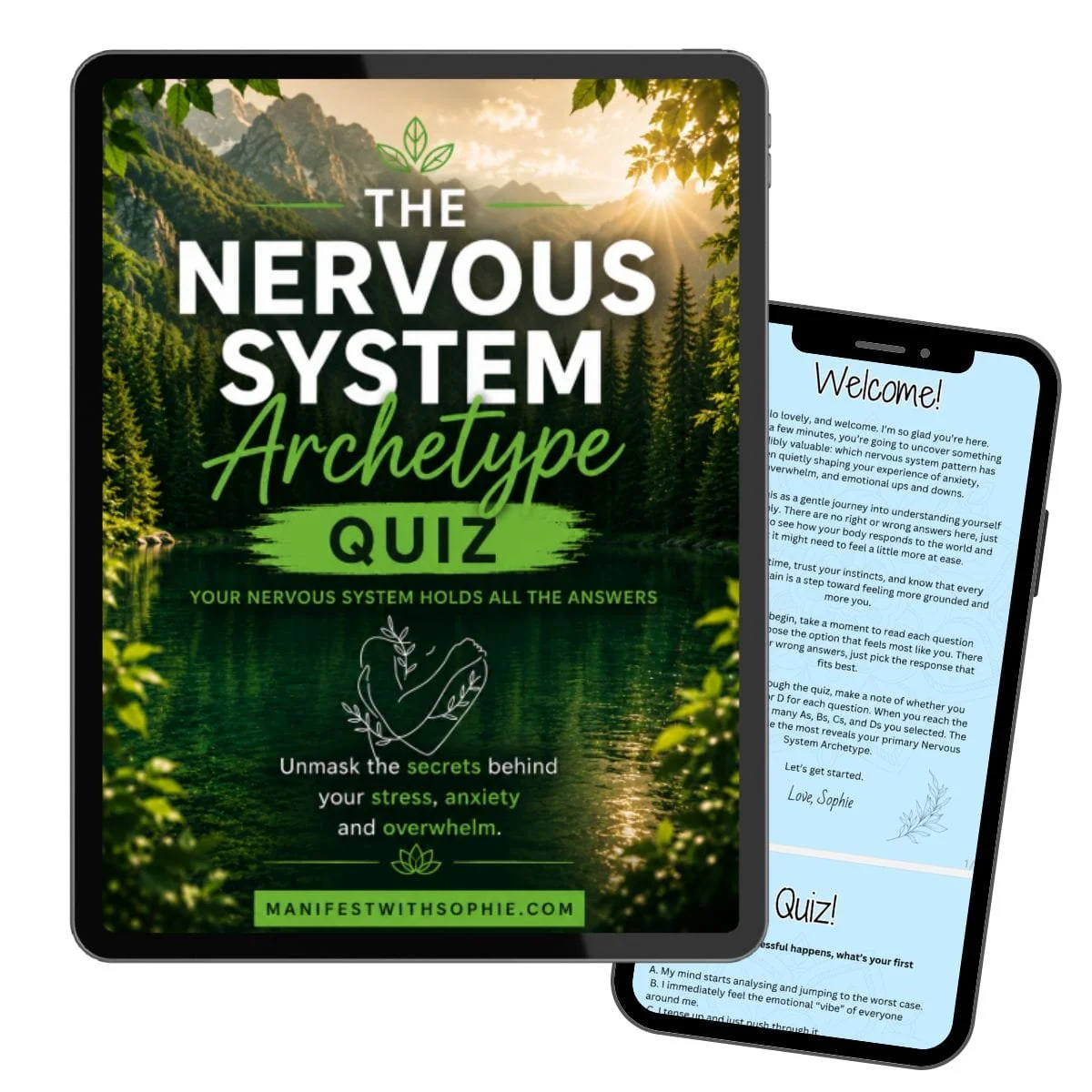
Take my free 2-minute Nervous System Quiz to discover which of the four nervous system archetypes you are and what your nervous system needs to feel safe.
Why Do I Overthink Every Conversation?
At its core, this habit comes from your nervous system constantly scanning for safety.
Somewhere along the line, your brain learned that interactions with other people carried a level of risk.
Maybe criticism felt painful.
Maybe you grew up worrying about getting things wrong.
Maybe you spent years trying to avoid rejection, conflict, embarrassment, or disappointing others.
As a result, your nervous system became highly alert around social situations.
After a conversation ends, it starts reviewing the interaction looking for possible threats.
Did I upset them?
Did I sound stupid?
Did they think I was rude?
Did I say too much?
Did I say too little?
The replaying isn't random. It's your nervous system trying to gather information that it believes could help protect you in the future.
Replaying conversations is only one form of a much bigger overthinking pattern, so if your mind also gets stuck analysing decisions, future possibilities or things that have not even happened yet, read my full guide on how to stop overthinking.
Your Nervous System Is Looking For Threats
Think of it like a smoke alarm that's become a little too sensitive.
A healthy nervous system can recognise that most conversations are safe and move on.
A dysregulated nervous system stays on high alert.
It analyses facial expressions.
It replays tone of voice.
It searches for hidden meaning.
It reviews every detail just in case it missed something important. This is why so many people find themselves replaying conversations in their head long after the interaction has ended.
The irony is that while you're reliving the conversation for the hundredth time, the other person has usually moved on with their day.
They aren't analysing your choice of greeting.
They aren't thinking about the sentence you stumbled over.
They're busy thinking about their own lives.
Why Logic Doesn't Stop Overthinking Conversations
This is why telling yourself to "just stop thinking about it" rarely works.
Logically, you already know the conversation was probably fine.
Logically, you know people aren't analysing you nearly as much as you analyse yourself.
The problem sits deeper than logic.
Your nervous system responds based on learned patterns of safety and threat.
Until those patterns change, the urge to replay conversations often keeps showing up, even when your rational mind understands there's nothing to worry about.
How To Stop Replaying Conversations
The solution isn't forcing yourself to think positively.
The solution is teaching your nervous system that social interactions are safe.
This happens through small, consistent actions that help regulate your nervous system each day.
Over time, your brain gathers new evidence.
It learns that conversations rarely lead to danger.
It learns that awkward moments pass.
It learns that people generally aren't judging every word you say.
As your sense of safety increases, the need to analyse every interaction begins to fade.
What once felt automatic gradually becomes less frequent and less intense.
The 4 Nervous System Archetypes
One of the fastest ways to understand why you react the way you do is to understand your nervous system archetype.
There are four main archetypes:
The Spiralling Overthinker
The Emotional Sponge
The High Functioning Freeze
The Shut Down Freeze
Each archetype responds differently to perceived threats.
Some people become trapped in endless thinking.
Some absorb everyone else's emotions.
Some stay busy and productive while internally feeling overwhelmed.
Others withdraw, disconnect, and struggle to take action.
Understanding your archetype gives you a starting point. It helps you understand why your nervous system reacts the way it does and what it needs in order to feel safe.
Final Thoughts on replaying conversations in your head
Replaying conversations over and over again isn't a sign that something is wrong with you.
It's often a nervous system that has learned to stay on guard and search for potential threats.
The good news is that nervous systems can learn.
As safety increases, the constant analysing, replaying, and second-guessing begins to lose its grip.
And eventually, conversations become exactly what they were always meant to be: a conversation, rather than a three-day investigation.
Discover Your Nervous System Archetype
If you spend hours replaying conversations, overthinking texts, worrying about what people think, or feeling emotionally exhausted after interactions, your nervous system may be running a pattern you're completely unaware of.
Take my free Nervous System Quiz to discover which of the four nervous system archetypes you are.
In less than two minutes, you'll gain a clearer understanding of why your mind reacts the way it does and, more importantly, what helps your nervous system feel genuinely safe.
Knowing your archetype is often the missing piece that finally makes your patterns make sense.
