
Freeze When You Want to Say ‘No’? Here’s The Solution
You've had a long, exhausting week.
All you want to do is spend the weekend in your comfies, feet up, watching your favourite show.
Then your friend texts:
"Are you free this weekend?"
Instantly, you freeze.
Your mind is screaming no.
You want to stay home.
You need to stay home.
Yet somehow you hear yourself replying:
"Yeah, definitely!"
Or maybe it's 5pm on a Friday and your boss asks:
"Any chance you could stay another hour and finish that project?"
It's a request, not a demand.
You could say no.
You know you could say no.
Yet you stand there frozen before hearing yourself say:
"Sure, no problem."
Or perhaps your hairdresser spins the chair around and asks:
"What do you think?"
You look like an 80-year-old poodle.
You hate it.
You smile politely, tell her you love it, pay full price, and cry quietly in the car on the way home.
If these situations feel painfully familiar, there's a reason.
Why Do You Freeze In Situations Like These?
If you constantly find yourself saying yes when you want to say no, people pleasing, avoiding conflict, or struggling to speak up for yourself, your nervous system may be running a pattern you don't even realise is there.
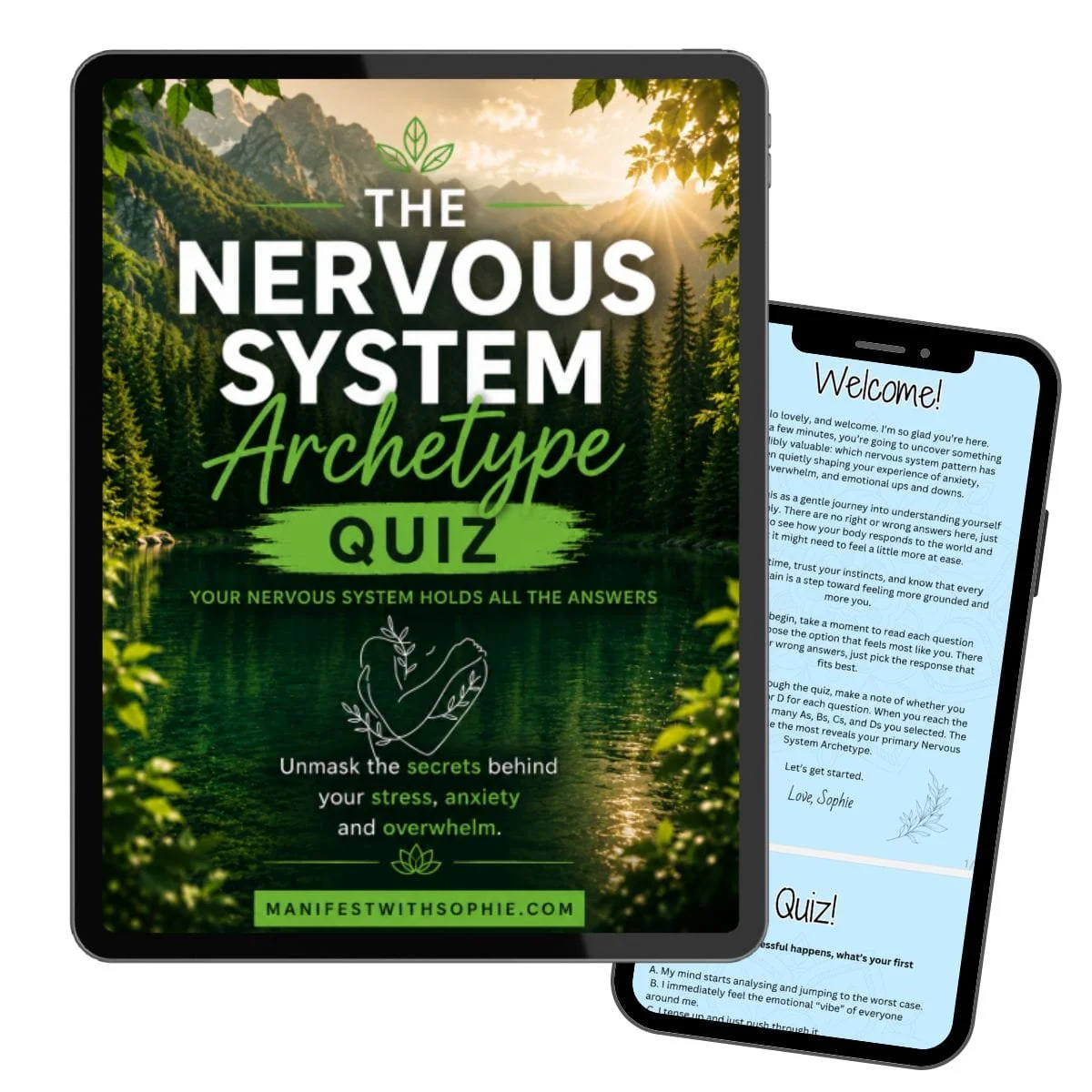
Take my free 2-minute Nervous System Quiz to discover which of the four nervous system archetypes you are and what your nervous system needs to feel safe.
Why Can't I Say No To People?
It feels incredibly frustrating when you want to say no but your body seems to have other plans.
You know what you want.
You know what would be best for you.
Yet when the moment arrives, the words refuse to come out.
Instead, you find yourself agreeing, apologising, smiling, or going along with something you never wanted to do.
Then later, you're left feeling annoyed with yourself.
Why didn't I just say no?
Why couldn't I speak up?
The answer often has less to do with confidence and more to do with your nervous system.
Your Nervous System Thinks Saying No Is Unsafe
Most people have heard of fight or flight.
What gets talked about less is freeze.
Freeze happens when your nervous system detects a threat and decides the safest option is to stay quiet, stay small, and avoid rocking the boat.
For many women, this shows up in social situations.
Saying no feels risky.
Expressing your real opinion feels risky.
Setting boundaries feels risky.
Disappointing someone feels risky.
Your nervous system learns that keeping other people happy helps you stay safe, so it steps in before you have a chance to respond differently.
This is why it can feel like you're watching yourself say yes while every part of you wants to say no.
Your nervous system has taken over the controls.
How To Stop Freezing When You Want To Say No
The goal isn't forcing yourself to become more assertive overnight.
The goal is helping your nervous system feel safe enough to express what you genuinely think and feel.
Simple daily practices such as slow breathing, grounding exercises, and nervous system regulation can help create that sense of safety. But when it comes to saying no specifically, your nervous system also needs evidence that setting boundaries is safe.
That might mean starting small.
Perhaps you say no to a shop assistant asking if you'd like a loyalty card.
Perhaps you tell a friend you're busy instead of rearranging your entire weekend.
Perhaps you choose the restaurant you actually want to eat at instead of automatically agreeing with everyone else.
Each time you express a preference, set a boundary, or say no when you genuinely mean no, your nervous system gathers new evidence.
It starts learning that setting boundaries doesn't lead to danger.
It starts learning that somebody else's disappointment is manageable.
It starts learning that expressing your needs is safe.
Over time, these small moments build confidence and safety within the nervous system. The freeze response begins to loosen its grip, the words become easier to find, and saying no starts to feel like a choice rather than an impossible task.
Final Thoughts on Why Its so Hard to Say ‘No’
If you've ever found yourself agreeing to plans you didn't want, staying late when you wanted to leave, or smiling through situations that felt completely wrong for you, freeze may be playing a bigger role than you realise.
This pattern can change.
As your nervous system learns safety, speaking up becomes easier, boundaries feel more natural, and your decisions begin reflecting what you actually want rather than what feels safest in the moment.
Discover Your Nervous System Archetype
The way your nervous system responds to stress, conflict, boundaries, and relationships is unique to you.
Take my free Nervous System Quiz to discover which of the four nervous system archetypes you are, and learn what your nervous system needs to feel calmer, safer, and more in control.
The insights often explain years of patterns in just a few minutes.
