
Feeling Irritable, Tired & Want to Be Alone? Here’s What’s Happening
If you keep asking yourself, “why am I so irritable and want to be alone?”, the answer may have a lot more to do with your nervous system than your personality.
When your nervous system spends too much time in a state of stress, your body keeps using energy to stay alert, scan for problems and prepare you to cope. Over time, that can leave you exhausted, irritable and desperate for space from other people.
You may wake up tired, feel overwhelmed by small things and find yourself wanting everyone to leave you alone. Even conversations, messages or somebody asking a simple question can suddenly feel like too much.
Why Am I So Irritable and Want to Be Alone?
A regulated nervous system can move through stress and gradually return to a calmer baseline. Your body gets activated when something needs your attention, then settles once the moment has passed.
With nervous system dysregulation, that settling process can become harder. Stress keeps stacking up. Your body may stay tense, alert or internally “switched on” even when there is no immediate problem in front of you.
Muscles stay tense. Your mind keeps scanning. Your senses can feel heightened. Your body is spending energy dealing with a level of activation that has become your everyday background.
Eventually, your capacity gets smaller. Someone talking to you can feel irritating. A notification can make you want to throw your phone across the room. You may love the people around you and still crave silence, space and zero expectations.
Your Nervous System May Be Running Out of Capacity
Imagine your stress capacity as a cup of water.
When your nervous system is regulated, stress gets added throughout the day, but some of that water also drains away. Your body processes the activation, settles and creates space again.
When your system struggles to regulate, the cup can stay almost completely full.
Work, poor sleep, social pressure, overthinking, noise, rushing, conflict and uncertainty keep topping it up.
Then one tiny thing happens. Someone asks where you put something. Your phone keeps buzzing. A person starts telling you a long story when you are already exhausted.
That one extra drop makes the entire cup overflow.
The irritation can look disproportionate from the outside, yet inside your body it makes perfect sense. The final drop was tiny. The cup was already full.
Regulation practices act like creating a small hole lower down in the cup. Instead of waiting until stress reaches the top and spills everywhere, you give some of that accumulated activation somewhere to go.
That creates more capacity.
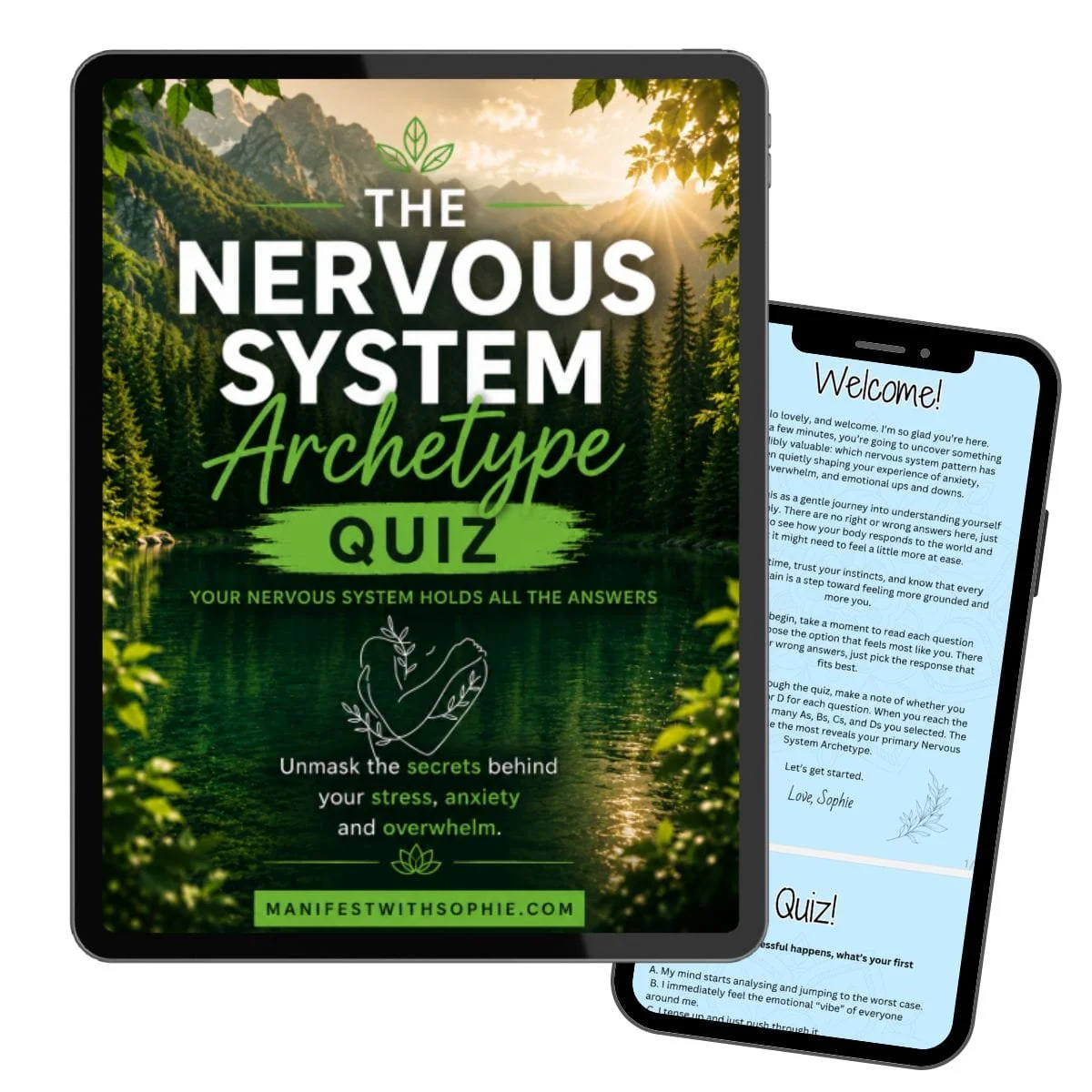
If rejection, overwhelm or stress regularly sends you into overthinking, people-pleasing, emotional overload or shutdown, my Nervous System Archetype Quizcan help you understand the pattern your system tends to fall into and what that response may be trying to do for you.
Why Being Around People Can Feel So Irritating When You Are Tired
Socialising requires more nervous system capacity than people often realise.
Even around people you like, your brain is processing facial expressions, tone of voice, conversation, movement, noise and social expectations. You are listening, responding, deciding what to say and staying engaged.
When your internal capacity is already low, all of that can feel like extra incoming information your system has to manage.
This is why feeling overwhelmed and wanting to be alone can go hand in hand.
Solitude removes input. Nobody needs an answer. Nobody is making noise beside you. Nobody is expecting conversation or a response. Your environment becomes more predictable and your system gets a chance to reduce the amount it has to process.
That can create a powerful urge to withdraw.
You might even find yourself getting irritated with people you genuinely love. When your nervous system is already overloaded, conversation, questions, noise and simply having someone around can feel like more input than you have the energy to deal with.
The irritation does not necessarily mean there is anything wrong with the relationship. It can simply be a sign that your capacity is already stretched.
Wanting to Be Alone Versus Being an Introvert
Enjoying time alone and feeling like you need to escape from everybody can look similar, but the experience underneath them can be very different.
Introversion usually describes where somebody naturally prefers to get their energy and how much social stimulation feels enjoyable. Nervous system overload tends to feel more urgent.
You might think, “I cannot deal with anyone right now.” Messages pile up because replying feels like another task. Even enjoyable plans can feel unbearable when the time arrives.
The important clue is how much capacity you feel you have.
When you feel calmer and more rested, connection may feel enjoyable again. That shift can suggest that the urge to isolate is partly connected to overload rather than simply a stable preference for solitude.
What to Do When You Feel Irritable, Tired and Want to Be Alone
When your cup already feels full, starting with a huge self-care routine can feel like another demand. Simple body-based practices can be easier because they give your nervous system something concrete to do.
1. Try Somatic Shaking
If you are feeling irritable, exhausted and like you cannot deal with anyone, somatic shaking can be a good place to start because it gives some of that built-up physical stress and activation an outlet.
Why Shaking Can Help
Think back to the cup analogy. When your nervous system has been under stress for a long time, your cup is already close to overflowing.
Shaking your body is one simple way of helping release some of that accumulated tension, creating a little more space before the next conversation, noise or demand tips you over the edge.
Think About How Animals Do It
Stand somewhere comfortable and gently shake out your hands, arms, shoulders and legs. You can bounce softly through your knees, loosen your jaw and let the movement stay messy.
Animals naturally do something similar after stressful or highly stimulating experiences. You may have seen a dog shake its whole body after a fright, an intense interaction or a burst of excitement. That physical movement helps the body transition out of that heightened state.
For us, intentional shaking can also help shift some of the physical tension that comes with stress while bringing your attention out of repetitive thoughts and back into your body.
How to Try It
Try it for 30 to 60 seconds and notice how you feel afterwards. You may feel slightly looser, calmer or simply less full of that restless, irritated energy.
It is also a particularly useful place to start when you feel too tired and irritable to do something that requires concentration, such as a longer meditation or breathing exercise. You are simply giving your body a way to move some of that pressure out.
2. Use Movement to Help Your Body Process Stress
Movement can be especially helpful when you feel tired, irritable and desperate to be alone because stress is experienced physically as well as mentally.
When your nervous system has been activated for a long time, your body may be carrying extra tension and arousal.
Your muscles can feel tight, your mind can feel restless and your whole system can feel like it has nowhere for that energy to go. Gentle or enjoyable movement gives your body an outlet for some of that activation and can help it gradually shift towards a calmer state.
Walking is one of the simplest ways to do this. The repetitive movement, change of scenery and steady rhythm can help reduce some of the physical and mental pressure that has been building throughout the day.
Think of it as another way of making a hole in that overflowing cup. Instead of stress continuing to pile up until a tiny noise, question or conversation makes you snap, regular movement can help create more space in your system.
Choose Movement You Actually Enjoy
The type of movement matters too.
Choose something you genuinely enjoy, whether that is walking, dancing around your house, swimming, lifting weights, cycling, stretching or anything else that feels good to you.
Enjoyment helps because the aim is to give your nervous system an experience that feels positive and manageable.
Forcing yourself through exercise you hate can easily feel like another obligation when you are already exhausted and overloaded. Movement you actually look forward to is much more likely to help you feel energised, calmer and more connected to your body.
Even a Little Can Help
Even ten or fifteen minutes can make a difference. You are giving your body a chance to move through some of that accumulated stress before your cup reaches the point where everything and everyone starts to feel like too much.
3. Try EFT Tapping
EFT, or Emotional Freedom Technique, is another practice you can use to help bring down some of the stress and emotional intensity that has built up in your system.
How EFT Works
It involves gently tapping on specific points on the face and upper body while acknowledging what you are feeling. You might tap while saying things like, “I feel completely overloaded,” “I am so tired and irritated,” or “everything feels like too much right now.”
This is particularly useful when your cup already feels full because you are giving your body a way to work with the stress rather than simply holding onto it.
The repetitive tapping can help calm physiological arousal, while putting words to what you are experiencing allows you to acknowledge and process the emotion instead of pushing it down.
Think of it as another small hole in the cup. Each time you use EFT to reduce some of that accumulated stress, you create a little more capacity before everyday things start to feel unbearable.
When to Use It
You can tap for just a few minutes when you notice yourself becoming increasingly irritated, overwhelmed or desperate to be alone. You may find that the emotion feels less intense afterwards and that your body feels a little calmer and less overloaded.
You can also use EFT regularly rather than waiting until your cup is already overflowing. Over time, having ways to release and regulate stress as it builds can help stop you from reaching that point where every conversation, sound or small demand feels like one thing too many.
You Can Also Use Positive Affirmations
You can also ‘tap in’ positive affirmations OR just focus on the feeling of release while tapping.
The Goal Is More Capacity and Greater Flexibility
Regulation means helping your nervous system move through different states with more flexibility. Stress, irritation, tiredness and overwhelm will still happen. Your system gains more ability to activate when life demands it and gradually come back down again.
That flexibility gives you more room before the cup reaches the top.
Over time, regular regulation practices can help you notice stress earlier and respond before everything feels unbearable.
You may still want time alone, but the urge can feel more like a choice and less like your only way to cope.
You may also find that patience starts returning. Conversations feel easier, small noises bother you less and social plans require less effort. Rest can feel more restorative as background tension eases.
If You Keep Wondering Why You Feel Irritated by Everyone
The question “why am I so irritable and want to be alone?” can sometimes be your body’s way of telling you that your available capacity is low.
Instead of judging the irritation, get curious about how full your cup has become.
Have you been sleeping well? Have you had much quiet time? Have you been rushing, overthinking, people-pleasing or holding tension in your body? Have you been dealing with uncertainty or emotional stress?
Then choose one small way to create a hole in the cup.
Shake for a minute. Take a walk. Tap for a few minutes. Move your body in a way that feels good.
Release pressure little by little. Every bit of space you create gives your system more capacity for life, connection and the version of you that has enough energy to enjoy both.
If you want to understand the stress response your nervous system tends to fall into, take my Nervous System Archetype Quiz. It can help you recognise whether you lean towards overthinking, emotional overwhelm, high-functioning freeze or shutdown, and give you a clearer starting point.
If your tiredness or irritability feels severe, sudden or persistent, speaking with a healthcare professional can also help you explore other possible causes.
