
How to Stop Overthinking at Night, Make Sleep Easy, Calm and Blissful
You can feel exhausted all evening, climb into bed expecting to fall asleep instantly, then find yourself wide awake.
Your brain starts replaying conversations, planning tomorrow and showing you unwanted mental films about everything that could go wrong. You want to sleep, but it feels as though your brain has no off switch.
Most advice focuses on controlling your thoughts through positive thinking, counting backwards, distraction or visualisation.
Those ideas struggle when your nervous system still believes something needs your attention.
Your brain overthinks to create safety. It replays, predicts and analyses because it believes enough thinking will produce certainty.
If overthinking affects you during the day too, my full guide on how to stop overthinking explains why these mental loops happen and what you can do to break them.
While your body feels tense or unsettled, your mind keeps searching for a solution.
This is why the most effective approach starts with the nervous system.
Calm the nervous system, and the mind receives the message that it can stop scanning, stop solving and begin settling into sleep.
You will learn why overthinking gets louder at night and how a three-step nervous system reset can quiet your mind and make sleep easier.
Your overthinking pattern reveals how your nervous system responds to stress.
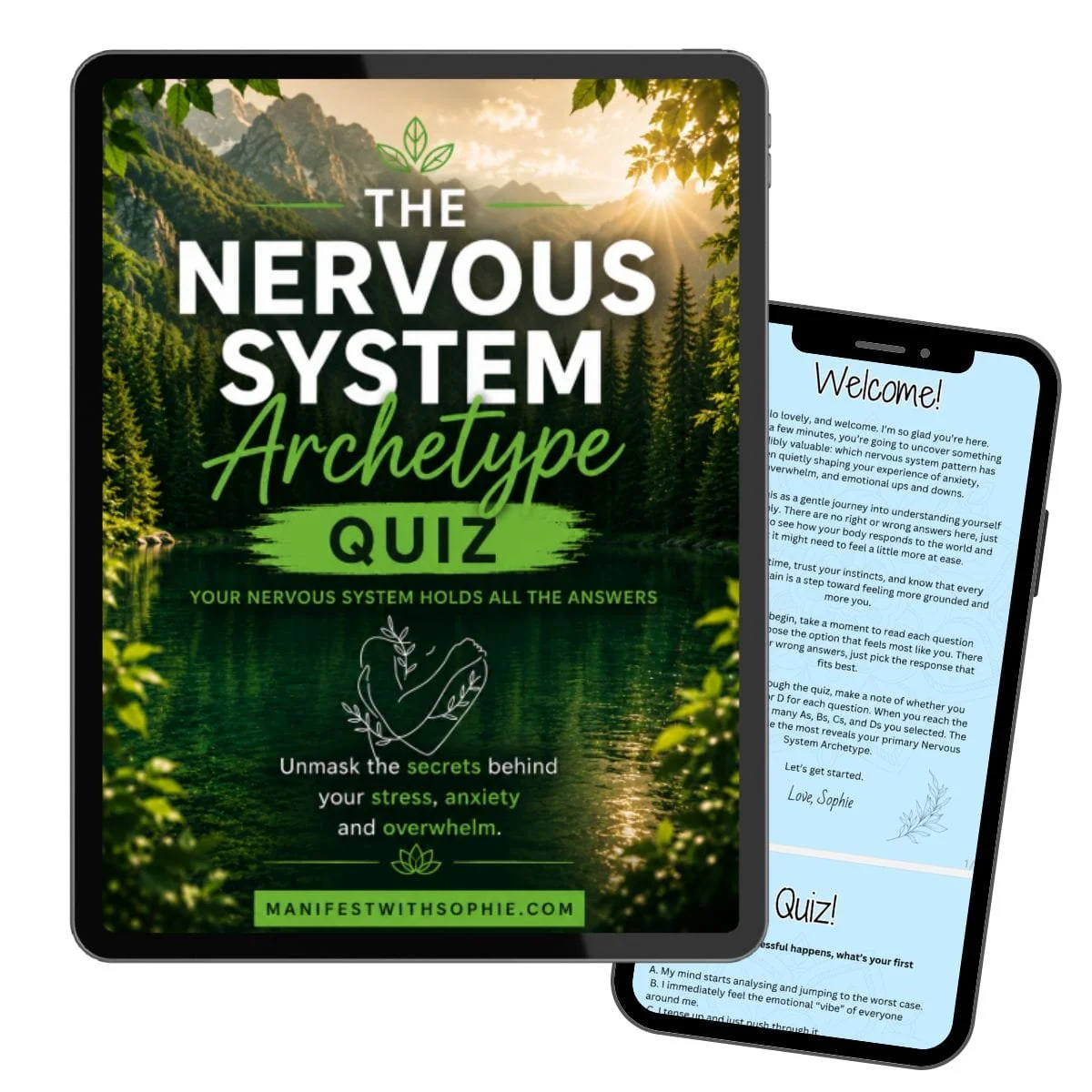
Take the free Nervous System Archetype Quiz to discover your pattern and learn what your system needs to feel calmer.
Why Do I Overthink So Much at Night?
Nighttime removes the distractions that kept your mind occupied during the day.
After hours of work, messages, tasks and responsibilities, quiet gives pushed-aside thoughts and feelings space to surface.
Your brain then treats anything unresolved as a problem that needs an answer.
It may replay a conversation to check whether somebody is upset, rehearse tomorrow to prevent mistakes or repeat a task so you remember it.
Your brain believes more thinking creates more safety.
The “threat” can be an awkward interaction, unfinished task, relationship uncertainty or accumulated stress.
You know you are safe in bed, but your nervous system still feels the tension and keeps your brain online.
Tiredness intensifies everything. A manageable afternoon concern can feel enormous at midnight, especially once you worry about losing sleep.
The solution is to show your body that the day has ended, the important things have been contained and it can stop standing guard.
The Overthinking and Sleep Cycle
Nighttime overthinking often follows the same frustrating pattern:
You get into bed feeling tired.
Your brain starts replaying conversations, listing tasks and creating mental movies about the future.
You try to force your mind to stop.
The thoughts persist, so frustration sets in.
You check the time and calculate how much sleep remains.
You worry about how exhausted you will feel tomorrow.
Your nervous system senses more urgency, making your body even more alert.
It feels as though your brain has taken control of the remote and started playing films you never agreed to watch.
The harder you fight the thoughts, the more important they seem. Sleep becomes something you monitor and try to perform correctly, which creates even more pressure.
To break the cycle, you need to remove the two things keeping it alive:
Your brain’s fear that it must remember or solve everything
Your body’s belief that it still needs to remain alert
Create a Bedtime Environment That Calms Your Nervous System
First, create an environment that tells your body the demanding part of the day has ended.
Change into soft clothes, dim the lights, use a relaxing scent and make your bed feel inviting. Add a caffeine-free drink, soft music, brown noise or rain sounds if they soothe you.
Warmth, softness, gentle lighting and familiar sounds tell your nervous system that nothing is being demanded from you.
Your surroundings begin helping you move from:
I still need to think, respond and prepare
to:
The day is complete. I am comfortable. I can begin letting go.
Once the scene feels soothing, use the three steps below to contain the thoughts, release the restless energy and guide your body towards sleep.
How to Stop Overthinking at Night With a Three-Step Nervous System Reset
This routine takes around 10 to 15 minutes. Each step has a clear purpose:
Your brain receives proof that nothing important will be forgotten.
Your body releases the activation keeping it alert.
Your breathing and muscles guide the nervous system further into rest.
Step 1: Get the Thoughts Out of Your Head and Onto Paper
Start by writing down the main thoughts circling your mind.
This is a quick brain dump, rather than a journaling session. The goal is to move information from your brain onto paper.
Write down:
The main thoughts looping in your mind
Anything you need to do or remember tomorrow
Conversations or situations your brain keeps returning to
Worries you can look at again during daylight
You can use three short headings:
What is looping in my mind?
What do I need to remember tomorrow?
What can wait until daylight?
Keep it brief and messy. One line per thought is enough.
Your brain repeats information when it fears forgetting it. Repetition is currently how it holds onto the email, appointment or task.
Writing it down creates physical proof. Your brain can effectively say:
“Okay, we have it. It is written down. We can look at it tomorrow.”
The same applies to worries. Writing, “I am worried she seemed annoyed with me,” acknowledges the concern so you can revisit it when rested. Write it down, let if go until tomorrow.
Step 2: Move the Restless Energy Out of Your Body
Overthinking rarely stays inside the head. You may also notice a clenched jaw, raised shoulders, a tight stomach, restless legs or a wired feeling running through your body.
That is physical activation.
Moving directly from high activation to a relaxed sleepy state is difficult. Let your body move through the energy first.
You can use somatic shaking, EFT tapping or both.
Somatic shaking
Stand up and shake your body in whatever way feels good. Shake out your hands and arms, loosen your shoulders, shake your legs, wiggle your hips or gently bounce.
Jump lightly, sway, stretch or sigh. There is no correct choreography. You are giving your body a route out of its braced state.
Deeper breaths, yawning, heavier limbs or less agitation show that your body is settling.
EFT tapping
Tap gently through the points around your face and upper body while saying something simple such as:
“My mind has been trying to solve everything, and I am allowing my body to release the day now.”
Or:
“Everything important has been written down. I can return to it tomorrow.”
The rhythmic tapping provides steady sensory input while acknowledging your experience.
Both practices also support nervous system regulation beyond bedtime. Using them regularly helps release stress before it accumulates, making sleep easier over time.
Step 3: Let Your Breath Finish What the Movement Started
Deep breathing may sound boring. I completely understand why you may feel tempted to skim this part.
The timing changes the experience.
Slow breathing can feel irritating while your mind is overloaded and your body is buzzing. Now the thoughts are recorded and some restless energy has moved, so breathing slowly feels more natural.
Get comfortable and breathe gently for a few minutes.
Inhale slowly through your nose, allowing your stomach and ribs to expand. Exhale gradually, making it slightly longer than the inhale.
As you breathe, soften one area of your body at a time.
Relax your forehead. Unclench your jaw. Let your tongue rest. Drop your shoulders. Release your hands. Allow your stomach to expand. Feel your legs growing heavier against the bed.
A slower exhale reduces alertness, while relaxed muscles show your nervous system that action is no longer required.
A few pleasant minutes are enough.
The thoughts have been contained. The energy has moved. It is time to rest.
When another thought appears, ask whether it needs writing down or whether another minute of tapping, shaking or breathing would feel good.
The aim is a mind that no longer treats every thought like an emergency.
How This Routine Makes Sleep Easier Over Time
Repeating this routine teaches your body a new association with bedtime.
Instead of bed meaning time to replay, worry and prepare, it begins to mean:
The day is complete
My thoughts have somewhere to go
My body can release tension
Nothing is required from me
Rest is beginning
The environment creates sensory safety, writing releases your brain from remembering, movement discharges activation and slower breathing guides you towards rest.
Each part communicates the same message:
There is no immediate threat and no problem that needs solving tonight.
How the Nervous System Keeps Your Body Awake
This matters because your nervous system controls many of the automatic processes happening throughout your body.
When it still senses a threat, it keeps your whole system prepared for action. Your breathing may stay quicker and shallower, your heart rate can remain raised, your muscles stay slightly braced and your brain remains alert and ready to respond.
You may be physically lying in bed, but internally, your body is still behaving as though it needs to stay awake and deal with something.
Think of nighttime overthinking as the mental and physical backlog of your day. Every swallowed feeling, unfinished decision and stressful interaction adds another open tab.
Bedtime removes the distractions, so your brain finally tries to process them all at once.
Regular regulation closes some of those tabs before you reach bed.
A two-minute shake after work, a short tapping round after an upsetting conversation or writing down a task as soon as you remember it can make a real difference.
You arrive at bedtime with less activation to release and fewer thoughts demanding your attention.
During the day, write tasks down, acknowledge emotions and use tapping, movement or breathing after stress. This keeps the full weight of the day from landing at bedtime.
If you regularly replay conversations at night, read [Why Do I Replay Every Conversation in My Mind?]
A Calming Bedtime Script for an Overactive Mind
Read this slowly, repeat it in your head or record yourself saying it:
My brain has been trying to protect me by remembering, replaying and searching for answers.
Everything important has been written down, and I can return to it tomorrow. There is nothing I need to solve in this moment.
I am allowing the energy of the day to leave my body. My jaw can soften. My shoulders can drop. My breathing can slow.
Right now, my only responsibility is to become comfortable and rest. Sleep can arrive in its own time.
Calm the Nervous System, Calm the Mind
Your thoughts are responding to a nervous system that still believes something needs attention.
When you create a soothing environment, place looping thoughts onto paper, move restless energy through your body and slow your breathing, your nervous system receives a different message.
The day is over.
Nothing important will be forgotten.
There is no problem to solve right now.
Your body can soften.
Sleep becomes easier when your brain no longer feels responsible for guarding, preparing and analysing through the night.
With repetition, bedtime becomes a calm transition out of the day. Thoughts lose urgency, your body grows heavier and your breathing slows.
Sleep starts to feel natural, peaceful and blissfully uneventful.
Your overthinking pattern holds clues about what your nervous system needs.
Take the free Nervous System Archetype Quiz to discover how your mind and body respond to stress and receive guidance for your specific pattern.
