
How to Be Happy Again: The Missing Piece Most People Overlook
When you wonder "how to be happy again" it often follows months or even years of feeling flat, numb, down, or disconnected.
Maybe nothing is dramatically wrong. You still get up, go to work, look after your responsibilities, spend time with people you care about, and keep life moving forward.
Yet something doesn't feel right.
You can't remember the last time you felt real joy, genuine happiness, or that excitement and motivation for life that used to come naturally.
Things that used to bring you joy do not seem to have the same effect anymore. You keep waiting for your spark to come back, for your motivation to return, for life to feel lighter and easier again, but it never seems to arrive.
Perhaps you've even found yourself thinking:
"I just want to feel like myself again."
If you've been searching for how to be happy again, there is a good chance this post is exactly what you've been looking for.
Why You Don't Feel Happy Anymore
Before we go any further, I want to help you understand why you're feeling this way.
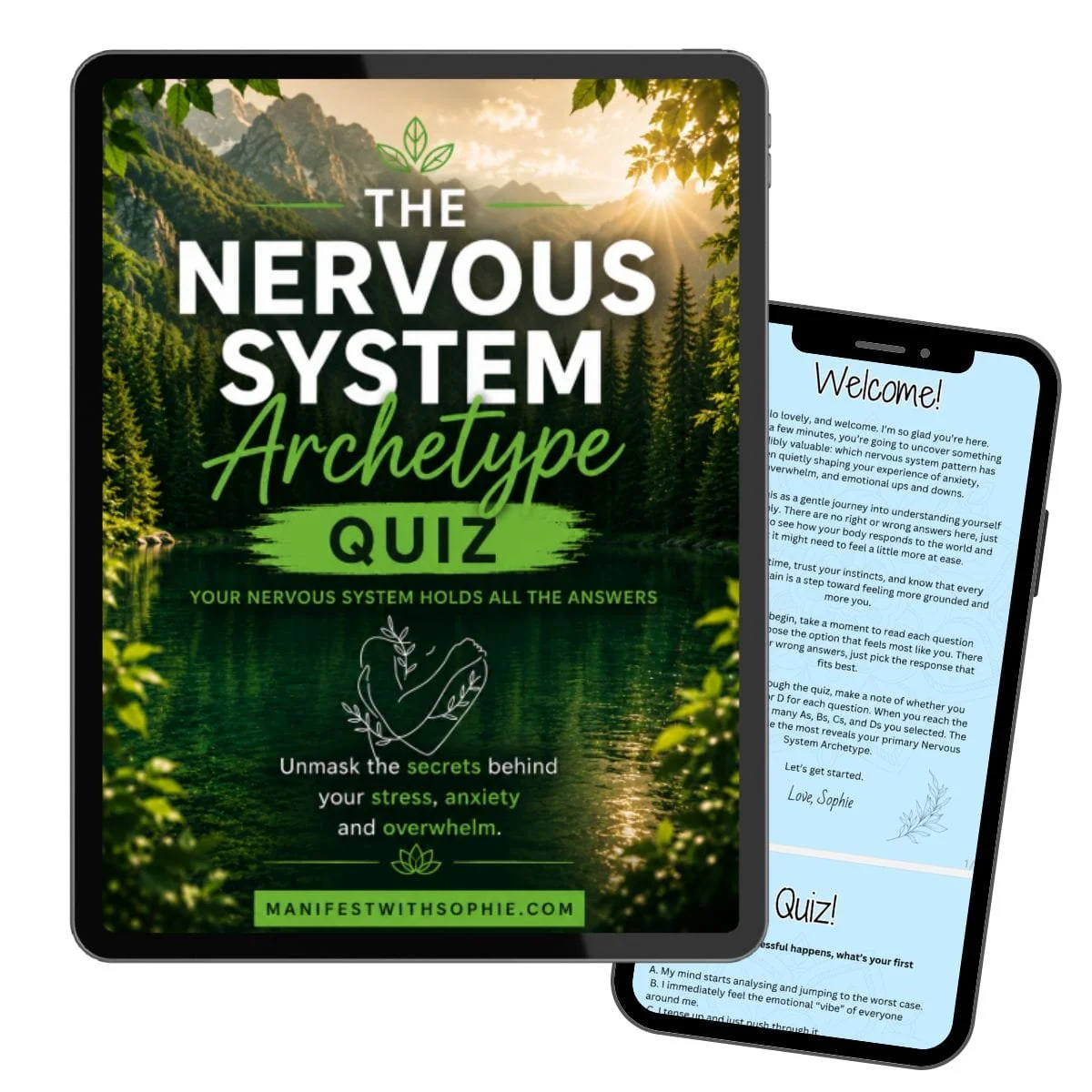
My free Nervous System Archetype Quiz helps you identify the specific nervous system pattern that's keeping you stuck, whether that's chronic overthinking, emotional overwhelm, high-functioning anxiety, or feeling completely shut down.
In less than two minutes you'll discover your nervous system archetype, understand how it may be affecting your happiness, confidence, energy, and mental health, and get personalised guidance to help you feel calmer, lighter, and more like yourself again.
Why Traditional Happiness Advice Doesn't Work For Everyone
Most online articles will tell you to think positively, practice gratitude, exercise more, improve your sleep, and eat healthier foods.
While those things absolutely matter, they can feel almost impossible to stick with when you're already struggling.
When you feel emotionally exhausted, disconnected, overwhelmed, or stuck, forcing yourself to journal every morning, hit the gym five times a week, and constantly look for the positives can feel like another thing you're failing at.
That's because those habits are often built on a foundation that isn't there yet.
The missing piece most people overlook is their nervous system.
When your nervous system spends long periods dealing with stress, anxiety, overwhelm, overthinking, people pleasing, or emotional exhaustion, it becomes much harder to access feelings like joy, excitement, connection, peace, and motivation.
In other words, the problem isn't that you're bad at being happy.
Your mind and body may have become so focused on getting through the day that they no longer feel safe enough to fully enjoy it.
Why Am I Suddenly So Unhappy?
Let's start by understanding why you feel so unhappy in the first place.
Many people assume they feel this way because something is wrong with them, their life, or their mindset. If you've ever found yourself wondering, "Why am I not happy?"despite having plenty of things to be grateful for, you're far from alone. In reality, there is often a much simpler explanation.
Stress builds.
Imagine your mind and body as a cup.
Every stressful experience adds a little more liquid to that cup. Major life events like relationship problems, financial worries, health concerns, family issues, or work stress can add a lot.
But so can smaller things that most people barely think about.
Things like:
Constant notifications and messages
A long to-do list that never seems to get shorter
Feeling responsible for everyone else's happiness
Spending hours scrolling social media
Running late
Sitting in traffic
Feeling guilty for resting
Trying to keep everyone happy
Constant pressure to be productive
On their own, these things might seem small. The problem is that stress sits on top of stress.
Without healthy ways to release it, that cup gradually fills up over weeks, months, and sometimes years.
Eventually it starts to overflow.
That's when you begin feeling overwhelmed, anxious, emotionally exhausted, irritable, flat, disconnected, or completely drained.
One of your nervous system's built-in safety mechanisms for dealing with this overload is something called a shutdown response.
When your mind and body decide that too much energy is being used simply trying to cope, they begin conserving resources by reducing access to things that feel non-essential for immediate survival.
Things like joy.
Excitement.
Motivation.
Creativity.
Connection.
This is why so many people reach a point where they find themselves wondering how to be happy again.
The happiness hasn't necessarily disappeared.
Your nervous system has simply become far more focused on helping you get through the day than helping you enjoy it.
The Missing Happiness Piece Most People Overlook
This is where most happiness advice gets things backwards.
People are often told that if they want to be happier, they need to think more positively, focus on the good things in life, and simply choose a better mindset.
While there is some truth in that, it completely overlooks something important. Your brain cannot prioritise happiness when it believes there are more important things to focus on.
Think about it for a moment.
If your house was on fire, you wouldn't care about feeling inspired, creative, playful, or motivated. Your entire focus would be on dealing with the threat.
How a Dysregulated Nervous System Affects Happiness
Now, most people aren't walking around dealing with life-threatening situations every day. The problem is that a dysregulated nervous system often struggles to tell the difference between genuine danger and everyday stress.
To your nervous system, a difficult conversation, financial pressure, work stress, relationship problems, criticism, uncertainty, or even scrolling on your phone for hours can all feel like threats that require your attention.
As a result, your brain becomes focused on protection.
This is why you can go on holiday and still feel stressed. It's why you can finally get through a difficult week and still feel flat. It's why you can have things to look forward to and still struggle to feel excited about them. Your brain is still busy scanning for the next problem to solve.
This is where nervous system regulation becomes so powerful.
How Nervous System Regulation Helps You Feel Happy Again
Nervous system regulation helps teach your mind and body that the danger has passed.
Once your nervous system truly believes it is safe again, it can finally switch off the metaphorical alarms, stop pouring so much energy into scanning for danger, and get some much-needed rest and recovery.
When your mind and body are no longer constantly on high alert, they have more energy available for the things that make life feel enjoyable again.
Things like happiness, joy, connection, excitement, creativity, motivation, and hope.
These feelings often return naturally because your nervous system is no longer directing all of its resources towards protection and survival.
This is why so many people find that as they regulate their nervous system, they begin feeling lighter, calmer, more positive, and more like themselves again, without forcing gratitude, positive thinking, or constant self-improvement.
7 Signs Your Nervous System Could Be Blocking Happiness
A dysregulated nervous system affects far more than your stress levels. It can impact every area of your life. If several of the signs below sound familiar, there is a good chance your nervous system is playing a bigger role than you realise.
1. You Can't Stop Overthinking
You replay conversations, analyse people's reactions, and worry about things that haven't even happened yet. Your mind always seems to find something to focus on.
2. You Never Truly Switch Off
Even when you have time to relax, your brain keeps running through your to-do list, responsibilities, and things you need to remember.
3. You're Tired All The Time
You get through the day, but everything feels harder work than it should. Even small tasks can feel surprisingly draining.
4. You Have Ongoing Physical Symptoms
Your nervous system doesn't just affect your thoughts and emotions. It can also affect your body. Headaches, digestive issues, muscle tension, poor sleep, skin flare-ups, fatigue, and feeling run down can all be linked to chronic stress and nervous system dysregulation.
5. You're Always Waiting For Something To Go Wrong
Even when things are going well, part of you stays on alert. You solve one problem and your mind quickly moves on to the next.
6. Making Plans Feels Like Hard Work
You genuinely like your friends and family, but the thought of socialising can sometimes feel exhausting. You find yourself cancelling plans, avoiding messages, or wishing you could stay home and do nothing instead.
7. You Feel Like You're Just Getting Through The Day
Instead of enjoying life, most of your energy goes into coping with it. You get things done, fulfil your responsibilities, and keep moving forward, but it feels like you're surviving rather than truly living.
How to Be Happy Again
If you've made it this far, you've probably realised that happiness isn't something you can force.
When your nervous system has been stuck in survival mode for months or years, happiness is often a by-product of healing rather than something you chase directly.
The goal isn't to force yourself to feel happy.
The goal is to create the conditions that allow happiness to return naturally.
1. Regulate Your Nervous System Daily
If there is one thing I recommend you take away from this article, it's this.
Make nervous system regulation part of your daily routine.
The goal is to send repeated signals of safety to your mind and body, helping your nervous system gradually move out of survival mode and into a state where rest, recovery, happiness, and enjoyment become easier to access.
Some of the most effective nervous system regulation tools include:
Slow deep breathing
EFT tapping
Meditation
Somatic shaking
Grounding exercises
Cold water exposure
Yoga
Spending time in nature
You don't need to do all of them.
Pick one or two that feel manageable and do them consistently.
Consistency matters far more than perfection. Five minutes every day will usually have a much bigger impact than doing an hour once a week and then forgetting about it.
The more often you signal safety to your nervous system, the easier it becomes for your mind and body to let go of protection mode and move towards healing, recovery, and emotional wellbeing.
2. Spend Less Time Consuming and More Time Experiencing
Most people underestimate how much energy constant consumption requires.
Scrolling social media, reading the news, watching videos, replying to messages, checking emails, and jumping between apps all day long keeps your brain processing information.
Even though it doesn't feel physically demanding, your nervous system is still working.
Many people spend hours consuming and very little time actually experiencing life.
Try swapping some of that consumption for real experiences.
Sit in the garden.
Walk the dog.
Watch the sunset.
Meet a friend.
Listen to music without doing anything else.
Read a book
Give your brain a break from constantly processing information and you'll often notice your mind feels calmer as a result.
3. Allow Yourself To Rest
If your nervous system has been running on high alert for a long time, your body may need time to recover.
This is something many people resist.
They finally start regulating their nervous system and then become frustrated because they feel tired. But if your body has been stuck in stress for a long time, it needs time to rest and recover, allow it that time.
In reality, tiredness is often a sign that your body is beginning to feel safe enough to rest.
If you're exhausted, sleep.
If you're overwhelmed, take a break.
If you need a quiet evening, say no to plans.
Put your phone down earlier.
Read for 30 minutes before bed.
Meditate.
Listen to calming music.
Give your mind and body opportunities to recover.
This isn't forever. It's simply a period of healing.
Your body has been working hard for a long time, and recovery deserves just as much respect as productivity.
4. Move Your Body In Ways That Feel Good
This isn't about exercise, it's about using movement as a tool to help regulate your nervous system.
Movement can be one of the most effective ways to regulate your nervous system because it helps release stored stress and tension from the body.
One simple example is somatic shaking.
Even two or three minutes of gentle shaking can help discharge stress energy that your body has been holding onto.
You can also dance around your kitchen, stretch on the living room floor, go for a walk, or simply move your body in ways that feel enjoyable.
Your body is often very good at telling you what it needs.
Sometimes that looks like dancing.
Sometimes it looks like stretching.
Sometimes it looks like lying on the floor with your legs up the wall.
It doesn't need to look good. It doesn't need to follow a programme.
Just move.
5. Take The Pressure Off Yourself To Be Happy
This may sound strange in an article about how to be happy again, but constantly monitoring your happiness can create even more pressure.
You start asking yourself:
"Do I feel better yet?"
"Why am I still feeling like this?"
"Shouldn't I be happier by now?"
Healing rarely works like that.
Instead of focusing on happiness itself, focus on supporting your nervous system.
Use the tools in this article.
Learn your nervous system archetype by taking the quiz.
Give your mind and body what they need.
As your nervous system begins to feel safer, happier emotions often start returning naturally.
It's biology.
Your nervous system was designed to move back towards balance, recovery, connection, and wellbeing when it feels safe enough to do so.
How to Be Happy With Yourself
Regulating your nervous system is one of the most powerful things you can do for your mental and emotional wellbeing. But once your nervous system begins to feel safer, another challenge often becomes much easier to see.
The way you speak to yourself.
Learning how to be happy with yourself becomes incredibly difficult when you're constantly criticising yourself.
For many people, the real challenge is the constant pressure they put on themselves every day.
You compare yourself to other people.
You focus on your flaws rather than your strengths.
You tell yourself that you should be further ahead by now, earning more, achieving more, doing more, or feeling better than you currently do.
Over time, that self-criticism can become so familiar that you barely notice it's happening.
The problem is that it's incredibly difficult to feel happy when your inner voice is constantly pointing out everything that's missing.
If this sounds familiar, try paying attention to how you speak to yourself throughout the day.
Would you speak to a friend the same way?
Would you constantly remind them of their mistakes, compare them to other people, and tell them they aren't doing enough?
Probably not.
The goal isn't to become arrogant, perfect, or positive all the time.
It's to start treating yourself with the same patience, understanding, and compassion that you naturally give to other people.
Because the healthier your relationship with yourself becomes, the easier it is to feel happier within yourself too.
Happiness Often Returns Quietly
One of the biggest misconceptions about happiness is that it arrives as a dramatic breakthrough.
For most people, it doesn't.
Happiness often returns so gradually that you barely notice it at first.
You realise you've gone a whole afternoon without overthinking.
You find yourself laughing at something and genuinely meaning it.
You start looking forward to seeing someone.
You catch yourself singing along to a song in the car.
You notice that things that used to feel overwhelming don't affect you quite as much anymore.
These moments might seem small, but they matter.
They're often signs that your nervous system is beginning to feel safer, calmer, and less focused on simply getting through the day.
So if you're wondering how to be happy again, try taking the pressure off yourself to feel dramatically different overnight.
Support your nervous system.
Give your mind and body time to recover.
The changes often happen gradually, but they do happen.
And one day you may realise that you're smiling more, worrying less, laughing more often, and feeling more like yourself again.
Ready To Feel Happy Again?
If you've read this article and found yourself thinking:
"That's me."
"I do that."
"I feel like that all the time."
Then there is a good chance your nervous system is playing a much bigger role in your happiness than you realise.
The good news is that different nervous system patterns respond best to different approaches.
That's exactly why I created the free Nervous System Archetype Quiz.
In less than two minutes, you'll discover your unique nervous system archetype, understand how it may be affecting your happiness, energy, confidence, emotions, relationships, and daily life, and learn where to focus your efforts first.
Because once you understand what's actually keeping you stuck, everything starts to make a lot more sense.
If you're ready to stop guessing and finally understand what your mind and body need to feel calmer, happier, and more like yourself again, take the free quiz below.
