
50 Scary Signs Of A Dysregulated Nervous System You Need to Know (+ What to Do)
Some of the things you have always thought were just part of your personality might not actually be you at all.
Maybe you have always called yourself an overthinker. Maybe you are “just someone who can’t relax,” you get overwhelmed ridiculously easily, you shut down when there is too much going on or you are constantly trying to keep everyone around you happy.
When you have reacted this way for years, it is very easy to assume, well, that is just who I am.
But some of these patterns can actually be signs that your nervous system has got used to protecting you.
Your nervous system is designed to notice danger, help you survive it and then settle back down once you are safe again.
When it becomes dysregulated, it can struggle with that last part. It may react strongly to things that are not actually dangerous, stay in survival mode long after the threat has passed or shut everything down when life feels like too much.
And that can look very different from person to person.
You might go into fight or flight, where your body becomes activated and prepares you to fight a threat or escape from it.
You might go into freeze or shutdown, where everything seems to slow down because your system feels overwhelmed.
You might fall into a fawn response, where keeping other people happy and avoiding conflict starts to feel like the safest option.
Or you may notice dysregulation mostly through physical and sensory symptoms, like poor sleep, tension, digestive issues or constantly feeling overstimulated.
And sometimes you can move between all of them.
Free Nervous System Quiz
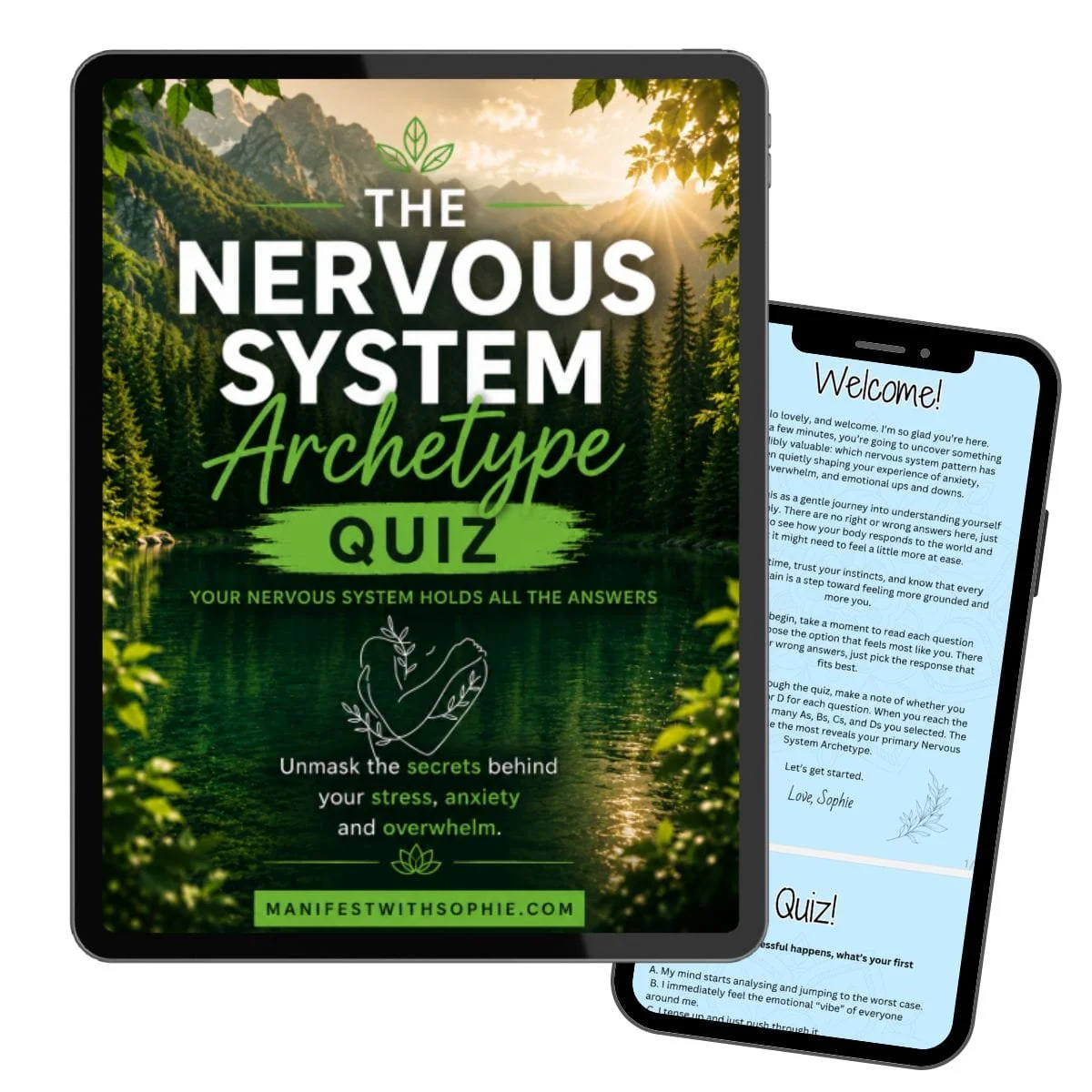
If you are already reading this and thinking, oh God… this sounds like me, take my free Nervous System Archetype Quiz.
Instead of trying to work out why you overthink, people-please, shut down or feel constantly overwhelmed, the quiz can help you uncover the protective pattern underneath it, and understand what your nervous system may actually be asking you for.
Below are 50 signs of a dysregulated nervous system, split into the four categories so they are easier to recognise.
You may see yourself in more than one, that is completely normal, but you will probably notice that one category contains far more of your familiar patterns than the others.
Fight / Flight Signs
Fight and flight are activated survival responses. Your nervous system senses danger and prepares you to either fight the threat or run far enough away to escape it.
To help you do that, your body releases adrenaline and other stress hormones, increasing things like heart rate, alertness and energy.
The problem is that modern “threats” are often arguments, emails, rejection or worries rather than something you physically need to fight or run from.
That extra activation has nowhere obvious to go, which can leave you feeling restless, tense, irritable, jumpy or constantly on edge.
You constantly feel on edge, even when nothing is obviously wrong
You find it genuinely difficult to relax
Small noises or movements make you jump
Your mind is constantly scanning for what might go wrong
You replay conversations long after they have ended
You overanalyse tiny changes in someone’s tone or behaviour
You immediately assume someone is upset with you
You catastrophise situations very quickly
Small problems can feel like huge emergencies
You become irritated or angry much faster than you want to
Conflict makes your whole body feel unsafe
You feel an intense urge to escape uncomfortable situations
Unexpected changes to plans can trigger a surprisingly strong reaction
You struggle to enjoy good moments because part of you is waiting for something to go wrong
If you recognise a lot of these signs, you may also want to look at these [warning signs you’re stuck in survival mode], because the two can overlap in everyday life.
Freeze / Shutdown Signs
If your nervous system senses that you cannot fight the danger and cannot escape it, it may move towards a freeze or shutdown response instead.
You can think of this loosely as the body trying to become still and conserve itself when action no longer feels possible, a bit like the survival instinct of “playing dead.”
In everyday life, this often shows up when you feel completely overwhelmed. Instead of becoming more activated, everything can seem to slow down or switch off, leaving you feeling numb, exhausted, disconnected, stuck or unable to make yourself do anything.
Your mind suddenly goes completely blank under pressure
You freeze when you need to speak up for yourself
You shut down emotionally when things become too much
You sometimes feel numb instead of upset
You feel disconnected from yourself or your surroundings
You withdraw from people when you become overwhelmed
You procrastinate on things you genuinely want to do
Even simple decisions can feel exhausting
A long to-do list overwhelms you before you have even started
You know what you need to do but cannot seem to make yourself begin
You struggle with brain fog or concentration when stressed
You feel exhausted after situations that did not seem physically demanding
You hold everything together for hours or days and then suddenly crash
Fawn / People-Pleasing Signs
The fawn response is another way your nervous system may try to keep you safe, particularly in relationships.
If conflict, rejection or somebody being upset with you has become associated with danger, your nervous system may react to disapproval as though it is a much bigger threat than it objectively is.
Instead of fighting, running or shutting down, your safest option can feel like keeping the other person happy.
That can lead to people-pleasing, avoiding conflict, monitoring other people’s moods, saying yes when you mean no and abandoning your own needs in an attempt to keep the relationship safe.
You people-please automatically, even when you do not want to
Saying “no” makes you feel guilty or anxious
You feel responsible for other people’s moods
You avoid disappointing people at your own expense
You change parts of yourself depending on who you are around
You apologise constantly, even when you have done nothing wrong
You need frequent reassurance that everything is okay
You practise conversations beforehand because you are scared of saying the wrong thing
You struggle to say what you really think during conflict
You agree to things and regret them afterwards
You monitor people’s faces, tone and body language to work out whether they are happy with you
Someone being quiet or distant can make you immediately question what you did wrong
Physical, Sensory & Everyday Signs
Nervous-system dysregulation can show up physically because your nervous system helps regulate far more than just your emotions.
It influences your heart rate, breathing, digestion, muscles, sleep, energy and how strongly your brain responds to sensory information.
If your body spends a lot of time preparing for danger or struggling to come back down afterwards, those systems can start to feel the effects too.
That is why ongoing stress can show up as things like muscle tension, poor sleep, digestive changes, shallow breathing, exhaustion or feeling unusually overwhelmed by noise, crowds and stimulation.
You struggle to fall asleep because your mind will not switch off
You wake during the night feeling alert or anxious
You often feel tired but wired
Your jaw, shoulders or muscles stay tense without you realising
Your heart races or pounds when you feel stressed or threatened
Your breathing becomes shallow or fast when you are overwhelmed
You feel shaky, sweaty, flushed or suddenly hot when anxious
Stress seems to go straight to your stomach
Noise, crowds, bright lights or too much stimulation overwhelm you easily
You stay constantly busy or productive because slowing down feels strangely uncomfortable
What to Do If You Recognise a Lot of These Signs
No matter which category you recognised yourself in most, the overall goal is the same: help your nervous system get better at recognising safety again.
That means having small regulation practices you do regularly, but it also means working with your nervous system in the actual moments when it gets triggered. The aim is not to stay calm 24/7 or never experience a stress response again.
Your nervous system is supposed to protect you when you need it. What you are working towards is being able to recognise, I am safe now, and come back down again instead of getting stuck in that response.
Practices such as slow breathing can influence autonomic activity and help reduce physiological arousal, particularly when they are practised regularly rather than saved only for moments of panic.
If You Go Into Fight or Flight
Imagine you get a message from your boss saying, “Can we have a quick chat later?”
Nothing bad has actually happened yet, but suddenly your stomach drops. Your heart is racing, you cannot concentrate and your mind has already decided you are about to be fired.
This is the moment to work with your body before trying to reason your way out of the fear.
Put both feet on the floor, look around the room and notice where you actually are. Take a few slow breaths with a longer, relaxed exhale.
If your body feels full of restless energy, get up and jump around, shake out your arms and legs for a few minutes. This expels the excess energy from your body.
Then come back to the facts: My boss asked to talk to me. That is all I actually know right now.
Your mind may immediately start attaching possibilities to that sentence: maybe I’ve done something wrong, maybe they’re unhappy with me, maybe something bad has happened.
But running through every possible explanation has no real benefit in that moment.
It does not give you more information or more control; it usually just gives your nervous system more frightening material to react to.
This is why the grounding and slow breathing matter.
Feeling your feet on the floor, looking around the room and slowing your exhale are not just distractions, they help bring your body out of that activated state and back towards safety.
When your body starts to settle, your thoughts are much less likely to keep spiralling because your brain is no longer receiving the same strong “something is wrong” signal from your body.
If You Go Into Freeze or Shutdown
Maybe you have ten things that need doing, the house is a mess and somebody has just asked you for something else.
Instead of getting started, you find yourself sitting on the sofa scrolling your phone, staring into space or thinking, I literally cannot do any of this.
Trying to bully yourself into tackling the entire list usually adds even more pressure.
Instead, bring yourself back into your body. Feel your feet against the floor. Look around and name a few things you can see, some you can hear, smell, taste and touch.
Then choose one ridiculously small action: put one plate in the sink, open the email you need to answer or stand up and put one item away.
You are not trying to fix your entire life in that moment. You are showing yourself, I can move. I have choices. I can do one thing at a time. Then celebrate yourself for doing that one thing. It’ll make the next thing easier.
Human freezing responses are recognised defensive responses to perceived threat, including social threat, rather than simply a lack of motivation.
If You Go Into Fawn or People-Pleasing
Imagine somebody you care about seems annoyed with you.
Your immediate instinct might be to apologise, explain yourself, agree with them, offer to fix everything or say yes to something you do not actually want to do.
Before responding, pause.
Take a slow breath and ask yourself:
What am I actually feeling?
What do I actually want?
Am I agreeing because I want to, or because I am frightened of how they will react if I don't?
If you need time, give yourself permission to say, “Let me think about that and get back to you.”
That tiny pause can be incredibly powerful. Instead of automatically abandoning your own needs to make somebody else comfortable, you are teaching yourself that another person's disappointment, irritation or disagreement does not automatically mean you are in danger.
You can care about how somebody feels without making their feelings your responsibility.
If It Shows Up Physically or Through Overstimulation
Maybe you are in a busy supermarket. There are bright lights, people everywhere, music playing, trolleys crashing into things and suddenly your shoulders are around your ears, your breathing is shallow and you feel like you need to get out now.
You do not have to prove that you can tolerate it by forcing yourself to stay until you are completely overwhelmed.
Reduce some of the input if you can. Step somewhere quieter for a minute, relax your jaw and shoulders, slow your breathing and bring your attention to something concrete around you, the feeling of your feet inside your shoes, the cool air on your skin or an object you can see in front of you.
Techniques that deliberately bring attention back to present sensory information are commonly used to help people feel more grounded when they become overwhelmed.
Teaching Your Nervous System Safety Happens in the Small Moments
Regulation does not need to mean doing an hour of breathwork every morning.
It can be taking a few slow breaths before answering the message that triggered you.
Going for a walk when your body feels full of restless energy. Taking one tiny action when you have frozen.
Pausing before automatically saying yes. Stepping away from stimulation when your body is telling you it has had enough.
Those moments add up.
Instead of repeatedly responding to discomfort as though something terrible is about to happen, you begin practising a different response: I can feel uncomfortable and still be safe. I can slow down. I can listen to myself. I do not have to react immediately.
And over time, that is the real goal, not becoming someone who never gets triggered, but becoming someone whose mind and body know how to find their way back to safety again.
If you recognised yourself in a lot of these signs, take my free Nervous System Archetype Quiz to discover the protective pattern your nervous system relies on most. Understanding how your system tries to keep you safe makes it much easier to start giving it what it actually needs instead.
