
7 Hidden Signs You're Overthinking Your Relationship
Your partner hasn't replied for a few hours, and despite knowing they're probably busy, you can't stop thinking about it.
You find yourself replaying your last conversation, wondering whether they're upset with you or wondering whether their feelings have changed.
If you've ever spiralled over a delayed text, a change in tone, or a partner seeming a little distant, you're definitely not alone.
Relationship overthinking is incredibly common, especially if you've struggled with anxiety, people-pleasing, rejection sensitivity, or relationship anxiety.
The problem is that overthinking rarely gives us the certainty we're looking for. Instead, it often creates more questions, more doubt, and can sometimes even end up pushing that person away.
Sometimes overthinking isn't really about the situation at all. When your nervous system is stuck on high alert, your brain starts scanning for signs of rejection, conflict, uncertainty, or emotional distance.
It thinks it's protecting you, but the more you analyse, the more things there are to worry about.
Many of these signs are also common symptoms of relationship anxiety, which is why overthinking in relationships can feel so difficult to switch off.
If you've ever wondered why some people can brush things off while your brain replays conversations, analyses texts, and gets stuck in anxious thoughts in relationships, your nervous system may be the missing piece.
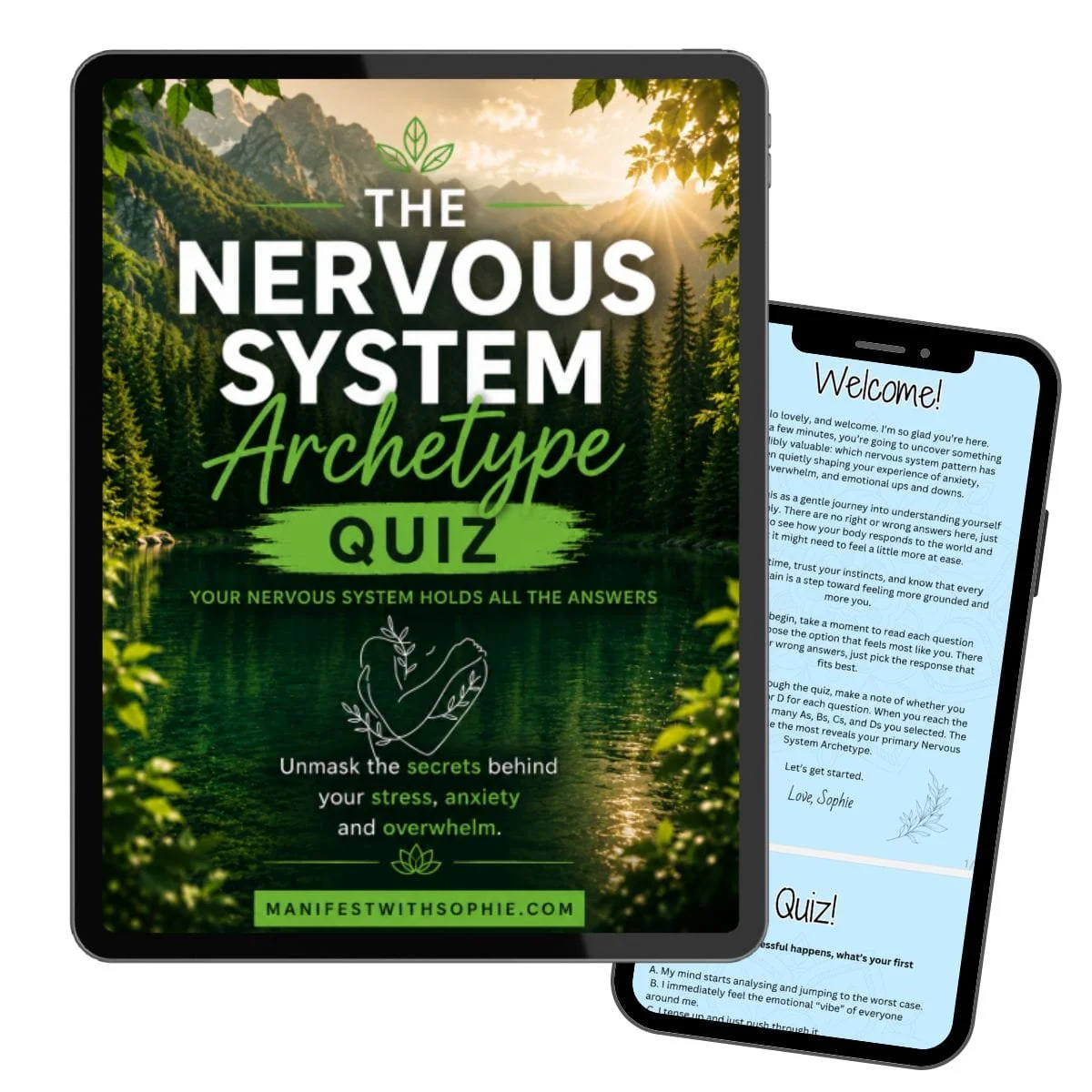
Take my free Nervous System Quiz to uncover what's really driving your overthinking and discover the tools that will help you feel calmer, more secure, and finally stop spiralling.
1. You Replay Conversations Long After They're Over
Relationship overthinking rarely starts with something obvious. More often, it's a tiny detail that gets stuck in your mind and refuses to leave.
Maybe your partner seemed slightly quieter than usual when they said goodbye. Perhaps they replied with "love you" instead of "I love you."
Maybe they yawned while you were talking, looked at their phone for a moment, or their tone sounded slightly different than normal.
You find yourself replaying the moment over and over. Did they sound annoyed? Were they bored? Have their feelings changed? Did I do something wrong?
The more you think about it, the more significant it starts to feel. What began as a tiny observation slowly grows into a much bigger concern, until it's difficult to focus on anything else.
This is one of the reasons relationship overthinking can feel so exhausting. Your nervous system is constantly scanning for signs that something is wrong.
Your brain starts treating small, everyday moments as potential evidence that there's a problem to solve.
Most of the time, there isn't. But because the thought keeps returning, it starts to feel important.
2. You Constantly Look For Hidden Meanings
A text message feels slightly shorter than usual and your mind tells you they're losing interest.
They take longer than normal to reply and your brain says they must be out with another woman.
They seem quieter than usual so you begin to overthink that they must have done something and are feeling guilty.
Meanwhile, they may have simply been stuck in a meeting, exhausted after a long day, distracted by something happening at work, or trying to process something completely unrelated to the relationship.
When your nervous system is already on high alert, it tends to focus on explanations that help you prepare for potential hurt, rejection, conflict, or abandonment rather than more simple explanations.
The more time you spend thinking about those possibilities, the more convincing they start to feel.
Before long, what started as a tiny observation can turn into hours of analysing, worrying, and trying to work out what's really going on, when in reality he may simply have had a long day at work.
3. You Need Constant Reassurance To Feel Secure
You ask if everything is okay and they tell you it is. You ask whether they're happy in the relationship and they reassure you they are.
Constantly needing reassurance is one of the most common relationship anxiety signs, especially when your nervous system doesn't feel safe.
When they tell you everything is fine, you feel better, but it doesn’t last, another worry appears.
Maybe they're only saying that because they don't want to upset you.
Maybe they didn't sound convincing enough.
Maybe they're hiding how they really feel.
Maybe they felt that way in the moment but today, they’ve changed their mind.
The reassurance helps temporarily, but it never seems to last. That's because reassurance can calm the symptom, but it doesn't address the nervous system state that's creating the fear in the first place.
Without consistent nervous system regulation, your need for reassurance will not end, in fact, it may get worse which unfortunately may even push away the person who you are trying to keep close.
4. You Struggle To Relax When They Seem Distant
Maybe they've had a stressful day at work. Maybe they're tired. Maybe they're distracted by something happening in their own life.
Whatever the reason, if they seem quieter than usual, less affectionate, or slightly different, you feel it almost immediately.
Instead of assuming they're having a normal human day, your brain starts searching for explanations.
You find yourself wondering whether you've done something wrong, whether they're upset with you, or whether their feelings have changed.
When the nervous system is highly sensitive to emotional distance, even small changes can feel much bigger than they really are.
This often shows up as relationship insecurity, where your brain constantly looks for evidence that something has changed, even when the relationship itself is stable.
5. You Create Problems Before They Exist
Have you ever found yourself worrying about an argument that hasn't happened yet?
Or imagining a future breakup when nothing is actually wrong?
Overthinking often pulls us out of the present moment and into an imaginary future filled with potential problems.
Your brain believes it's preparing you. Your nervous system is getting ready to fight the threat, the threat in this case being loss, abandonment, rejection, or something similar.
It believes that if you think through every possible scenario, you'll be safer if something goes wrong.
This is especially common if you have a strong fear of abandonment in relationships, because your mind is always trying to stay one step ahead of potential loss.
You might find yourself imagining how a future conversation will go, what you'll say if they try to leave, or how you'll cope if the relationship ends.
Sometimes you can become so caught up in preparing for what might happen that it's difficult to enjoy what's actually happening.
Unfortunately, this often means carrying the emotional weight of situations that don't even exist, essentially torturing yourself without any real benefit.
6. You Keep Second-Guessing Your Own Feelings
One day you feel happy and secure in your relationship. The next day you're questioning everything.
These kinds of relationship doubts can feel incredibly convincing when you're already prone to overthinking.
You wonder whether you're happy enough, whether you're making the right choice, or whether something is missing.
You start analysing your feelings, trying to work out exactly how you feel and whether those feelings mean something important.
Perhaps you notice a moment of irritation and wonder whether it's a sign you're with the wrong person.
Maybe you have a day where you don't feel particularly connected and start questioning the entire relationship.
Or perhaps you simply don't feel as excited as you think you should and begin wondering whether something is wrong.
The more you analyse your feelings, the more confusing they become.
Instead of trusting yourself, you end up stuck in an endless cycle of checking, questioning, and searching for certainty.
What began as a small doubt can quickly grow into something much bigger simply because it receives so much attention.
The reality is that no relationship feels exactly the same every day. Feelings naturally rise and fall. But when you're constantly monitoring and analysing those feelings, every small fluctuation can start to feel significant.
7. One Small Thing Can Ruin Your Entire Day
A delayed text. A cancelled plan. A short reply. A change in tone.
Something relatively small happens, yet it stays with you for hours.
You struggle to focus. Your mood drops. You keep checking your phone. Part of your brain becomes completely fixated on the situation.
You tell yourself to let it go, but your mind keeps coming back to it. You replay conversations, analyse messages, and search for clues that explain what happened.
Before long, a large part of your day is being spent thinking about a situation that may only have lasted a few seconds.
The difficult part is that the emotional reaction feels very real. You're not deliberately choosing to worry about it.
Your nervous system has detected something that feels threatening and is trying to protect you by keeping your attention focused on it.
When your nervous system is already sensitive to rejection, abandonment, conflict, or emotional distance, even small moments can trigger a much bigger response than the situation itself.
The more attention the situation receives, the more important it begins to feel, making it even harder to switch off and move on.
How To Stop Overthinking Your Relationship
If you've recognised yourself in several of these signs, you may be wondering how to stop overthinking your relationship.
The first thing to understand is that overthinking is rarely solved by thinking harder. Most people try to analyse their way to certainty.
If overthinking is affecting more than just your relationship, my full guide on how to stop overthinking explains why these mental loops happen and the practical steps that can help you break them.
They replay conversations, search for reassurance, and spend hours trying to figure out what something means. Unfortunately, this usually creates even more anxiety because every answer leads to another question.
Instead, focus on bringing yourself back to facts rather than assumptions.
For example, if your partner takes longer than usual to reply, notice the story your mind is creating.
Are you imagining they're losing interest? Are you assuming they're upset with you?
Then ask yourself what evidence you actually have.
A delayed reply is a fact. The story attached to it is an assumption.
It's also important to remember that relationships naturally contain uncertainty. No amount of analysing can give you complete certainty about another person's thoughts, feelings, or future behaviour.
Learning to tolerate that uncertainty is one of the most powerful ways to reduce relationship overthinking.
Most importantly, start working with your nervous system rather than fighting your thoughts.
The reason overthinking feels so convincing is because your body already feels unsafe. Your brain then creates thoughts that match that feeling.
This is why nervous system regulation practices such as deep breathing, EFT tapping, mindfulness, exercise, and grounding techniques can be so effective.
As your nervous system becomes calmer, your brain has less need to scan for threats and search for problems.
Over time, you'll find yourself spending less energy analysing text messages, replaying conversations, and imagining worst-case scenarios.
Instead, you'll be able to enjoy your relationship for what it actually is, rather than worrying about what it might become.
If this post felt uncomfortably familiar, your nervous system may be playing a much bigger role than you realise.
Take my free Nervous System Quiz to discover your unique nervous system pattern, understand what's driving your overthinking in relationships, and learn the specific tools that will help you feel calmer, more secure, and less trapped in your own head.
