
One week you're feeling confident, happy and completely in control of your emotions. The next, you're overthinking everything, crying over something small or feeling irritated by things that wouldn't normally bother you.
Sound familiar?
The truth is, understanding your emotions during menstrual cycle changes isn't always easy, especially when anxiety, overthinking and emotional overwhelm seem to come out of nowhere.
But understanding what's happening inside your body can help you make sense of these feelings and learn how to support yourself instead of constantly fighting against them.
Contents:
→ Why Do Your Emotions Change During Your Menstrual Cycle?
→ The 4 Menstrual Cycle Phases and Your Emotions
→ Why Anxiety and Overthinking Can Feel Worse Before Your Period
→ How Your Menstrual Cycle Can Affect Your Nervous System
→ 5 Ways to Support Your Emotional Wellbeing Throughout Your Cycle
Why Do Your Emotions Change During Your Menstrual Cycle?
Throughout your menstrual cycle, two important hormones, oestrogen and progesterone, naturally rise and fall.
These hormones don't just affect your reproductive system. They also interact with processes in your brain that influence mood, sleep and your response to stress.
For example, oestrogen interacts with serotonin signalling, which plays a role in mood regulation, while progesterone produces substances that affect GABA signalling, involved in regulating brain activity.
Interestingly, it's not always about having too much or too little of a particular hormone.
Some women are simply more sensitive to normal hormonal fluctuations than others.
This is why one person might barely notice any emotional changes throughout the month, while another experiences anxiety, irritability, sadness or intense mood swings.
The 4 Menstrual Cycle Phases and Your Emotions
Understanding the different phases of your cycle can help you recognise patterns in how you feel.
However, these are possibilities rather than rules. Not everyone experiences predictable mood changes during each phase.
1. Menstrual Phase: Feeling Tired or Emotionally Sensitive
This is when your period begins and oestrogen and progesterone levels are relatively low.
Some women experience tiredness, lower motivation or increased emotional sensitivity, particularly if they're dealing with cramps or disrupted sleep.
Others actually notice their mood improving as premenstrual symptoms begin to disappear.
Try this: Give yourself permission to rest when you need it. You don't have to maintain the same energy levels every day.
2. Follicular Phase: Feeling More Positive and Motivated
During this phase, which begins alongside menstruation and continues until ovulation, oestrogen levels generally rise.
Some women notice increased energy, improved mood or greater motivation.
You might feel more sociable, confident or interested in trying something new. Simply, you feel more like yourself again.
Try this: Enjoy the days when you naturally feel more motivated, without putting pressure on yourself to be constantly productive.
3. Ovulation Phase: Feeling More Confident or Sociable
Around ovulation, oestrogen levels are typically high.
Some women report feeling more energetic, outgoing or confident during this time, although research on consistent mood changes around ovulation is mixed.
If you notice yourself feeling more sociable or positive, that's great. But don't worry if you don't experience any noticeable difference.
Try this: Focus on how you personally feel rather than expecting your cycle to follow a particular emotional pattern.
4. Luteal Phase: Increased Anxiety, Overthinking and Mood Swings
The luteal phase happens after ovulation and continues until your period begins.
For women who experience premenstrual syndrome (PMS), this is often when emotional symptoms become more noticeable.
You might find yourself:
Overthinking conversations and relationships.
Feeling unusually sensitive to criticism or rejection.
Becoming irritated or upset more easily.
Feeling anxious, overwhelmed or mentally exhausted.
Wanting to withdraw from people and spend more time alone.
If you've ever wondered why, you suddenly feel insecure or emotionally fragile before your period, sensitivity to hormonal changes may be one contributing factor.
Try this: Give yourself extra emotional support during these days, whether that's more rest, fewer commitments or calming activities that help you feel grounded.
Why Anxiety and Overthinking Can Feel Worse Before Your Period
In the days leading up to your period, your oestrogen and progesterone levels begin to fall. These hormonal changes can affect brain systems involved in mood and stress regulation, particularly if you're sensitive to hormonal fluctuations.
For some women, this can mean increased anxiety, irritability and emotional sensitivity. If you're already prone to overthinking, you might find it harder to let go of worries that wouldn't normally bother you.
For example, you might suddenly start questioning your relationship, replaying conversations or worrying that someone is upset with you.
But why does everything suddenly feel so much more serious?
When you're feeling more anxious, your brain can become more focused on potential problems and uncertainties. You might interpret an unanswered message as rejection or a small disagreement as a sign that something is wrong.
Poor sleep, tiredness and other premenstrual symptoms can also make everyday stress feel harder to manage.
This doesn't mean your concerns aren't valid. It simply means your emotional response may be more intense than usual.
If you notice this happening, try giving yourself a little space before reacting to worrying thoughts. Remind yourself that just because something feels urgent doesn't necessarily mean it is.
How Your Menstrual Cycle Can Affect Your Nervous System
Your hormones and nervous system are closely connected, which means changes throughout your menstrual cycle can influence how you respond to stress and process emotions.
Oestrogen and progesterone interact with brain chemicals involved in mood and emotional regulation. As these hormones fluctuate, some women become more sensitive to stress, anxiety and emotional overwhelm.
You might notice that:
Small problems suddenly feel much bigger than usual.
You're more easily irritated or overstimulated.
You struggle to switch off from worrying thoughts.
You feel emotionally exhausted and want to withdraw from others.
You need more reassurance or find yourself feeling unusually insecure.
Your nervous system doesn't operate in isolation from your hormones, emotions or everyday experiences. They all interact, which is why understanding your emotional patterns can be so valuable.
And while hormonal fluctuations are a natural part of your menstrual cycle, learning how your nervous system responds to stress can help you recognise when you need additional support.
Rather than fighting your emotions or criticising yourself for feeling overwhelmed, you can begin developing ways to feel calmer, more emotionally balanced and supported.
Want to Understand Your Nervous System Better?
Have you ever wondered why you overthink everything, absorb other people's emotions or shut down when life becomes overwhelming?
Your menstrual cycle is just one factor that can influence how you feel. Understanding your usual responses to stress can help you become more aware of your emotional needs.
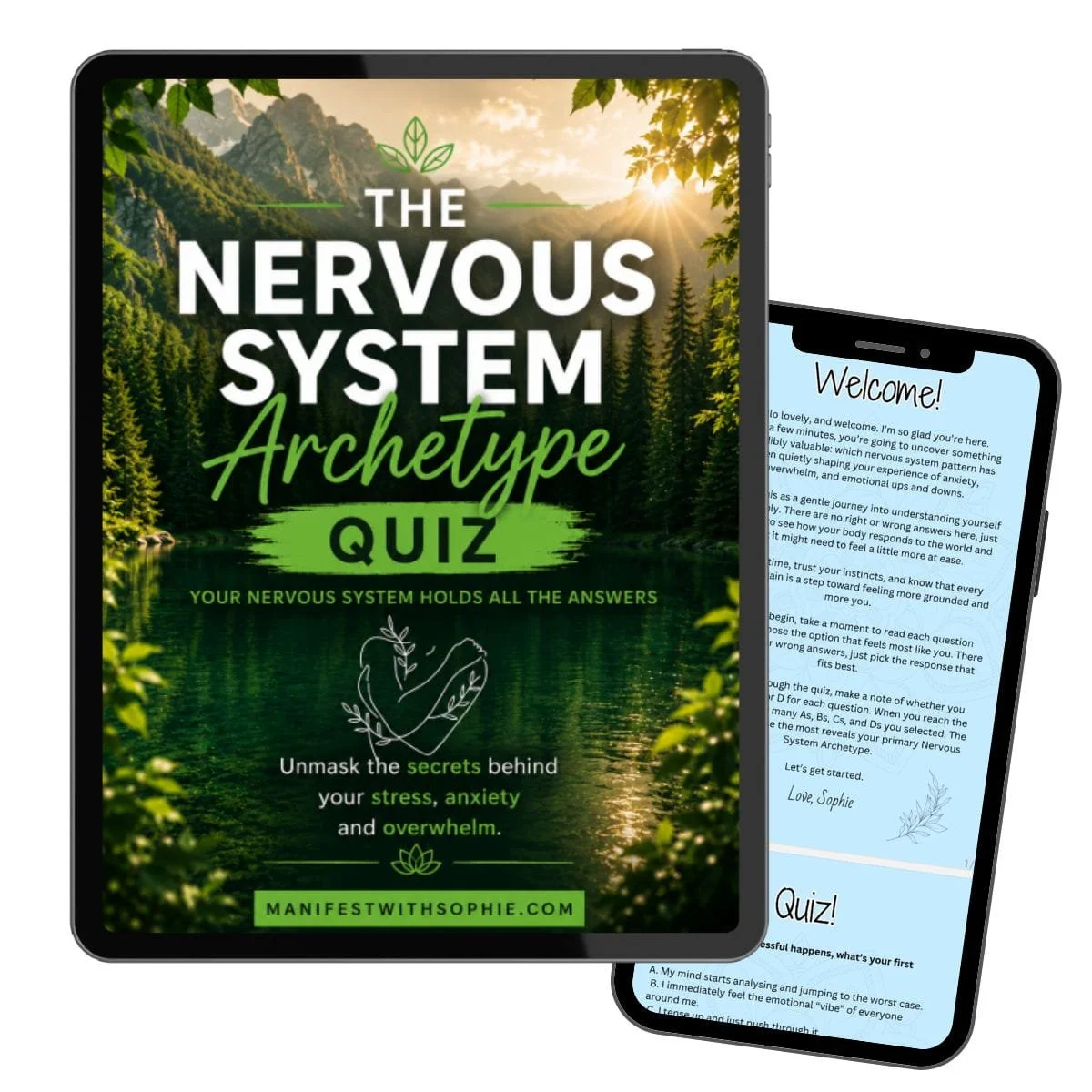
Take my free Nervous System Archetype Quiz to explore your personal stress-response patterns and discover gentle ways to support your emotional wellbeing.
5 Ways to Support Your Emotional Wellbeing Throughout Your Cycle
You can't always prevent hormonal fluctuations, but you can develop habits that make difficult days feel more manageable.
1. Track your emotional patterns.
Keep a simple journal of your mood, anxiety, energy and menstrual cycle. Over time, you might recognise recurring patterns that help you prepare for more emotionally sensitive days.
Instead of living everyday like it’s the same as yesterday, you can plan ahead for days that need more rest and relaxation and days where you can work harder towards your goals.
2. Practise gentle nervous system regulation.
Taking a walk, listening to relaxing music, spending time in nature or practising slow breathing can help you manage feelings of stress and overwhelm.
Understanding your nervous system archetype is the first step to understanding what your personal system needs to feel safe, calm and emotionally stable. The quiz is free and has some fantastic insights that may surprise you.
3. Give yourself permission to set boundaries.
If you're feeling emotionally exhausted, it's okay, and in fact healthy to say no to additional commitments or give yourself some quiet time. Sometimes a girl just needs to be on the sofa with her favourite show on and a tub of ice cream instead of helping your friend out for the 4th time this month.
4. Prioritise sleep and physical wellbeing.
Poor sleep, stress and fatigue can make difficult emotions harder to manage. Regular meals, rest and enjoyable movement can support your overall wellbeing.
It’s important to listen to your body and understand that the female body works very differently from the males. We need more rest at certain times of the month and honouring that will make you feel much better in the long run.
5. Replace self-criticism with self-compassion.
Instead of thinking, why am I being so emotional? try asking, what would help me feel supported today? How can I be kind to myself today? Or what is my body asking for today?
Small changes in how you respond to yourself can make a meaningful difference.
Final Thoughts: Learn to Work with Your Body, Not Against It
Understanding menstrual cycle emotions can help you recognise why certain days might feel more emotionally challenging than others.
Some days, you might feel confident, motivated and calm. Other days, you might need more rest, reassurance or patience with yourself.
And that's okay.
Your emotional wellbeing isn't about feeling positive every single day. It's about learning to understand your emotions, recognise your needs and support yourself through the difficult moments.
You don't have to fight every emotion you experience. Sometimes, the most powerful thing you can do is meet yourself with a little more understanding.
Read These Next:
7 Signs You're Mentally Exhausted (Even If You Don't Realise It)
25 Symptoms of Burnout: How to Actually Recover From Burnout
Inner Child Healing: The Unexpected Missing Truth (Practical steps)
