
25 Symptoms of Burnout: How to Actually Recover From Burnout
Burnout can creep up on you so gradually that you do not always realise what is happening until everyday life suddenly feels much harder than it used to.
Maybe you are still getting up, going to work and doing everything you need to do, but you feel like you are dragging yourself through it. Or maybe you have reached the point where even getting off the sofa feels exhausting and you desperately want the world to leave you alone for a while.
Burnout can look different for everyone, but when your mind and body have been carrying too much for too long, they usually start finding ways to tell you.
The symptoms of burnout can affect your energy, motivation, mood, concentration, relationships and even the way you respond to tiny everyday problems.
In this guide, I want to help you understand what burnout actually feels like, why your nervous system may be struggling to switch off and, most importantly, how to recover from burnout without turning recovery into yet another thing you need to be perfect at.
Contents
Burn Out Meaning: What Does Burnout Actually Feel Like?
Stress vs Burnout: What Is the Difference?
What Your Nervous System Has to Do With Burnout
Burn Out Meaning: What Does Burnout Actually Feel Like?
Burnout usually develops after prolonged periods of stress without enough genuine recovery.
Sometimes it looks exactly how you would imagine: complete exhaustion, very little motivation and feeling like even the smallest responsibilities are too much.
At other times, people continue functioning surprisingly well from the outside. They still work, exercise, socialise and answer messages, but almost everything requires more effort than it used to.
Neither experience is more legitimate than the other. Burnout is not measured by how productive you still manage to be. What matters is what is happening underneath.
You may notice that your capacity for everyday life has become smaller, your patience has disappeared and your body seems to be asking for more rest than you are able to give it.
25 Symptoms of Burnout
There is no single checklist that will perfectly describe every person experiencing burnout, but there are some common patterns. You certainly do not need to recognise all 25 of these symptoms of burnout for your experience to matter.
Emotional Symptoms of Burnout
1. You feel irritated by tiny things. When your stress levels are already high, there is not much room left for additional frustration. Something as small as dropping something, receiving another notification or being asked a simple question can make you disproportionately angry.
2. Other people start to feel draining. You may still love the people around you while simultaneously feeling like you have no emotional energy left for them. Conversation feels like effort, other people's needs feel heavier than usual and you find yourself craving quiet.
3. You cry more easily. Your emotional threshold can become much lower when you are exhausted. Something you would normally brush off might suddenly bring you to tears because it lands on top of everything else you have been carrying.
4. Things you normally care about start to feel flat. Burnout does not always make emotions stronger. Sometimes you start feeling disconnected instead. Things that usually excite you feel flat, and you struggle to care about things that would normally matter to you.
5. Socialising starts to feel like too much. Social plans may start feeling like another task rather than something enjoyable. You might fantasise about having an entire weekend where nobody talks to you, needs anything from you or expects you to be anywhere.
Mental Burnout Symptoms
Mental burnout can leave your brain feeling just as exhausted as your body. You may know exactly what you need to do, but still find it difficult to think clearly, focus or get your brain to cooperate.
6. Your thoughts feel foggy and harder to organise. You may struggle to organise your thoughts, find the right words or follow something that would usually feel simple.
7. You cannot concentrate properly. You reread the same paragraph, jump between tasks or realise you have been staring at your screen without taking anything in.
8. Simple decisions feel exhausting. Even deciding what to eat can feel unnecessarily difficult when your brain already feels overloaded.
9. You overthink everything. When you feel stressed and depleted, your brain may try even harder to anticipate problems and create certainty. Unfortunately, replaying conversations and analysing every possible outcome creates even more mental work.
10. You become forgetful. Appointments, conversations, names and small tasks disappear from your mind because your brain already feels like it has too many tabs open.
11. Your mind feels constantly full. Sometimes there is no better way to describe it. Another message, task or question simply feels like one thing too many.
If These Burnout Symptoms Are Resonating So Far...
Your nervous system has its own was of responding to stress, overwhelm and perceived pressure, which might be different from how other peoples nervous systems work.
Understanding your own patterns can make a huge difference to how you support yourself.
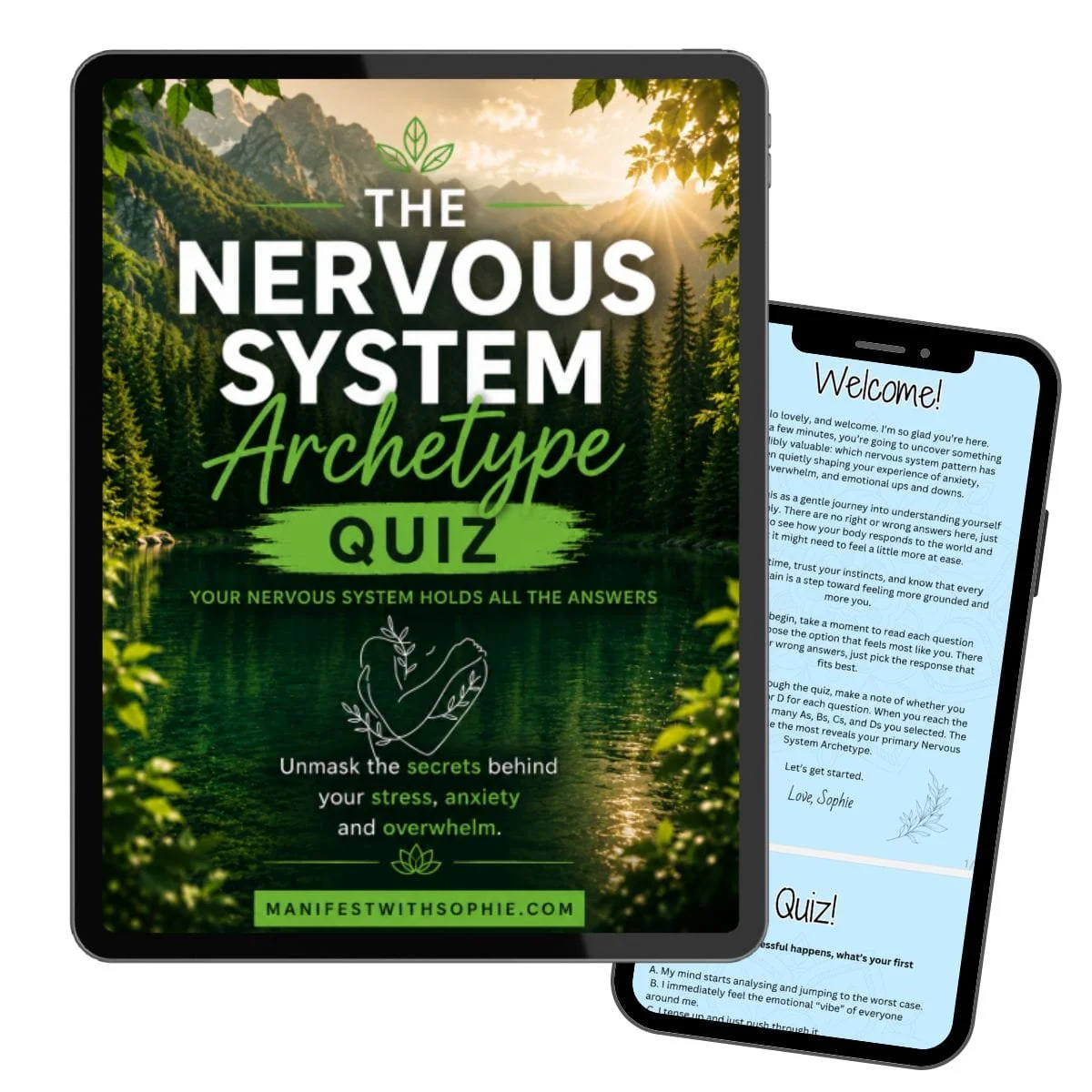
Take my free Nervous System Archetype Quiz to learn more about your own personal nervous system, why it tends to react the way it does and what may help it feel calmer, safer and more regulated.
Physical Symptoms of Burnout
12. You feel exhausted even after resting. Burnout tiredness can feel deeper than ordinary sleepiness. You may sleep for longer than usual and still wake up feeling drained.
13. You feel tired but wired. Your body desperately wants rest while your brain continues racing through tomorrow's tasks, conversations and potential problems. You may even feel jittery in your body.
14. You struggle to get good-quality sleep. You may struggle to fall asleep, wake frequently, sleep more than usual or simply stop waking up feeling refreshed.
How To Stop Overthinking at Night, Make Sleep Easy, Calm & Blissful
15. You carry more tension in your body. Tight shoulders, a clenched jaw or aching neck can become so normal that you barely notice them anymore.
16. You experience more headaches or physical discomfort. Long periods of stress can affect the body in many different ways, although persistent or concerning physical symptoms should always be discussed with a healthcare professional rather than automatically being put down to burnout.
Behavioural Symptoms of Burnout
17. You procrastinate very simple tasks. Something that should take five minutes somehow feels enormous, so you avoid it even though having it hanging over you creates more stress.
18. You spend more time scrolling. When you have very little mental energy, scrolling provides an easy form of escape because it requires almost nothing from you.
The trouble is that too much stimulation can sometimes leave you feeling even more mentally drained afterwards.
19. You cancel plans more often. Something that sounded lovely when you arranged it suddenly feels exhausting when the day actually arrives.
20. Your usual routines start slipping. Cleaning, cooking, exercising, replying to people or keeping on top of everyday admin may become much harder than usual.
21. Your motivation disappears. You can still care about your goals and want things for your life while feeling like you have absolutely no energy to move towards them.
Subtle Symptoms of Burnout
22. Everything starts feeling inconvenient. The washing machine finishes, somebody rings you, you need groceries or an unexpected task appears, and your immediate reaction is, “I genuinely cannot deal with another thing.”
23. You stop enjoying things you normally love. Hobbies, friendships and activities that usually recharge you can begin to feel like additional demands.
24. You feel guilty when you rest. You finally get a chance to lie down, but your brain immediately starts running through everything you should be doing instead. Physically stopping and actually feeling rested are not always the same thing.
25. Tiny problems trigger huge reactions. You may cope with major responsibilities all week and then almost cry because you cannot find your keys.
The keys usually are not the real problem. They are simply the thing that arrived when your stress cup was already full.
Stress vs Burnout: What Is the Difference?
Stress is a normal part of life. There will always be busy periods, difficult conversations and unexpected problems. When your nervous system is able to regulate stress effectively, that stress rises, gets processed and then gradually comes back down again.
This is where stress vs burnout starts to become clearer. When your nervous system is dysregulated, stress does not always get fully processed and released before the next stressful thing arrives.
Instead, it starts to pile up. One difficult day becomes a stressful week, then another problem appears, then your sleep suffers, then you start overthinking more, pushing yourself harder or ignoring what your body is asking for.
Without enough opportunity to process and release the stress that builds up, your nervous system can become overloaded, eventually leading to burnout.
What Your Nervous System Has to Do With Burnout
Your nervous system is constantly responding to what is happening around you. When something feels stressful, your body uses energy to help you cope with it.
Once the stressful moment has passed, your nervous system is supposed to settle back down again. However, when that stress is not properly processed and released, it can stay in the system and gradually build up over time.
Imagine your body and nervous system as a cup, with every stressful experience adding a little more liquid. Ideally, when something stressful happens, you are able to feel it, deal with it, process it and release it, which creates space in the cup for whatever comes next.
But if stress keeps being added without enough being released, eventually the cup becomes full and starts to overflow. This is when overwhelm and burnout can begin to set in.
And once your cup is already full, even something small can push it over the edge. This is why minor things can suddenly feel enormous when you are burnt out.
The email, messy kitchen or unexpected request in front of you might be relatively small, but your nervous system is reacting to it on top of everything else it has already been carrying.
50 Scary Signs Of A Dysregulated Nervous System You Need to Know
Why Rest Does Not Always Feel Restful
You would think burnout recovery would simply involve resting more, and physical rest absolutely matters.
The problem is that many of us have become very good at stopping physically while our minds continue working at full speed.
You finally get a free afternoon, lie on the sofa and then spend the next three hours thinking about Monday, checking your phone, mentally writing lists and feeling guilty because you are not being productive.
Your body may be still, but your mind is still active and your nervous system may still be responding as though there is something it needs to stay alert for.
When this happens, your system struggles to properly down-regulate into the parasympathetic, or “rest and digest,” state.
So even if you spend the whole evening on the sofa and technically do very little, you may still wake up feeling just as drained because your body has not fully shifted into a state where it can truly rest, reset and recover.
How to Recover From Burnout
If you are wondering I would start by taking some pressure away rather than immediately creating a huge recovery routine.
When you are already exhausted, the last thing you need is another list of 15 things you now feel responsible for doing perfectly.
1. Give your system more time to properly rest
Burnout usually means your system has been carrying too much for too long, so recovery often needs more than one quiet evening or a lazy weekend.
That does not mean you need to drop everything and stay in bed for two weeks. It means creating a longer period where you are asking less of yourself and giving your mind and body more opportunities to properly recover.
Look at what is currently taking up your energy and ask yourself what genuinely needs your attention right now, and what could be delayed, simplified or temporarily dropped.
The goal is to reduce the overall load enough that your system finally has some space to come down from the stress it has been carrying.
2. Give your nervous system regular chances to settle
Nervous system regulation does not need to become another complicated project.
Slow breathing, gentle walking, stretching, sitting outside, listening to calming music or simply spending a few minutes without constant input can all create moments where your body gets to come down from the pressure it has been carrying.
Or if you want specific activities, you can get my guide HERE.
3. Notice what actually restores you & what drains you
Scrolling can feel relieving in the moment because it gives your brain something easy to focus on, but that does not always mean it is helping your nervous system settle.
Constant input, fast-moving content and endless switching from one thing to the next can sometimes leave you feeling even more wired, scattered or overstimulated afterwards.
Try swapping some of that time for activities that give your brain less to process, such as reading, doing an adult colouring book, working on a craft or watching something light, funny and comforting.
Even the kind of television you choose can make a difference. A positive comedy may help you unwind much more than something intense, violent or disturbing when your system is already overloaded.
Pay attention to how you feel afterwards. If an activity leaves you calmer, clearer and more settled, it is probably giving your nervous system the kind of recovery it actually needs.
4. Protect the energy you still have
People pleasing, overexplaining yourself and worrying constantly about other people's reactions can use a surprising amount of emotional energy.
You may need to say no more often, give shorter explanations, take longer before agreeing to things and accept that you cannot manage everybody else's feelings for them.
6. Rebuild gradually
When you finally start feeling better, it is very tempting to immediately fill your diary again because you are excited to have energy.
Try not to spend your entire new supply at once. Recovering from burnout means giving your capacity time to grow while continuing the things that helped you feel better in the first place.
5. Look at what was exhausting you in the first place
Once you have a little more capacity, start looking at the bigger picture. What were you constantly pushing through? Where were you ignoring your own limits? Which relationships or responsibilities were draining you? Where were you living with a constant sense of urgency?
Recovery becomes much more sustainable when you change some of the patterns that helped create the burnout instead of recovering just enough to return to exactly the same situation.
How Long Does Recovering From Burnout Take?
There is no universal timeline for recovering from burnout because it depends on how long you have been under stress, how intense that stress has been and whether the original source of pressure is still present.
For some people, recovery may take a few months, while more prolonged burnout can take much longer, sometimes many months or even years to fully recover from.
That does not mean you will feel completely burnt out for that entire time. You may start noticing improvements much sooner as your energy, motivation and ability to cope gradually return.
Full recovery can take longer because your body and nervous system need repeated opportunities to come down from chronic stress, rebuild capacity and become more comfortable spending time in calmer, more regulated states again.
Recovery can also be uneven. You may have several days where you feel much more like yourself and then suddenly need more rest again. That does not mean you are back at the beginning. Try to look at the direction you are moving in over time rather than expecting every day to feel better than the one before it.
Final Thoughts on the Symptoms of Burnout
The symptoms of burnout can look different depending on the person and where they are in the process.
You might still be carrying on with most of your normal life while wondering why everything suddenly feels so difficult, or you might feel completely flattened and desperate for the demands around you to stop for a while.
Either way, burnout is a sign that your current stress load and your available capacity have become badly mismatched.
Recovery involves more than forcing yourself to get back to normal as quickly as possible. It means creating enough breathing room for your mind and body to genuinely recover, regulating your nervous system, protecting your energy and paying attention to the parts of your life that keep refilling your stress cup.
If burnout, overthinking and emotional overwhelm keep showing up for you, my Free Nervous System Archetype Quiz can help you understand the stress pattern your nervous system tends to fall into and what may help you begin feeling calmer and more regulated.
Read These Next
How to Stop Being Negative Without Forcing Positivity
Why You Feel Anxious After Setting a Boundary: 3 Hidden Reasons
