
Inner Child Healing: The Unexpected Missing Truth (Practical Steps)
If you have been searching for how to heal your inner child, you have probably come across journaling prompts, meditations, affirmations and exercises where you imagine talking to your younger self.
All of these can be incredibly powerful. But there is another piece of healing your inner child that deserves far more attention: your nervous system.
Sometimes the connection between your childhood and your adult patterns is obvious. You may already know exactly where your fear of rejection came from, why you people please or why somebody being slightly quiet suddenly makes you anxious.
Other times, the connection is much harder to see. You might simply know that you overthink everything, struggle to say no, feel responsible for other people's moods, become deeply insecure around certain people or panic when you think somebody is upset with you.
You may have lived this way for so long that it simply feels like part of who you are.
But many of these reactions can begin as protective patterns learned much earlier in life. And even when your adult mind understands what is happening, your body can still react as though the original danger is happening all over again.
That is where nervous system regulation comes in. For many people, this is the missing piece.
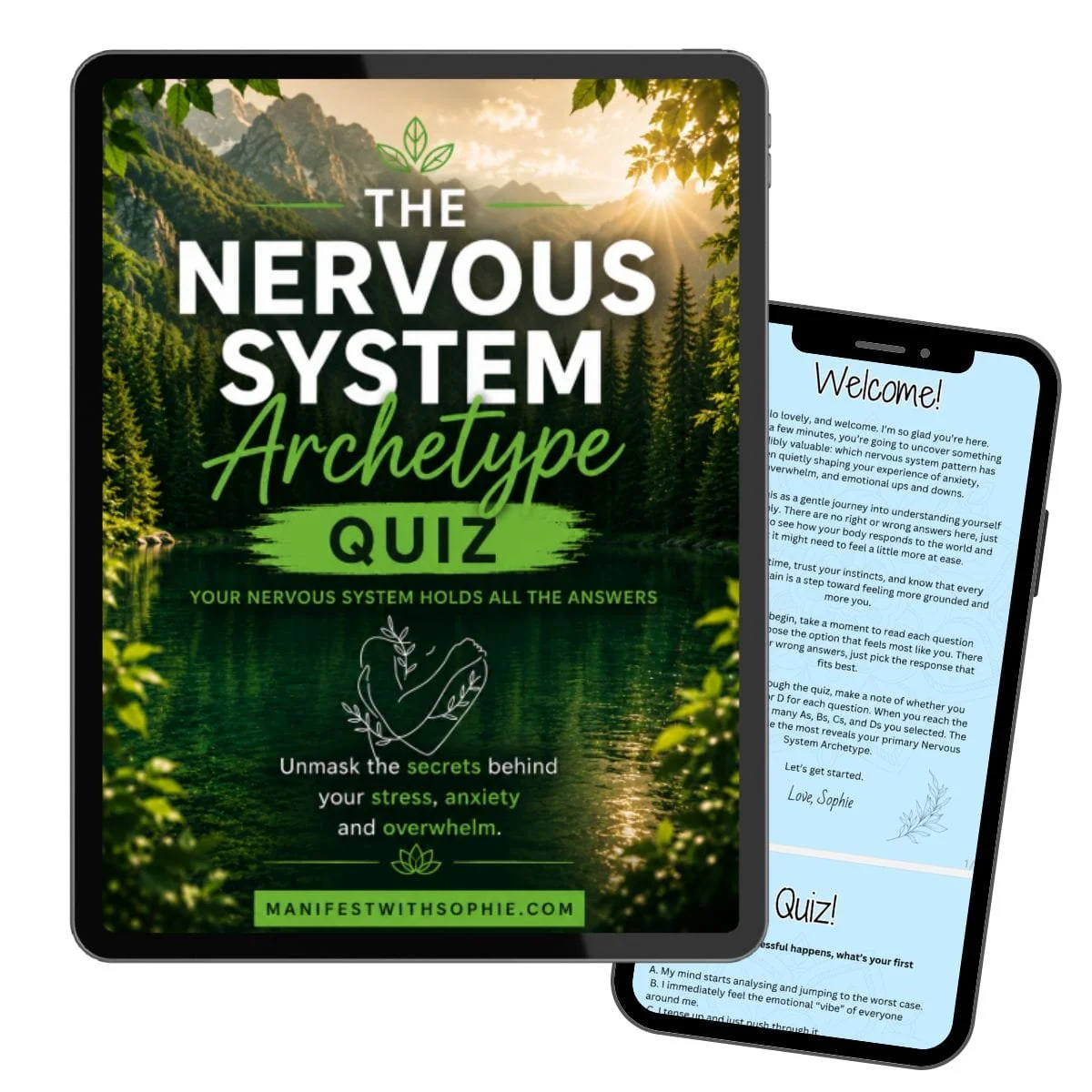
Wondering how your nervous system responds when life feels overwhelming?
Take my free Nervous System Archetype Quiz to discover whether you are an Overthinker, Emotional Sponge, High-Functioning Freeze or Shut-Down Freeze, plus the first steps that can help you feel safer and more regulated.
👇
What Is Your Inner Child?
Your inner child is essentially the younger emotional version of you who experienced the world before you had the perspective, independence and understanding you have now.
As a child, your brain and body were constantly learning what helped you feel safe, loved and accepted.
Imagine growing up with a highly critical parent.
Perhaps criticism regularly appeared when you made mistakes, expressed your opinion or failed to meet their expectations. Your younger self may have gradually learned that keeping this person happy created more safety.
So you became agreeable.
You watched their mood.
You learned to anticipate what they wanted.
You pushed your own needs aside.
You became incredibly good at people pleasing.
Then you grew up.
The critical parent may have less influence over your life now, yet the protection strategy your younger self developed can continue automatically.
You might find yourself worrying about disappointing people, overexplaining decisions, struggling to say no or feeling deeply uncomfortable whenever somebody seems annoyed with you.
Eventually, you may even decide, This is just my personality. But many behaviours we associate with our personality began as adaptations.
Your wounded inner child learned a way of navigating the world that once helped create emotional safety, and your nervous system became very familiar with that pattern.
The Missing Truth About Healing Your Inner Child
Here is where inner child healing often misses something huge. Your nervous system is constantly gathering information about safety and potential threat.
When you experience long periods of stress, criticism, rejection, emotional unpredictability, bullying, abandonment or other painful experiences, your body can become extremely sensitive to cues associated with those experiences.
The protective response can continue long after childhood. That helps explain why an adult can logically understand their past perfectly and still experience powerful reactions in the present.
Your adult mind might understand that your mother was critical because of her own upbringing.
Your nervous system simply learned:
Criticism feels dangerous.
Your adult mind might understand that your partner is tired after work.
Your nervous system remembers:
A change in somebody’s mood means something could be wrong.
Your adult mind might know that a friend taking longer to reply means very little.
Your younger emotional pattern hears:
Something has changed. I could be rejected.
This can show up through tiny everyday moments.
Someone gives you a slightly different look.
A message ends with a full stop instead of an emoji.
Someone’s tone sounds flatter than usual.
A person walks into the room feeling stressed.
Your manager says, “Can we have a quick chat later?”
A friend becomes quieter during a conversation.
Someone takes longer than usual to reply.
Your nervous system can start ringing alarm bells while your conscious mind desperately tries to figure out what happened.
That is why healing your inner child involves the body as well as the mind.
Imagine Your Wounded Inner Child in a Dark Forest
Picture your younger self standing alone in a dark forest.
The wind is blowing through enormous trees. Strange noises are coming from somewhere in the distance. It is cold, dark and unpredictable.
Your inner child feels tense and frightened.
Now imagine your adult self standing at the edge of the forest saying:
Come over here. You are safe. We are healing now.
The child wants to believe you.
She takes a few steps.
A branch snaps somewhere behind her.
She jumps.
Something moves between the trees.
She freezes.
The wind suddenly becomes louder.
Her attention goes straight back to survival.
You can keep calling her towards you, but every alarm around her keeps pulling her attention back towards staying safe.
Now imagine the same child somewhere completely different.
She is sitting in a warm, cosy room.
The lights are soft. She feels comfortable. Everything around her feels peaceful and secure.
You are standing three feet away.
You hold out your hand and say:
Come with me.
She gets up.
She takes your hand.
And walking forward suddenly feels much easier.
That is the difference nervous system regulation can make.
Journaling, meditation, affirmations, inner child visualisation and reparenting can all provide incredible support.
But regulation creates an internal environment where those practices have a much better chance of sinking in.
When your body feels safer, your attention becomes available for something beyond survival.
Signs Your Wounded Inner Child May Be Running the Show
A wounded inner child can appear in adulthood in surprisingly ordinary ways.
You may become extremely sensitive to rejection, constantly analyse other people's moods, feel responsible for keeping everyone happy or struggle to understand why saying no creates so much anxiety.
You might overexplain yourself, crave reassurance, become deeply attached to people, fear abandonment, shut down during conflict or feel strangely young and insecure in certain situations.
You may also experience perfectionism, difficulty expressing your needs, a powerful urge to avoid disappointing anyone or experience chronic overthinking.
And sometimes the difference between feeling secure and feeling deeply insecure seems to change from one day to another.
I have experienced this myself.
I have spent time around people I know love me and want me there. They have told me so many times.
Yet when my nervous system has been highly dysregulated, my brain can suddenly begin creating a completely different story.
They secretly want me to leave.
They are only pretending they want me here.
I am bothering everyone.
When I feel regulated, that entire experience changes.
My mind feels clearer and I can simply enjoy being around the people I love.
That difference taught me something incredibly important.
Sometimes the story running through your mind is being shaped by the state of your nervous system.
Why Understanding Your Childhood Sometimes Changes So Little
One of the most frustrating parts of inner child healing is reaching a point where you understand everything.
You know where the wound came from.
You understand your parents' behaviour.
You recognise your patterns.
You can explain exactly why you became a people pleaser.
And then someone seems irritated with you and suddenly every ounce of that knowledge disappears.
This happens because intellectual understanding and automatic protective responses operate differently.
Your nervous system learned through experience. So alongside insight, it needs repeated experiences of safety.
This is also why I struggled for years to stay consistent with many of the things that were supposed to help me.
When my nervous system was constantly on high alert, survival always felt more important.
People pleasing felt urgent.
Keeping somebody else happy felt urgent.
Monitoring everyone else's emotions felt urgent.
Taking an evening for myself to journal, meditate or work through my own emotions felt far less urgent.
Once I started regulating my nervous system consistently, those other practices became easier. I naturally had more capacity for the things that supported me. That is why my biggest advice for how to heal your inner child is incredibly simple:
Regulate first. Then do the deeper work from a body that feels safer.
How to Heal Your Inner Child: Practical Steps
1. Start With Daily Nervous System Regulation
Consistency matters far more than waiting until you are already overwhelmed. One of my favourite practices is incredibly simple.
Place one hand over your heart and the other over your stomach. Breathe slowly and comfortably, allowing your body to soften as you breathe.
I like to do this for around 10 minutes in the morning and another 10 minutes in the evening. Think of this as repeatedly giving your body small experiences of calm.
You can also use grounding exercises. Feel your feet against the floor. Look around the room. Notice what you can see, hear and physically feel.
Bring yourself into the environment you are actually standing in.
Over time, these small moments can help create a stronger sense of internal safety, if done daily and consistently.
2. Let Yourself Feel the Emotion in Your Body
Sometimes an emotion needs space to move.
When sadness, anger, fear or grief appears, bring your attention towards the physical feeling of the emotion rather than building a bigger mental story around it.
Where can you feel it?
Your chest?
Your throat?
Your stomach?
Your shoulders?
Does it feel tight, heavy, warm, shaky, hollow or pressurised?
Stay curious about the sensation.
Allow the feeling to be present while gently releasing the thoughts trying to explain it, analyse it or predict what happens next.
Then return your attention to the physical sensation.
This gives the emotion space to be experienced and processed rather than immediately turning it into another hour of overthinking.
3. Journal With Your Inner Child
Journaling can be incredibly powerful for healing your inner child, especially once your body feels calm enough to explore what is underneath the reaction.
You could ask:
What am I afraid will happen right now?
When have I felt this feeling before?
What did younger me learn she had to do to feel safe or loved?
What did I need to hear back then?
What would make me feel supported right now?
Then answer yourself from the perspective of the adult you are today.
Give yourself the reassurance, compassion and understanding that younger version of you needed. And after a powerful journaling session, continue regulating.
Think of the days following deeper emotional work as integration time.
Give yourself space. Rest. Breathe. Ground yourself. Spend time doing things that make your body feel peaceful and secure.
Inner work can bring things to the surface.
Nervous system regulation helps your system settle around what you have learned.
4. Reparent Yourself With Kindness
Reparenting sounds complicated, yet so much of it comes down to learning how to treat yourself with the tenderness you deserved as a child.
Imagine the six-year-old version of you standing in front of you.
Would you call her stupid because she made a mistake?
Would you tell her she was embarrassing for feeling nervous?
Would you criticise her body?
Would you shame her because someone else seemed unhappy?
Or would you kneel down beside her, comfort her and remind her that she is safe with you?
Offer yourself that same kindness.
Your inner voice becomes part of the environment your nervous system lives in every single day.
Create an environment that feels supportive.
5. Use EFT and Reassuring Affirmations
EFT can also be used as a calming ritual for your nervous system while you repeat supportive phrases that speak directly to the fears underneath your old patterns.
Choose affirmations that feel warm, believable and reassuring while tapping on meridian points like the side of your hand, the sides of your eyes, between your brows, cupids bow, chin and just below the collar bone.
Try:
I am safe with myself now.
My needs matter too.
I am allowed to take up space.
I can be myself and still be loved.
Other people's moods belong to them.
I can disappoint someone and still be safe.
I choose relationships where I feel valued and secure.
I can rest without earning it first.
I am here for myself now.
The goal is repetition from a calmer state. Choose affirmations that feel good when you say them. You are giving your brain and body a different message to practise.
The Real Goal of Inner Child Healing
Healing gradually changes the intensity of the reaction.
A trigger that once consumed your entire evening might eventually affect you for an hour.
Then twenty minutes.
Then five.
Eventually, the same situation may barely register.
The aim becomes building the ability to notice what comes up, regulate yourself, respond with compassion and continue living your life. Your whole existence never needs to become one endless healing project.
Deal with what rises when it rises.
Support yourself through it.
Regulate.
Then enjoy the periods where you feel peaceful, confident, connected and present.
Nervous System Regulation First, Then Let Everything Else Follow
If there is one thing I want you to take away from this entire article, it is this:
Nervous system regulation comes first.
Once your body spends more time feeling safe, so many other pieces of healing become easier.
You have more capacity to journal.
Meditation becomes easier to sit through.
You can recognise your patterns more clearly.
Taking time for yourself feels more natural.
Your mind becomes quieter.
You can make decisions from the adult you are today rather than automatically handing control to the survival strategies your younger self developed years ago.
This is the piece I wish more conversations about how to heal your inner child included.
Your younger self learned through experience. Now, through repeated experiences of safety, compassion, boundaries and self-trust, you get to teach her something new.
You are here now.
You can protect yourself now.
You can listen to yourself now.
And you can finally become the safe place your younger self was searching for.
Want to understand your own personal nervous system archetype, download my free quiz below:
