
Wondering how to change your life when you know what you want but can’t seem to stay consistent? You picture yourself feeling confident, calm and free, yet every fresh start gives way to overthinking, overwhelm or exhaustion.
I know that cycle. For me, nervous system regulation and changing how I saw myself made taking action feel more manageable and my next steps clearer.
If you’re ready to explore how to be the best version of yourself, these seven steps will help you recognise what’s holding you back, support your nervous system and turn your goals into actions you can follow. Start by getting clear on what you actually want.
Contents:
Step 1. How to Be the Best Version of Yourself: Define Your Vision
Step 2. Make Nervous System Regulation Your Foundation
Step 3. Notice and Reduce What Keeps Overwhelming You
Step 4. Build Morning and Evening Routines That Support You
Step 5. How to Change Your Life With Small, Achievable Actions
Step 6. Change the Self-Concept You Keep Repeating
Step 7. Keep Regulating, Taking Action and Reviewing
How to Be the Best Version of Yourself: Put Your Plan Into Practice
Step 1. How to Be the Best Version of Yourself: Define Your Vision
Before you explore how to be the best version of yourself, define what that means to you.
Maybe you want to feel comfortable expressing yourself. Perhaps you picture a fulfilling career, healthier relationships, more energy or the confidence to start something you’ve been putting off.
Think about what your ideal life looks like and what matters most to you. Is it a career you love, fulfilling relationships, financial freedom, confidence in yourself, or more time to do the things you enjoy?
Give yourself permission to be honest about what you want.
Get clear on the life you want to create and what the best version of you really looks like within that life.
Start with a short journaling session
Answer these questions:
What does my ideal life look like? Write about yourself, your home, job, relationships, family and how you spend your time.
How do I want to feel about myself and my life? Perhaps confident, calm, happy, free, secure, loved or excited about your future.
What would I be doing in my ideal life? Maybe running a business, travelling, spending more time with people you love, enjoying hobbies or looking after yourself.
What do I want more of, and what do I want less of? Think about things like money, time, freedom, connection, stress, pressure and responsibilities.
Then write down what you believe is holding you back, focusing on your thoughts, feelings and patterns.
For example:
“I get overwhelmed when there are too many steps.”
“I’m afraid people will judge me.”
“I feel excited at first, but then everything becomes exhausting.”
“I don’t trust myself to make the right decision.”
“If I can’t do something perfectly, I struggle to begin.”
“I can’t seem to stay consistent with anything”
Other people and circumstances can create real obstacles. For this exercise, focus on where YOU have influence: your responses, boundaries, choices and the support you seek.
Now you have a clear picture of your destination AND what’s holding you back currently.
The more clearly you can recognise a pattern, the more specifically you can work with it.
Step 2. Make Nervous System Regulation Your Foundation
This is the step I want you to give real attention to.
If you’re constantly tired, overwhelmed, overthinking or struggling to stay consistent with your goals, supporting your nervous system can make a significant difference.
Your nervous system plays a huge role in how you respond to stress, experience emotions and react to what’s happening around you.
When your stress response stays activated, you can feel constantly on alert, making it harder to concentrate, make decisions and cope with everyday demands.
Think of it as an alarm system that has become overly sensitive. A difficult conversation, an uncertain decision or the possibility of getting something wrong can feel much more threatening than it otherwise would.
This leaves you feeling too tired, foggy or irritable to take the steps to change your life.
Make Regulation a Daily Practice
Begin with one or two practices that feel helpful and manageable:
Slow, controlled breathing: Set aside five to ten minutes morning and evening. Take deep slow breaths, focusing on relaxing your body on each extended out breath.
EFT tapping: Spend a few minutes gently tapping meridian points such as the inner eyebrow, the bone beside or beneath the eye, your chin, and just below the collarbone. You can pair this with focusing on releasing stress, you can pair it with positive affirmations.
Gentle movement: When you feel jittery, try gently jumping up and down, shaking your arms and legs, swaying or walking. Notice whether the movement helps you feel more settled and keep it comfortable. This helps to release the stress stored in your body.
Quiet, supported rest: For 10-15 mins per day, lie down with your legs propped up a wall, this sends a signal to the nervous system to switch into the ‘rest-and-digest’ state, calming you.
You don’t need to do every practice. Choose something you can return to consistently, and change it if it makes you feel more uncomfortable.
Understand Your Own Nervous System Patterns
What if understanding your nervous system is the missing piece in why you keep feeling stuck?
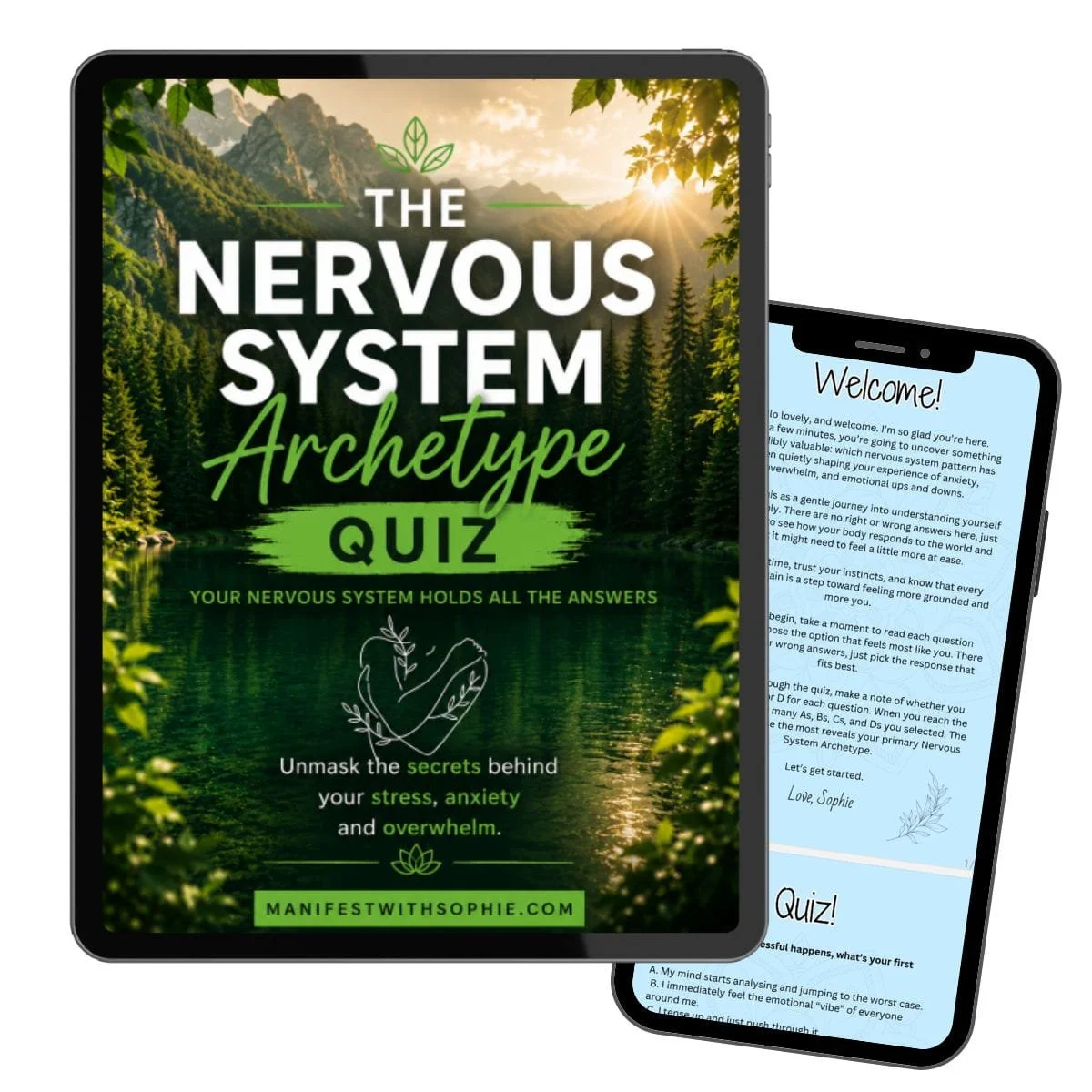
Take my free Nervous System Archetype Quiz for a personalised result that helps you understand your stress patterns and the support that suits you, so you can take steps towards your best self with more clarity.
Step 3. Notice and Reduce What Keeps Overwhelming You
You pick up your phone for a break, then spend that break absorbing bad news, arguments, other people’s achievements and advice about everything you should be doing differently.
You say yes when you wanted to say no and now you’re even more exhausted and dysregulated just because your friend wanted to go for drinks.
Notice the patterns that make you feel overwhelmed, tired or push you into negative thinking and begin to manage those actions.
For a few days, give yourself a clear, realistic boundary on the actions that might be keeping you in a dysregulated state.
You could keep your phone away during meals, set a scrolling window or unfollow accounts that consistently leave you feeling inadequate.
Maybe you say no to a friend’s event when you know you need to stay in and rest instead. Or maybe you learn to complete tasks without constant screen stimulation.
Compare how you feel after scrolling for 15 minutes with how you feel after spending that time resting, reading or sitting outside: which leaves you calmer, clearer and more able to take your next step?
Step 4. Build Morning and Evening Routines That Support You
Your mornings and evenings are practical places to make regulation consistent.
The goal is a routine you can live with for months, including when motivation is low. Keep it simple enough that you want to return to it.
Begin your morning with some space for yourself
Try keeping your phone away for the first 30 minutes, if that works with your responsibilities.
Choose a few supportive activities:
Five to ten minutes of gentle breathing or meditation.
A warm drink outside or by a window.
A few pages of a book.
Your chosen affirmations.
A brief check-in with how you feel and what you need.
You don’t need to fit everything in. A quiet drink and five minutes of breathing can be your starting routine.
Give yourself a morning boost to set your day off right without making the routine too big that you can’t stick to it.
Create a gentler transition into the night
Set a time to step away from stimulating screens. You might aim for an hour before bed, extending it if that suits you.
Then choose a few familiar activities that help you unwind: reading, slow breathing, gentle movement, journaling or repeating your affirmations.
If you enjoy gentle shaking for regulation, you could include a short session as a way to move through stress after a tense day.
For more support with a busy mind at bedtime, read how to stop overthinking at night.
Your routine should support you, including on imperfect days.
Create a shorter version for evenings when you have less time or energy.
Step 5. How to Change Your Life with Small, Achievable Actions
Return to what you wrote about your best self.
What does she want to build, experience or change? Write out your goals, then choose one or two to begin with.
If you’re wondering how to change your life when your goals feel overwhelming, start by breaking each one into small, specific actions you can put in your calendar.
If you want to exercise regularly, your plan could be:
Join a gym and book an induction.
Attend two or three short sessions each week while learning the equipment.
Choose suitable home workouts and have the videos ready.
Walk for 20 to 30 minutes on specific mornings or evenings.
Choose the option that fits your interests, health and current capacity.
Committing to six intense gym sessions when you’ve never trained before can make the whole experience unnecessarily daunting. Give yourself room to become familiar and build confidence.
The same principle applies to other goals. If you want to start a business, begin with a defined task such as outlining your offer or researching the people you want to help.
Make your next step unmistakable.
For each goal, write:
“On [day], at [time], I will [specific action].”
Then decide what a smaller version would look like when your capacity is lower.
A useful action stretches you enough to create movement while remaining achievable in your actual life. Keep regulation alongside it, especially when you notice yourself slipping into overwhelm or harsh self-pressure.
Step 6. Change the Self-Concept You Keep Repeating
Learning how to be the best version of yourself includes looking at what you currently believe about yourself. These beliefs form your self-concept that influence how you move through your day and what you feel capable of trying, learning and achieving.
Notice the words that follow “I am.”
Do you describe yourself as kind, creative, capable, thoughtful or resilient? Do you also describe yourself as lazy, inconsistent, awkward, unworthy or someone who always gives up?
These descriptions can become the assumptions you bring to new situations. If you see yourself as incapable, you may dismiss your ideas before giving yourself a chance to develop them.
Write down your current identity
List the traits and beliefs you associate with yourself, both positive and negative. Relate them to your goals you wrote in step 1, then create positive affirmations to re-wire the negative assumptions.
For example:
“I’m not good enough to start a business” becomes “I am smart, capable and willing to learn what I need.”
“I never stick to anything” becomes “I follow through on manageable commitments and return when I get off track.”
“My needs don’t matter” becomes “My needs deserve consideration, and I can express them.”
“I can’t trust myself” becomes “I am building trust in my decisions through practice.”
Repeat your affirmations and act on them.
Choose wording you can connect with. If a statement feels so far from your current beliefs that it creates an internal argument, use “I am learning” or “I am becoming.” You want the affirmations to feel good when you repeat them.
Repeat your affirmations daily and consistently and look for opportunities to put them into practice. “I am capable of learning” can be followed by spending ten minutes learning a skill.
Step 7. Keep Regulating, Taking Action and Reviewing
Now bring everything together.
You have a clearer picture of the life you want, an understanding of your patterns, a regulation practice, realistic actions and affirmations that support the person you’re becoming.
The next step is repetition.
Make daily nervous system regulation a vital priority you plan for.
My own experience is why I place so much emphasis here: supporting my nervous system makes an enormous difference to how I approach the rest of my life. It is the difference between a great day and an awful day.
Follow your planned actions and repeat your affirmations. When you miss a day, return at the next opportunity. You don’t need to compensate with a punishing routine.
Review your progress each month
Ask yourself:
What feels easier now?
Which practices help me most?
Which commitments need adjusting?
What am I learning about myself?
What is the next appropriate challenge?
Perhaps you now feel comfortable in the gym and want a more structured programme. You might add another session, or progress within the schedule you already have.
Perhaps your goal needs a smaller step because life has become more demanding. Adjusting thoughtfully is part of staying involved in your own progress.
Keep reviewing your actions, supporting your nervous system and practising the self-concept you want to strengthen.
How to Be the Best Version of Yourself: Put Your Plan Into Practice
Learning how to change your life involves both the actions you take and the way you support yourself while taking them.
For me, nervous system regulation has been foundational. It helps me access the clarity and capacity to act on what matters, and self-concept work helps me approach those actions with greater belief in myself.
Start with your journal answers. Choose one achievable action. Make space for a daily practice that supports you.
And if you need help understanding the patterns you’re working with, take my free Nervous System Archetype Quiz and use your result as your starting point.
You can begin practising the qualities of your best self today, with the life and capacity you have right now.
