
How to Stop Being Negative Without Forcing Positivity
If you are searching how to stop being negative, you are probably tired of your mind automatically finding the worst-case scenario.
Maybe you always assume something is going to go wrong. You convince yourself someone is upset with you because their message feels slightly different.
You imagine bad outcomes before anything has even happened, or find yourself expecting disappointment even when things are going well.
Or maybe your negativity is more general. You tend to see what is wrong before you notice what is right, assume things probably will not work out, focus on the downside of situations or find yourself thinking,
What’s the point? It’ll probably go wrong anyway.
Even when something good happens, part of you may immediately look for the catch.
Maybe you have already tried telling yourself to “think positively,” practised gratitude or tried to replace every negative thought with a happier one.
But if your brain keeps returning to negativity, the problem may not simply be your mindset.
When your nervous system has spent a long time stressed, anxious or on high alert, your brain can become much more focused on potential problems, rejection and danger. Negative thinking can actually become one of the ways your system tries to protect you.
That is why learning how to stop being negative is not about forcing yourself to think happier thoughts.
It is about helping your nervous system stop expecting something bad to happen in the first place.
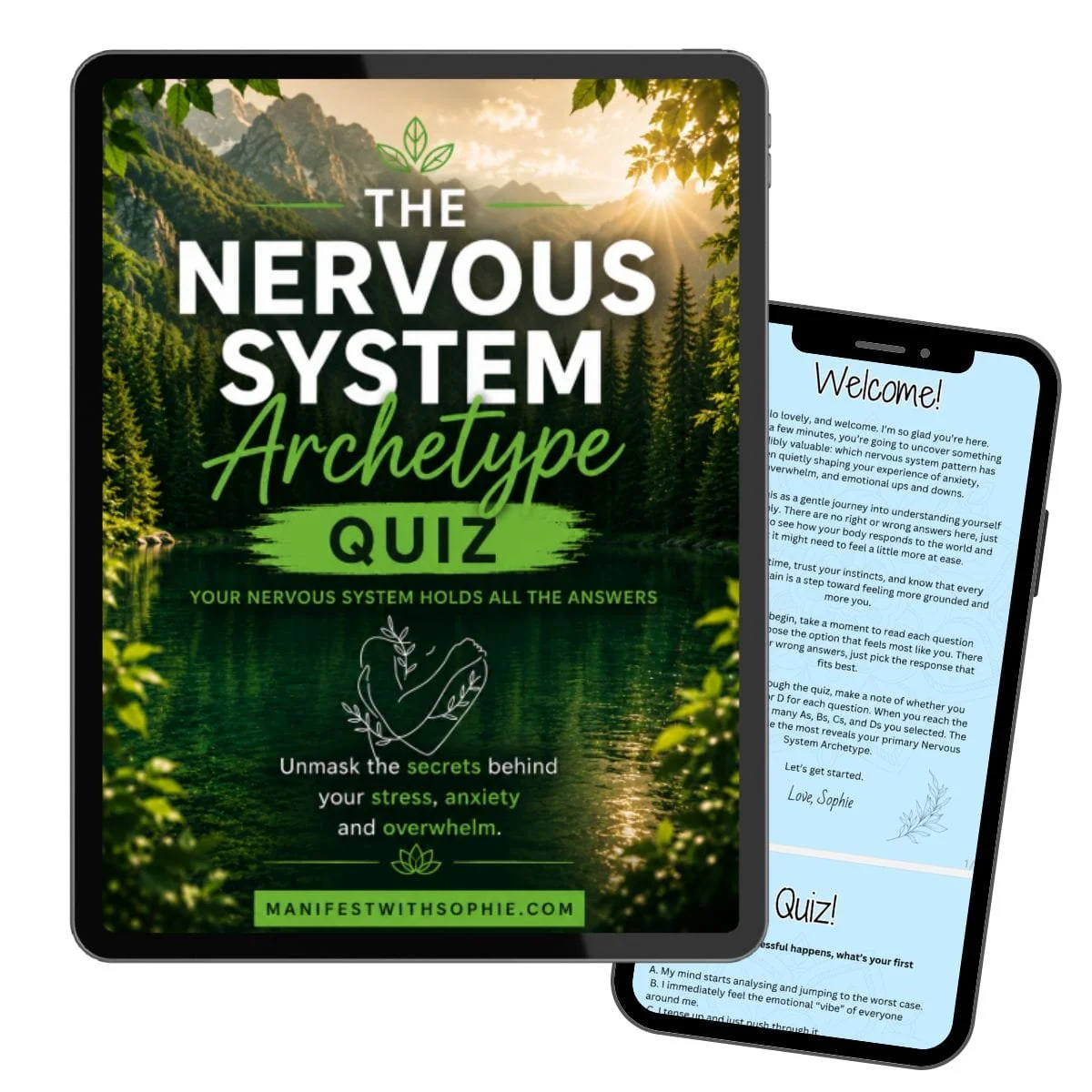
If you constantly overthink, expect the worst or feel like your emotions take over before you can stop them, my free Nervous System Archetype Quiz can help you understand why.
You will discover whether you are an Overthinker, Emotional Sponge, High-Functioning Freeze or Shut-Down Freeze, so you can understand the protective pattern your nervous system relies on most.
Why Am I So Negative All the Time?
When negative thinking becomes automatic, it is easy to start believing that you are simply a negative person.
You might call yourself pessimistic. Maybe other people have told you that you “always see the bad side” or that you need to stop worrying so much.
Negativity does not always look like obvious anxiety either.
It can look like constantly seeing the glass as half empty, expecting plans to fall through, assuming new opportunities will not work out, noticing everything that is wrong with a situation or finding it much easier to imagine a bad outcome than a good one.
But your brain does not create negative thoughts for no reason. One of its main jobs is to predict what might happen next and keep you safe.
If you have experienced a lot of stress, anxiety, uncertainty, rejection or emotional overwhelm, your nervous system can start becoming more sensitive to anything that resembles a threat.
Your brain begins looking for problems before they have even happened.
A friend takes longer than usual to reply and your mind decides they are annoyed with you. Your manager asks to speak to you and you immediately assume you have done something wrong.
You make plans you are excited about, then spend the next week imagining everything that could ruin them or everything that could go wrong.
Someone gives you a compliment and instead of enjoying it, you question whether they actually meant it.
Negative thinking can become a way of trying to stay one step ahead. If you expect disappointment, maybe it will hurt less.
If you predict every possible problem, maybe you can prevent one. If you assume the worst, maybe nothing can catch you off guard.
It makes sense as a protective strategy. But it is exhausting to live that way.
Why Your Nervous System Can Make You Think Negatively
Your nervous system is constantly taking in information from your environment and deciding whether you are safe. Most of this happens automatically.
If your nervous system has become used to stress, it can start behaving as though danger is always just around the corner. And when your body feels threatened, your brain looks for a reason.
That can affect far more than how you interpret other people. When your nervous system expects problems, your brain can start viewing life through that same lens.
You notice risks before possibilities, problems before solutions and reasons something might fail before reasons it could work.
Over time, that can start to feel like your personality when really your brain has become highly practised at looking for what might go wrong.
That is an important part of understanding how to stop being negative because your thoughts do not exist separately from what is happening inside your body.
Imagine you wake up already tense. Your shoulders are tight, your breathing is shallow and your stomach feels uncomfortable. Your body is already slightly activated before anything has even happened.
Then someone sends you a short message. If your nervous system felt calm and safe, you might barely think about it.
But when your body is already on alert, your brain can interpret that same message very differently.
Why are they being weird with me? Have I upset them? Something feels off.
Your mind then produces a story that matches the physical state your body is already in. This is why negative thoughts can feel so convincing when you are chronically stressed.
Your body is effectively telling your brain, something is wrong, so your brain starts searching for evidence to explain why.
Why Positive Thinking Alone Does Not Stop Negativity
There is nothing wrong with positive thinking. But if your nervous system is constantly activated, positive thoughts often will not stick.
You can tell yourself that everything will be fine, that things might work out, that people are probably not upset with you or that you should try to look on the bright side.
But if your body is still tense, on edge and expecting something to go wrong, those thoughts can feel almost impossible to believe.
You can try to argue with those thoughts all day, but if your nervous system is still signalling danger underneath them, your brain will keep returning to the same negative patterns.
That is why forcing positivity can feel so exhausting. You are trying to make your thoughts more positive while your body is fighting in the opposite direction, still signalling danger and telling your brain that something is wrong.
How to Stop Being Negative by Regulating Your Nervous System
If chronic stress is fuelling negative thinking, the most effective place to start is with your nervous system.
Regulation works through repetition, and regular relaxation practices can help your body become more familiar with a calmer state over time.
That is why five or ten minutes a day can be more useful than doing one long regulation session every few weeks.
Think of it like brushing your teeth. Brushing for two minutes every day keeps them far healthier than brushing extremely thoroughly for an hour once a month.
Nervous system regulation works in a similar way. A little practice every day, or more if you want, gradually makes safety feel more familiar.
As your system becomes less reactive and stops expecting danger everywhere, the negative thinking it was fuelling can begin to lift naturally too.
Use Slow Breathing to Bring Your Body Down From High Alert
When you are stressed, your breathing often becomes quicker and shallower, which keeps your body’s stress response activated.
Slow, relaxed breathing helps interrupt that pattern and signals to your nervous system that you are safe.
Sit comfortably and take slow breaths, allowing your exhale to be slightly longer than your inhale.
Practising this regularly helps your body become more familiar with calm, rather than constantly staying on alert.
Whilst breathing, drop your shoulders, unclench your jaw and relax each of your body parts one by one.
Move and Shake Out Built-Up Stress
Stress does not only exist in your thoughts. An activated nervous system can leave you feeling restless, jittery, tense or full of pent-up energy that has nowhere to go.
Try shaking your arms and legs, jumping up and down, dancing, stretching or going for a walk for a few minutes.
Shaking and bouncing can help use up some of that built-up physical activation, giving the restless energy somewhere to go so your body can settle and there is less stress fuelling negative thoughts.
Ground Yourself in What Is Actually Happening
Negative thinking often pulls you into imagined future problems: What if this goes wrong? What if something bad happens?
Grounding brings your attention back to what is actually happening now. Feel your feet on the floor, notice the chair beneath you, look around the room and listen to the sounds around you.
This helps your nervous system recognise the difference between something that might happen and a danger that is happening right now, which can stop your body from sounding the alarm over every possible worst-case scenario.
How to Catch Negative Thinking Without Fighting With It
You do not need to fight every negative thought or force yourself to replace it with a positive one. Start by noticing when your mind is automatically choosing the worst interpretation.
Maybe you assume someone is upset with you, decide something is going to go wrong before it has even started, focus on everything that could fail or immediately find the downside in something good.
When that happens, ask yourself: Do I actually know this, or is my brain expecting the worst again?
If someone has not replied, you know they have not replied. You do not know that they are angry with you. If you have a new opportunity, you know there are things that could go wrong. You do not know that it is going to fail.
You do not need to jump to everything will be amazing. Just bring yourself back to what you actually know. That gives your nervous system less fuel for the negative story it is trying to build.
Let Good Things Be Good
If you are used to seeing the glass half empty, you may also notice that your mind quickly finds something wrong even when things are going well.
You get good news and think about what could ruin it. You have something exciting coming up and immediately imagine everything that could go wrong. Something works out and your brain starts waiting for the catch.
When you notice yourself doing this, practise letting the good thing be good for a moment without searching for the problem.
You are showing your nervous system that it is safe to experience something positive without immediately preparing for disappointment. As safety becomes more familiar, your brain becomes less likely to automatically pull you back towards the negative.
Let Your Thoughts Become More Positive Naturally
The most important thing is to keep teaching your nervous system that it is safe.
When your body is no longer constantly alerting you to danger that is not actually there, your brain has less reason to search for problems, expect the worst or assume something is about to go wrong.
That is when your thoughts can start becoming more positive naturally. Not because you are forcing yourself to “look on the bright side,” but because your nervous system is no longer pulling you back towards danger all the time.
If you want to understand why your nervous system reacts the way it does, take my free Nervous System Archetype Quiz.
You will discover whether you are an Overthinker, Emotional Sponge, High-Functioning Freeze or Shut-Down Freeze and get a clearer understanding of the protective pattern keeping you stuck in stress, overthinking or negativity.
