
You finally say no. You tell someone you cannot do something. You ask for more space. You tell them that something they said hurt you.
And for a few seconds, you feel relieved.
Then the anxiety starts.
You replay the conversation. You wonder if you sounded rude. You start imagining them being angry with you, talking about you or deciding they no longer want you around.
Before long, you are tempted to send another message, soften what you said or take the boundary back completely.
If you feel anxious after setting a boundary, it does not necessarily mean you set the wrong boundary.
Sometimes the anxiety that comes after setting a boundary has far more to do with what your nervous system has learned about conflict, rejection and keeping other people happy.
And once you understand that, your reaction can start to make a lot more sense.
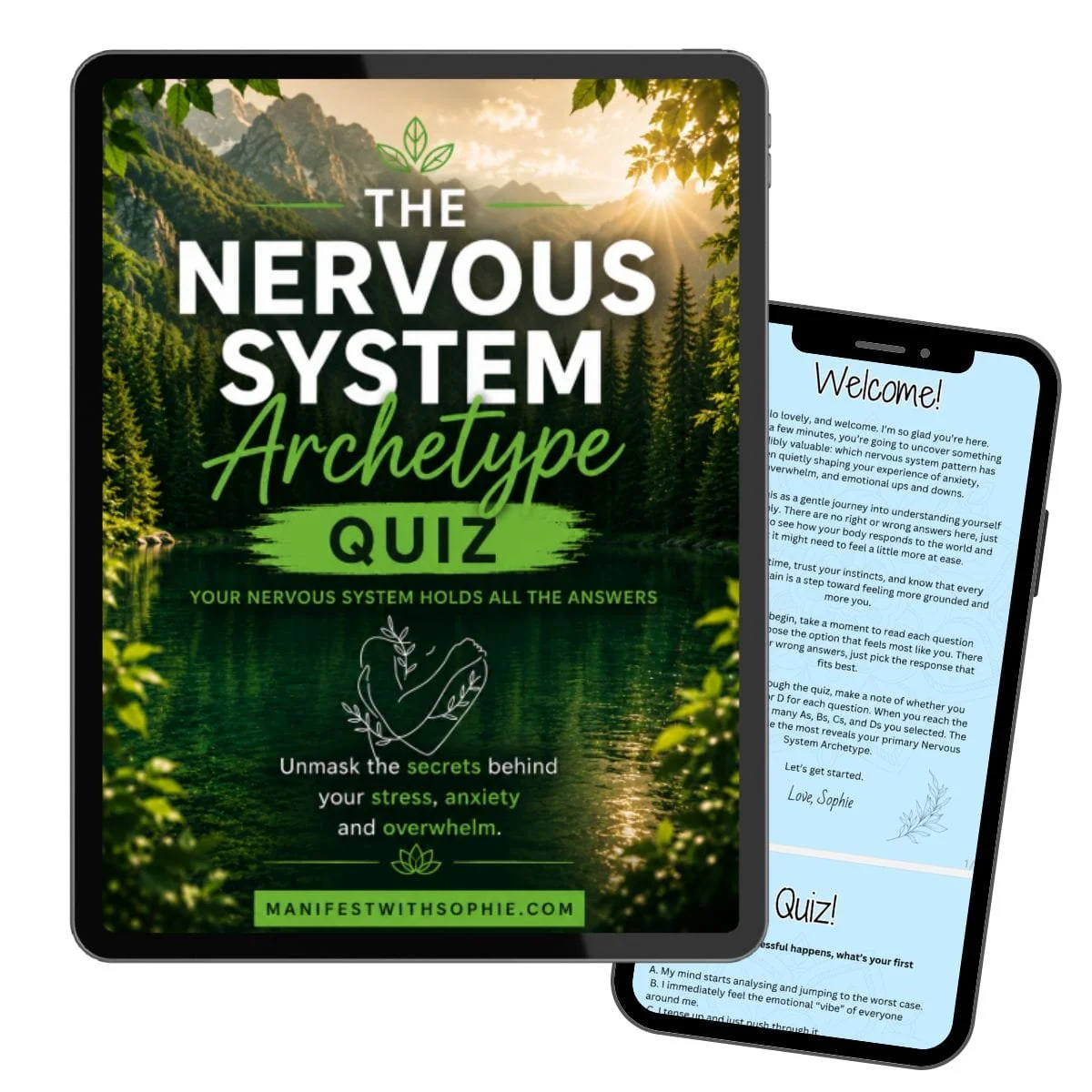
If boundaries regularly send you into overthinking, guilt or panic, my free Nervous System Archetype Quiz can help you understand the protective pattern your nervous system tends to fall into most.
You may recognize yourself as an Overthinker, Emotional Sponge, High-Functioning Freeze or Shut-Down Freeze.
Why Do I Feel Anxious After Setting a Boundary?
Setting a boundary can seem incredibly simple from the outside. You say what you need. The other person responds. Conversation over.
But your nervous system may experience something very different.
If you have spent years avoiding conflict, trying to keep people happy or worrying about being rejected, saying no can feel like you have suddenly broken one of the invisible rules that used to keep you safe.
Your logical mind might know that you are allowed to have boundaries. Your body may still react as though something dangerous has happened.
That can look like a racing heart, nausea, tightness in your chest, obsessive thinking, guilt or an overwhelming urge to make sure the other person is not upset with you.
Here are three hidden reasons this can happen.
1. Your Nervous System Associates Boundaries With Rejection
For some people, disagreement feels uncomfortable. For others, it feels threatening.
If your nervous system has learned that conflict can lead to anger, withdrawal, criticism or rejection, setting a boundary can immediately trigger a stress response.
You might say something completely reasonable like:
“I cannot come tonight.”
“I need some time to myself.”
“I do not want you speaking to me like that.”
But instead of feeling calm afterward, your body acts as though you have just put an important relationship at risk.
You may begin scanning for signs that the person is upset. Their reply seems shorter than usual. They take longer to text back. They do not use the same emoji.
Suddenly, your mind is building an entire story around what their reaction might mean.
This is especially common if you grew up feeling like love, approval or emotional safety could disappear when someone was unhappy with you.
Your nervous system may have learned:
If they are upset with me, I am not safe.
So even healthy boundaries can trigger an old alarm.
The anxiety is not always telling you that something is wrong. Sometimes it is telling you that something feels unfamiliar.
Maybe you grew up in a household with parents who could not regulate their own emotions, so you learned very young that keeping them happy helped you feel safe.
Those early experiences can become part of your wounded inner child, shaping the way your nervous system responds to conflict, disapproval and boundaries long into adulthood
2. You Learned That Keeping Other People Happy Keeps You Safe
If you are used to people-pleasing, boundaries can feel deeply uncomfortable because they go against a strategy you may have relied on for years.
People-pleasing is not always about being “too nice.”
For many people, it is a protective pattern.
You learn to read the room. You notice tiny changes in tone. You anticipate what other people need. You try to avoid disappointing anyone. You say yes before you have even checked whether you actually want to.
Over time, keeping other people comfortable can start to feel like your responsibility.
So when you finally set a boundary, your nervous system may immediately ask:
Are they upset with me?
Do they still like me?
Did I make things awkward?
Should I apologise?
You may even feel guilty despite knowing, logically, that you did nothing wrong.
That guilt can be incredibly convincing.
But guilt does not always mean you have harmed someone. Sometimes it simply appears because you are doing something different.
If you are used to abandoning your own needs in order to protect someone else’s feelings, choosing yourself can initially feel selfish.
That does not make it selfish.
It means your nervous system is adjusting to a new pattern.
3. Your Body Has Not Yet Learned That It Is Safe to Say No
You can understand boundaries intellectually long before your body feels comfortable with them.
You may know that you are allowed to say no. You may know that healthy relationships can survive disagreement. You may know that another person being disappointed does not automatically mean you have done something wrong.
But your nervous system learns through repetition and experience.
That means every time you set a boundary and survive the discomfort that follows, you are giving your body new information.
You say no. The anxiety rises. You resist the urge to immediately take it back. Time passes. Nothing catastrophic happens.
Your nervous system slowly begins to learn:
Maybe I can disappoint someone and still be safe.
Maybe someone can be unhappy with my decision and still care about me.
Maybe I do not have to fix every uncomfortable emotion in the room.
That learning does not always happen overnight. Especially if you have spent years doing the opposite.
But each boundary can become a small piece of evidence that you are allowed to protect your time, energy and emotional wellbeing.
What to Do When You Feel Anxious After Setting a Boundary
The first thing to remember is that you do not have to immediately act on the anxiety.
You may feel a huge urge to send another message. You may want to explain yourself again. You may want to add, “But it is totally fine if you need me.” You may even want to take the boundary back.
Give your nervous system a little time before doing anything.
Plant both feet on the floor and take three slow breaths.
Notice what is happening in your body. Is your chest tight? Is your stomach churning? Are your shoulders tense?
Then remind yourself of what is actually true.
You set a boundary. Someone may or may not like it. You are allowed to have needs. You do not have to manage another adult’s emotional response for them.
If your mind keeps spinning, write down the exact fear underneath the anxiety.
For example:
Fear: They are going to think I am selfish.
Then ask:
What evidence do I actually have that this is happening?
And:
If they are disappointed, does that automatically mean my boundary was wrong?
This helps separate the immediate nervous system reaction from the actual situation in front of you.
Movement can help too.
Go for a walk, shake out your arms and legs, stretch or put on a song and move around the room.
Anxiety often comes with physical activation, so giving that energy somewhere to go can help your body settle faster than trying to think your way out of every possible outcome.
You Do Not Need to Feel Comfortable Before You Set Boundaries
A lot of people wait to feel confident before they start setting boundaries.
But confidence often comes afterward.
You set the boundary while your voice shakes. You tolerate the discomfort. You realise you survived. Then you do it again. And again.
Eventually, what once felt terrifying can start to feel normal.
You may still care whether someone is upset. You may still dislike conflict. You may still feel a little nervous after saying no.
But the anxiety no longer controls what you do next.
You stop immediately apologising. You stop writing five-paragraph explanations. You stop abandoning your needs the second someone seems disappointed.
And that is often where real change begins.
Feeling Anxious Does Not Mean the Boundary Was Wrong
One of the hardest things to learn is that discomfort and danger are not the same thing.
Your nervous system can react strongly to something simply because it is unfamiliar.
So the next time you feel anxious after setting a boundary, try not to immediately interpret the anxiety as proof that you made a mistake.
It may simply be your body adjusting to a new way of relating to people.
A way where you can care deeply about others without abandoning yourself.
A way where someone else can feel disappointed and you do not have to fix it.
A way where saying no does not mean losing love.
And the more often your nervous system experiences that, the safer boundaries can begin to feel.
If you often overthink conversations, absorb other people’s emotions, freeze when you want to speak up or struggle to say no without guilt, take my free Nervous System Archetype Quiz.
It can help you understand the protective pattern your nervous system relies on most and why certain situations may affect you more strongly than they seem to affect everyone else.
Read These Next:
5 Signs You Care Too Much What People Think
If setting boundaries leaves you obsessing over how other people see you, this will help you recognise the deeper pattern behind that fear.20 Warning Signs You’re Stuck in Survival Mode
A broader look at the emotional and physical signs that your nervous system may be spending too much time in a stress response.How to Quiet Your Mind: The Eye-Opening Secret You Need to Know
Perfect for readers who leave boundary conversations replaying everything they said and struggling to switch their brain off.
