
Someone hasn't replied to your message, and suddenly you're convinced you've upset them.
Your boss asks for a quick chat, and your mind immediately starts imagining everything you might have done wrong.
Or maybe you've got something exciting coming up, but instead of enjoying it, you're busy imagining all the ways it could go wrong.
Sound familiar?
Before you know it, you've created an entire disaster in your head, complete with conversations that haven't happened, problems that don't exist yet, and outcomes that you're already emotionally preparing yourself for.
And the most frustrating part? You know you're probably overthinking, but knowing that doesn't seem to make it stop.
What if I told you that imagining the worst-case scenario isn't necessarily a sign that you're a negative person, but that your nervous system might be trying to protect you?
Contents
→ Why Your Brain Keeps Expecting the Worst (Even When Everything Is Fine)
→ The Hidden Reason Your Nervous System Expects Something Bad to Happen
→ Why You Can't Just Stop Overthinking (Even When You Know You're Doing It)
→ 5 Tips to Stop Jumping to the Worst Case Scenario.
When your nervous system is constantly on edge, your brain can become particularly sensitive to anything that feels uncertain, threatening or potentially disappointing.
And sometimes, this response is something you've learned through experiences much earlier in life.
The good news is that just as your nervous system can learn to expect danger, it can also learn new patterns of safety.
Let's explore why your mind keeps imagining the worst and, more importantly, how to gently teach your nervous system that it doesn't need to be on high alert all the time.
Why Your Brain Keeps Expecting the Worst (Even When Everything Is Fine)
There's a name for constantly imagining negative outcomes: catastrophising.
It's when your mind jumps straight to the worst possible explanation or outcome, even when there's little evidence that it's actually going to happen.
For example, your friend seems quieter than usual, and your mind immediately wonders whether they're upset with you.
Or you make a small mistake at work, and suddenly you're imagining getting into trouble or losing your job.
But here's something interesting.
Catastrophising isn't just a thinking problem. It is also connected to how your nervous system responds to perceived danger.
Your nervous system is constantly gathering information from your body and surroundings, helping you respond to what's happening around you.
When it detects a potential threat, your body can move into a heightened state of alertness. This is part of your natural survival response.
Your heart might beat faster, your muscles may tense, and your attention can become more focused on what could go wrong.
The problem is that your nervous system doesn't only respond to physical dangers.
Emotional experiences such as rejection, criticism, conflict and uncertainty can also trigger a stress response, especially if you've learned to associate them with feeling unsafe.
When you're already feeling on edge, your mind may become more likely to interpret ambiguous situations negatively.
And suddenly, a perfectly ordinary situation can feel like a warning sign that something terrible is about to happen.
It's as though your brain is saying:
Something might go wrong. We need to figure out what it is before it happens.
But why does your nervous system react this way in the first place?
The Hidden Reason Your Nervous System Expects Something Bad to Happen
Sometimes, the answer can be found in experiences much earlier in your life.
Our nervous systems are shaped by the things we experience, particularly when we're growing up.
Think about a child who frequently experiences criticism, unpredictable reactions or emotional rejection.
Perhaps they never quite know what mood a parent is going to be in.
Maybe they learn that making a mistake leads to an angry reaction, or that upsetting someone means affection or approval might be withdrawn.
Over time, that child might become very good at noticing tiny changes in other people's behaviour.
They learn to watch facial expressions, analyse someone's tone of voice and anticipate potential problems before they happen.
Why?
Because being prepared may have helped them avoid uncomfortable or frightening situations.
And when a response repeatedly helps us cope, our brains and nervous systems can become more likely to use it again.
What started as a way of protecting yourself can eventually become an automatic pattern.
Now imagine that child growing up.
They're an adult, with their own relationships, responsibilities and opportunities.
But when someone doesn't reply to a message, their body still reacts with that familiar feeling of unease.
Of course, you don't need to have experienced a difficult childhood to develop catastrophic thinking. Stress, anxiety and painful experiences at any age can contribute to it.
And not everyone who has experienced these things will develop the same patterns.
But understanding how your experiences may have shaped your responses can be incredibly helpful.
Because instead of asking yourself, "Why am I always so negative?"
You can start asking:
"What might my nervous system have learned to protect me from?"
And that question opens the door to a much kinder way of understanding yourself.
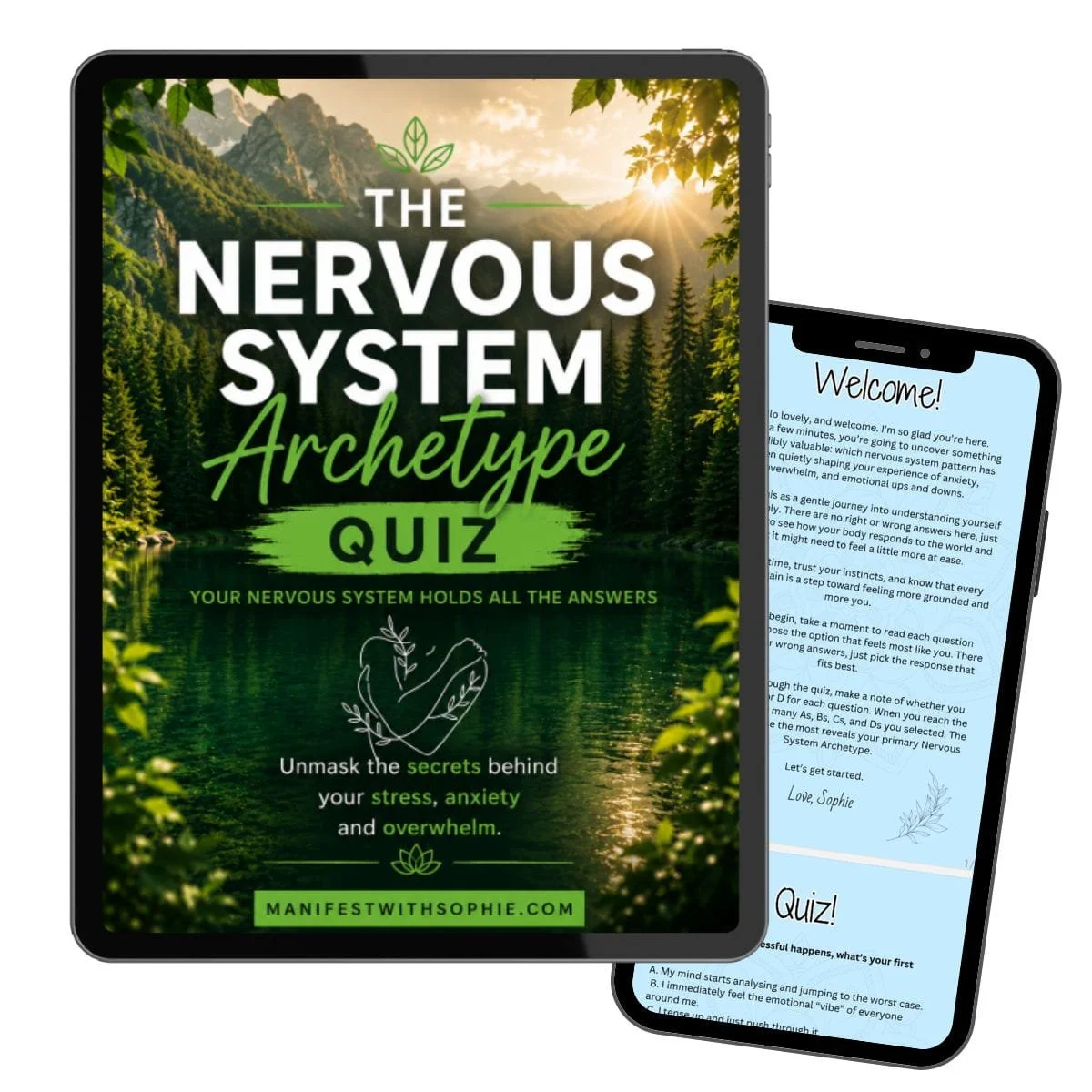
If you are ready to start understanding yourself and your triggers more, take my free nervous system archetype quiz. You will learn which of the 4 archetypes best explains you and your responses to stress.
Why You Can't Just Stop Overthinking (Even When You Know You're Doing It)
Here's where things get interesting.
Your brain learns through experience and repetition.
When a particular response becomes familiar, your brain can start using it automatically, even when you're no longer in the situation where you originally learned it.
Let's say you've experienced rejection in the past.
The next time someone seems distant, your nervous system may react as though rejection is about to happen again.
You feel anxious, your mind starts searching for clues, and you begin imagining the worst.
So you analyse their messages, replay conversations or ask them whether everything is okay.
Eventually, you receive reassurance and feel better.
For a moment, your nervous system settles.
But there's a catch.
If you repeatedly rely on overthinking or reassurance to escape uncomfortable feelings, your brain can learn that those behaviours are necessary to feel safe.
So the next time something uncertain happens, the same pattern begins again.
Uncertainty → Feeling threatened → Imagining the worst → Overthinking or reassurance → Temporary relief.
And round and round it goes.
But here's the really encouraging part.
Your nervous system can learn new responses, too.
Through a process called neuroplasticity, your brain can change and strengthen connections as you practise different behaviours and have new experiences.
You don't have to spend the rest of your life automatically expecting the worst.
And the answer isn't simply forcing yourself to think more positively.
It's helping your nervous system gradually become less reactive to situations that don't actually require a danger response.
Here’s 5 tips to stop jumping to the worst case scenario.
1. Regulate Your Nervous System Before Trying to Change Your Thoughts
When you're caught in a worst-case-scenario spiral, your first instinct might be to argue with your thoughts.
You tell yourself you're being ridiculous, that nothing bad has happened, and that you need to stop worrying.
But somehow, the thoughts keep coming.
That's because when your body is already experiencing a stress response, it can feel impossible to return to a calm state with thought alone, you must switch your focus to the body.
This is where nervous system regulation comes in.
You could try:
Slow, gentle breathing: Breathe comfortably and allow your exhale to become slightly longer than your inhale, without forcing it.
Grounding through your senses: Look around and notice the colours, textures and sounds in your environment.
Gentle movement: Take a walk, stretch or move your body in a way that helps release some restless energy.
Relaxing physical tension: Unclench your jaw, lower your shoulders and notice where you're holding tension.
Creating a comforting environment: Make a warm drink, listen to calming music or sit somewhere that feels peaceful.
These simple activities can help reduce feelings of physical stress and bring your attention back to the present.
And when your body feels less overwhelmed, your thoughts become easier to manage, too.
If you want 7 cosy nervous system activities that are NOT meditation, click below.
7 Easy Ways to Take Care of Your Nervous System
2. Teach Your Nervous System That Uncertainty Doesn't Always Mean Danger
If your nervous system has learned to associate uncertainty with danger, not knowing what's going to happen can feel incredibly uncomfortable.
You might find yourself needing answers, reassurance or a clear plan before you can relax.
But life is naturally unpredictable.
We can't always know what someone is thinking, how an opportunity will turn out or what tomorrow might bring.
And constantly trying to eliminate uncertainty can keep your nervous system stuck in a cycle of alertness.
So how do you start changing this?
By gently practising uncertainty in situations where it's genuinely safe to do so.
Start small.
Perhaps you send a message and resist the urge to check your phone every few minutes.
Maybe you make a small decision without asking several people whether you've done the right thing.
Or you allow yourself to look forward to something exciting without immediately imagining all the possible ways it might go wrong.
At first, you might notice that familiar uncomfortable feeling.
Your mind may start offering frightening possibilities, trying to convince you that you need to do something.
Instead of automatically reacting, remind yourself:
"I don't know what's going to happen, and I can allow that uncertainty to be here."
You can use gentle grounding techniques while allowing the feeling to pass.
Over time, repeated experiences of tolerating uncertainty without constantly checking or preparing can help your brain learn that uncertainty itself doesn't always require an alarm response.
And that is such an important part of breaking the catastrophising cycle.
3. Allow Yourself to Feel the Emotion Instead of Fighting It
This one might seem counter-intuitive, but stay with me.
Emotions are meant to move. They are meant to come up, be felt, process through your body and be released.
Often, when someone has an overthinking mind, particularly a negative overthinking mind like the kind who always things of the worst case scenario, those emotions get ‘stuck’.
The feeling over being overwhelmed feeds the negative thoughts which keeps you in a cycle of expecting the worst.
The trick here is to take all the focus off the thoughts and put it all into the FEELING.
When you are thinking of the worst case-scenario, let go of the thoughts and focus on the somatic feelings within your body.
Maybe your belly feels tight, maybe there’s a pressure feeling in your chest, maybe your arms feel jittery. Whatever it is, focus on the feeling and let go of each thought that pops up.
As you do this, you are allowing the emotion to be there, allowing it to process.
Sit and do this for as long as you need for the emotion to process.
Maybe some tears will come, that’s ok, that’s part of the release, allow it. Its important not to get caught up in the thoughts in your mind and allow your body to process the feelings.
4. Create More Experiences of Safety in Your Everyday Life
When we talk about teaching your nervous system safety, it's easy to imagine that it requires some complicated healing routine.
But often, it's about the small things you repeatedly experience throughout your day.
Your nervous system responds to your environment, your relationships, your habits and the way you treat yourself.
And if you spend much of your time feeling rushed, overwhelmed or on edge, it can be harder to settle when another stressful situation appears.
That's why creating more opportunities to feel calm, connected and supported can be helpful.
You could try building little moments of safety into your day.
Maybe that's taking ten minutes to sit peacefully in the morning rather than immediately rushing into your responsibilities.
Perhaps it's spending time with people who make you feel accepted and comfortable being yourself.
It might be enjoying a gentle walk, listening to music you love or giving yourself permission to rest without feeling guilty.
And sometimes, it's simply noticing when things are going well.
If you're having a lovely afternoon with a friend, allow yourself to enjoy it instead of worrying about whether they'll still like you tomorrow.
If something exciting happens, let yourself experience that happiness without immediately preparing for disappointment.
You don't have to earn the right to feel peaceful by first making sure nothing could possibly go wrong.
5. Change the Way You Speak to Yourself When You're Spiralling
Imagine a child coming to you feeling frightened because they're worried something bad might happen.
Would you tell them they're being ridiculous, that they're overreacting and that they need to get a grip? Would you panic with them, tell them to take cover and frighten them more?
Probably not.
You'd likely want to comfort them, help them feel supported and remind them that everything will be okay and they don't have to face everything alone.
Yet when we're anxious, we can be incredibly harsh towards ourselves.
Why am I like this?
I'm always overthinking everything.
I need to stop being so dramatic.
But criticising yourself for feeling anxious can add another layer of stress to an already difficult moment.
Instead, try responding with a little more compassion.
You could say:
"I understand why this feels scary."
"My mind is trying to protect me, but I don't need to prepare for every possible outcome."
"I've experienced difficult things before, but this situation isn't necessarily the same."
"I can take care of myself, even when I don't know what's going to happen."
Final Thoughts
If you've spent years imagining the worst-case scenario, remember that this isn't necessarily who you are. It may simply be a pattern your nervous system learned along the way to try to keep you safe.
And the beautiful thing is, just as your nervous system can learn to expect danger, it can also learn to recognise safety.
Through gentle regulation, self-compassion and repeated experiences of safety, you can gradually teach your nervous system that uncertainty doesn't always mean something bad is coming.
You don't have to prepare for every disappointment, predict every outcome or constantly brace yourself for things to go wrong.
You're allowed to feel excited about the future. You're allowed to trust that good things can happen. And most importantly, you're allowed to feel safe enjoying the present, even when you don't know what comes next.
Be patient with yourself. Every small step towards feeling safer is a step towards a calmer, more peaceful you.
Grab your free copy of the Nervous System Archetype Quiz below.
